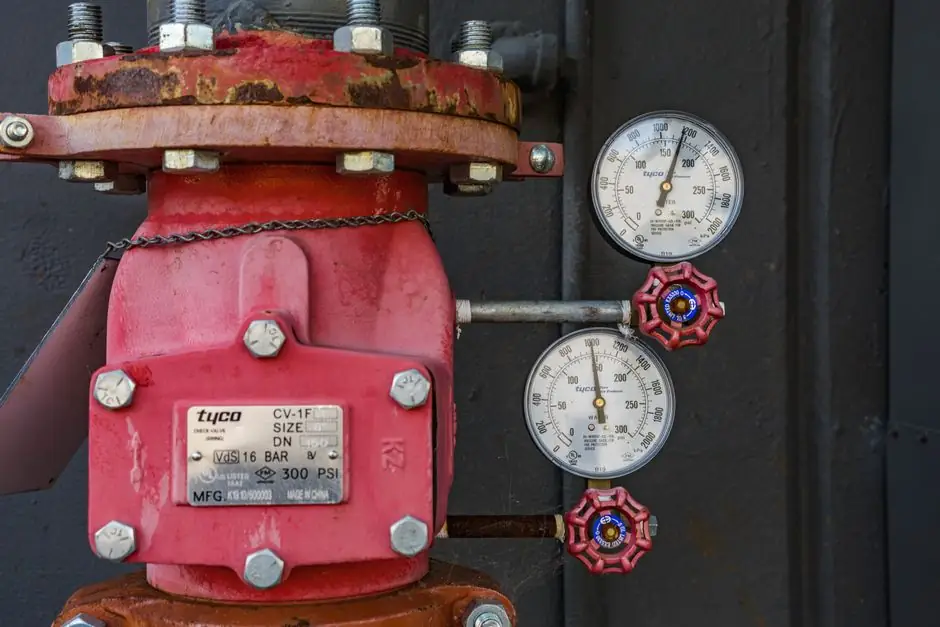
Pneumatic two-hand control valves and electrical two-hand safety relays solve the same problem from opposite ends of the wiring diagram, and the choice between them hinges on the safety integrity level you need, the existing infrastructure on the press, and whether you want fault diagnostics back to a PLC.
Both architectures are still specified for safeguarding metal-fabrication presses, clamp-and-hold fixtures, and pneumatic power presses that fall under OSHA 1910.217 in the U.S. and EN 574 / EN 60204-1 in Europe. Pneumatic circuits dominate on stand-alone air presses, while electrical relay modules now dominate anywhere a safety PLC or HMI already exists.
How the Two Logics Actually Work
A pneumatic two-hand control requires two spring-returned 3-way pushbutton valves feeding pilot air to a single 5-port directional valve; the output only shifts if both buttons are actuated within 0.3 s (Air-Mite) or 0.5 s (SMC VR51) of each other [S2][S3]. Releasing either button vents the pilot side, which spring-returns the directional valve to safe in milliseconds because no software is in the path.
Electrical two-hand safety modules implement the same simultaneity check in firmware or hard-wired relay logic, often meeting EN 574 Type III C or Cat. 4 / PL e per ISO 13849-1 on the relay side. Pneumatic logic therefore has a faster, simpler signal chain; electrical logic has the diagnostic outputs (EDM, aux feedback) that modern safety PLCs expect.
Component Count and Air Circuit Anatomy
A minimal pneumatic anti-tie-down build uses two 3-way manual push valves, a 5/2 or 5/3 spring-return directional valve, the press cylinder, and (optionally) a tamper-resistant two-hand module such as the SMC VR51 or the Renco 2-Hand No-Tie-Down unit [S1][S2][S6].
The VR51 is a self-contained logic block: aluminum die-cast body, H-NBR seals, brass internals, supply port 0.25-1.0 MPa, proof pressure 1.5 MPa, ambient -5 to 60 °C, weight 340 g, port size ø6 mm or 1/4 in, and it conforms to EN 574:1996 + A1:2008 Class Type III A [S2]. With 1 MPa supply the simultaneity window is roughly 0.1 s, faster than the spec's 0.5 s [S2].
Air-Mite's SC3000 and SC3400 modules are the analogous U.S. drop-ins: self-contained, stand-alone, OSHA 1910.217-targeted, with the SC3400 adding a reset button for clamp-and-hold circuits [S3]. Pneumatic systems are therefore attractive on a retrofit where pulling 24 Vdc to each operator station is the most expensive part of the job.
Electrical Two-Hand Modules: When the Relay Wins
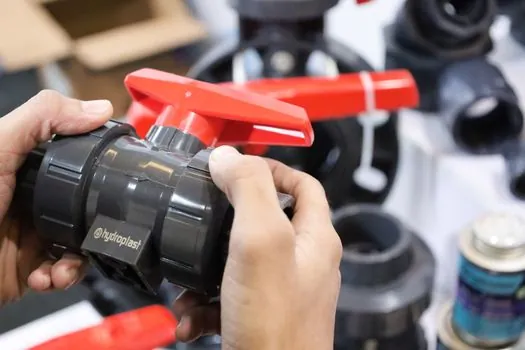
Electrical two-hand safety relays, often from Pilz, Sick, Allen-Bradley, or Schmersal, sit between the pushbuttons and the press contactor. They enforce the same 0.3-0.5 s simultaneity window, but they also cross-check the contactors via EDM (external device monitoring) and signal faults back to the safety PLC over a dedicated bus. [S1]
For plants already standardized on a control valve and electrical automation platform, the relay module replaces the pneumatic logic block and lets the press inherit the rest of the safety ecosystem: light curtains, interlocks, muting, and stop-category selection. The trade-off is the wiring: 24 Vdc or 110 Vac supply, two-channel wiring per button (for Cat. 3/PL d and above), and a documented test interval.
Pneumatic vs Electrical: Decision Matrix
For a side-by-side call, line the architectures up against the four criteria that drive most purchase decisions:
<strong>Safety integrity ceiling.</strong> Electrical relay modules are the only practical way to reach ISO 13849-1 PL e / SIL 3 because the diagnostic coverage requirement is met by the relay's internal cross-checking; pneumatic logic blocks are typically declared to EN 574 Type III A, which maps to a lower PL without a guarding-rated safety relay downstream [S2].
<strong>Response time.</strong> A pure-pneumatic chain shifts in 10-30 ms because the only moving parts are spools; a relay plus contactor chain adds 15-25 ms of relay dropout and contactor de-energize, but the absolute stop time still meets OSHA 1910.217 stop-time limits on most mechanical presses under 200 mm/s ram speed [S3].
<strong>Diagnostics and integration.</strong> Electrical modules expose fault contacts, EDM, and often a bus status; pneumatic blocks expose only an air-pressure output, so fault visibility lives in the maintenance walk-around. Pneumatic systems also require ventilation in sealed panels so exhausting pilot air does not pressurize the enclosure and add back-pressure to the pneumatic valve actuator [S2].
<strong>Cost and install effort.</strong> Pneumatic is cheaper on a stand-alone press (under USD 600 for a VR51-class block plus two pushbutton valves, vs USD 800-1500 for a Cat. 4 safety relay plus contactors), but loses that advantage as soon as a safety bus is already in place; the relay then drops onto DIN rail with no additional plumbing.
Use-Case Fit: Who Should Pick What
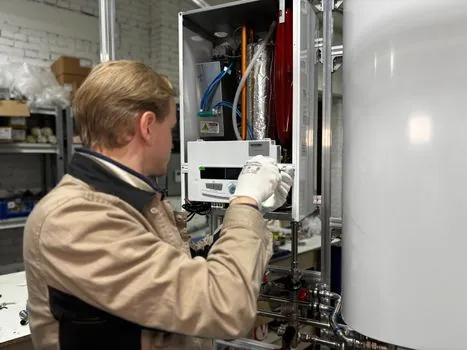
For a new stand-alone pneumatic press with 32-80 mm bore cylinders, the pneumatic two-hand control is the right call: minimal parts, no new electrical infrastructure, and conformance to OSHA 1910.217 via a pre-engineered module such as the Renco or Air-Mite SC3000 [S3][S4][S6]. This is the same architecture discussed in our OSHA 1910.212 emergency-stop compliance guide and is the baseline for any shop using a stand-alone hand-tools-class press.
For a multi-press cell wired to a safety PLC, an electrical automation two-hand relay is the right call: it gives you EDM, fault logging, and one less air circuit to maintain, while still meeting EN 574 simultaneity on the pushbutton side. Electric also wins when the operator buttons are remote, when the press is integrated with light curtains, or when stop-category 1 controlled stops are required.
For hybrid cells (legacy pneumatic press plus new light curtain), the cleanest pattern is an electrical two-hand relay driving the press's existing control valve solenoids, which keeps the pneumatic muscle while moving the safety decision into the relay; the two-hand control page in the encyclopedia walks through the same logic.
Limitations and Common Failure Modes
Pneumatic two-hand blocks are vulnerable to three documented failure modes: tied-down buttons (mechanically held), blocked silencers (the exhaust port R cannot vent, so the directional valve sticks shifted), and supply pressure drop (below ~0.25 MPa the simultaneity window stretches and the spec is no longer met) [S2][S3][S6]. Each is mitigated by anti-tie-down logic, exhaust silencers that are serviceable, and a supply pressure switch.
Electrical two-hand relays fail open by design (a welded contactor cannot restart the press), but they require a documented test interval, a means to defeat the test for production, and a wiring layout that maintains channel separation all the way back to the pushbutton. Mixing Cat. 4 relay logic with single-channel pushbuttons is a recurring audit finding and silently drops the achieved PL.
Standards, Sourcing, and Field Reality
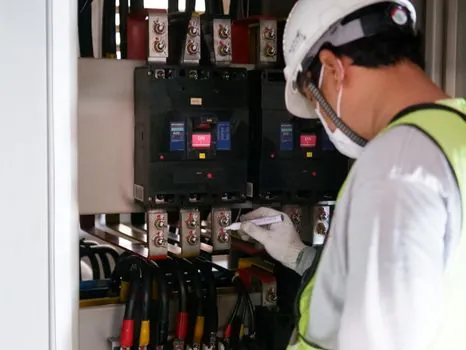
Two hand control conformance in Europe is governed by EN 574 (timing and logic), with the safety circuit built to EN 60204-1 and risk-assessed to ISO 13849-1; in the U.S. the controlling rules are OSHA 1910.211-1910.217 for mechanical power presses, with OSHA 1910.212 covering general machine guarding [S2][S3]. Always cross-check the local risk assessment because EN 574 Type III A is a floor, not a ceiling.
For sourcing, both pneumatic modules and electrical relays are stocked at the same industrial distributors, but pneumatic two-hand blocks are still the easier field-replace item because they require no commissioning software, no address allocation, and no electrical measurement loop check. That is the operational reason pneumatic two-hand logic persists even on lines that are otherwise fully electrified.
Next, watch two signals over the next 6-12 months: (1) whether OSHA 1910.217 draft revisions tighten anti-tie-down verification cadence for pneumatic-only circuits, and (2) whether any major safety-relay vendor releases a two-hand block with native IO-Link safety, which would finally let diagnostic data from a pneumatic-style two-hand block reach a PLC without adding a relay.