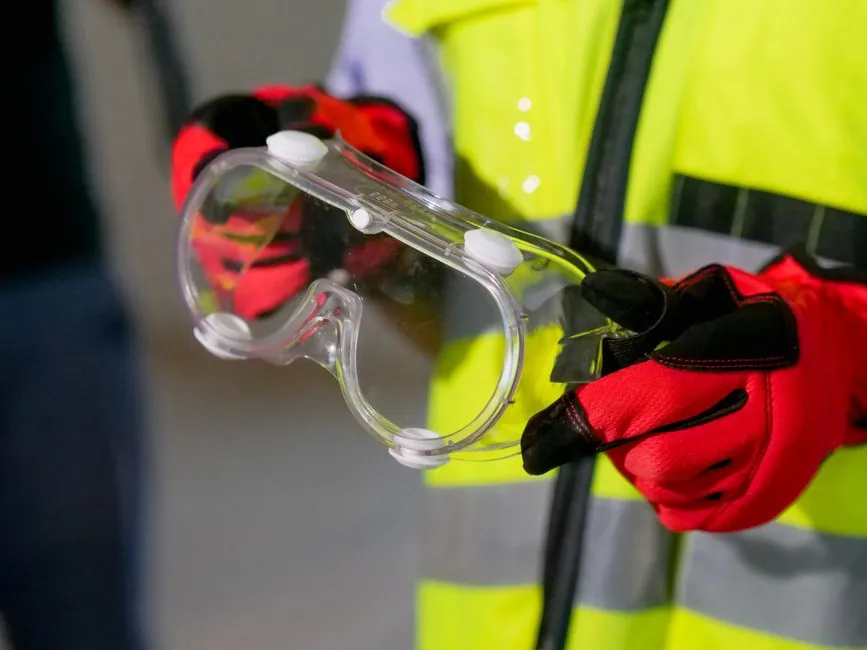
OSHA 29 CFR 1910.132 requires every U.S. construction employer to perform a written workplace hazard assessment before specifying PPE, and CDC/NIOSH states that no single ensemble protects against all site hazards [S1]. In Europe, CEN/TR 15419:2017 (49 pages, ICS 13.340.10) supersedes the 2006 edition and codifies a four-step selection flow: hazard nature, risk level, protection need, then garment-material criteria including chemical barrier, mechanical, and ignition resistance [S5].
Construction PPE typically bundles five garment families worn together: hi-vis outerwear, weatherproof shell, cut- and abrasion-resistant base layers, chemical or dust coveralls, and task-specific hand protection. A wrong pick in any one family voids the whole ensemble, which is why protective clothing is selected as a system, not as standalone items.
Hazard classes that drive the specification
CDC/NIOSH divides site hazards into categories that map directly to garment standards: impact, penetration, chemical, heat/flame, electrical, and visibility [S1]. CEN/TR 15419:2017 §4.2 lists "nature of the hazard" as the first selection variable and §4.6 splits garment criteria into chemical barrier, mechanical, and resistance to ignition [S5]. OSHA's general-duty clause (29 CFR 1910.132(d)(1)) forces the employer to select PPE that fits the hazard, which in construction is rarely a single hazard.
For hi-vis outerwear the operative standard is EN ISO 20471, which grades garments Class 1 (low risk, parking attendants, 0.14 m² fluorescent + 0.10 m² retroreflective), Class 2 (roadworks, site visitors, 0.50 m² fluorescent + 0.13 m² retroreflective), and Class 3 (high-risk traffic exposure, motorway crews, 0.80 m² fluorescent + 0.20 m² retroreflective) [S1] cross-referenced with EN 343 for weather. For arc-flash and welding, EN ISO 11612 sets letter-coded performance levels (A1/A2 limited flame spread, B convective heat, C radiant heat, D molten iron splash, E contact heat, F radiant heat transfer) and is typically specified together with IEC 61482-1-1 or -1-2 for arc-rated kit.
Chemical and dust coveralls: Type codes, not brand names
Type 1–6 classifications under EN 14325 govern chemical-protective coveralls: Type 1 (gas-tight, EN 943-1), Type 2 (non-gas-tight), Type 3 (liquid jet, pressurized), Type 4 (liquid spray), Type 5 (airborne solid particles), Type 6 (light spray/mist) [S5]. For wet concrete, cement-dust, and fuel splash on a structural site, Type 4 or Type 5 with taped seams is the common engineering call; Type 3 only enters the spec for hydrodemolition or chemical-stripping tasks. Construction buyers should anchor on the EN "Type" code, since garment weight (e.g. 65 g/m² microporous film) alone does not prove barrier performance.
CEN/TR 15419:2017 §4.6.2 makes permeation breakthrough time and degradation the two chemical-barrier metrics, and §4.6.3 covers mechanical criteria: tensile, tear, seam strength, abrasion cycles, and puncture [S5]. A common mis-spec is buying a Type 5/6 coverall for asphalt or solvent work; the right call is a Type 4 with chemical-specific permeation data against the solvent in the safety data sheet. Related spec discipline on chemical-resistant sheet goods is covered in PTFE selection for construction: grade, thickness, and spec gates, which walks the same permeation-thickness logic for gasketing.
Hi-vis, weather, and cold: EN ISO 20471 + EN 343 + EN 342
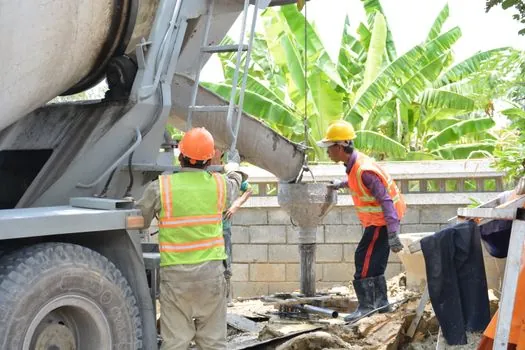
EN ISO 20471:2013 specifies three Classes by minimum area of background and retroreflective material, with Class 3 mandatory whenever a worker is on or near a live carriageway without positive separation [S1]. EN 343:2019 grades waterproofness by Resistance class (1–4, with class 4 ≥ 20,000 mm hydrostatic head on the seams) and breathability by Water vapour resistance class (1–4), giving buyers a two-axis pick for foul-weather shells. EN 342 sets thermal insulation for full cold-weather suits in clo/m², with results expressed as Icler (resulting effective insulation) and a paired air-permeability class (1–3).
For cold-weather concrete, earthworks, and steel-erection work the typical 2026 spec is a Class 3 EN ISO 20471 outer shell, EN 343 class 3/3 or 4/4 foul-weather parka, and a removable EN 342 inner with Icler ≥ 0.305 m²·K/W. Layering matters: CEN/TR 15419:2017 §4.7.4 explicitly requires selection to account for compatibility with other PPE (respirator, harness, fall-arrest), and a thermal liner that fouls a fall-arrest D-ring is a documented rejection reason [S5].
Cut, abrasion, and impact: EN 388 + EN 14058 + EN 166
Cut and abrasion resistance for gloves and sleeves is governed by EN 388:2016+A1:2018, which scores four-digit performance on abrasion, cut (Coup), tear, puncture, and adds ISO 13997 cut (letter A–F, with F ≥ 30 N) plus optional EN 388:2018 impact (P pass / F fail). For sharp-edge steel handling, EN 388 D (ISO 13997 10–14 N) is the engineering minimum; for glass or sheet-metal work, EN 388 E or F with TDM cut ≥ 22 N is typical. Construction boots layer EN ISO 20345 S3 (penetration-resistant midsole, cleated outsole, 200 J toe) over the site hazard assessment.
Eye protection is EN 166, which marks mechanical strength (S solid-particle, F low-energy impact, B medium-energy, A high-energy) on the lens; site impact calls for EN 166 F or B with side shields. For welding, EN 169 shade numbers (1.5–16) are added, and for arc, EN 379 auto-darkening filters with scale 4/9–13 are standard. The same fit-and-compatibility caution in CEN/TR 15419 §4.7.4 applies: goggles that break the respirator seal are a failed spec, not a marginal one [S5].
Selection criteria comparison across main garment families
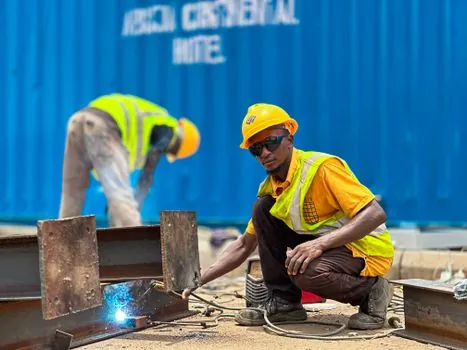
Four decision axes separate the families in 2026: governing standard, minimum test metric, typical use case, and known failure mode. The 5-step buyer pick (hazard assessment → standard → class → comfort/compatibility → inspection) mirrors CEN/TR 15419:2017 §4.1–4.7 [S5]. A condensed comparison:
Hi-vis outerwear: EN ISO 20471, minimum 0.50 m² background + 0.13 m² reflective (Class 2) for site visitors, Class 3 for live carriageway. Failure mode: fading fluorescent below 0.50 m² after 25 wash cycles, which is the EN ISO 20471 wash-cycle limit. Weather shell: EN 343, hydrostatic head ≥ 20,000 mm (class 4) and water-vapour resistance ≤ 20 m²·Pa/W (class 4) for heavy rain. Failure mode: seam tape delamination after flex, not the fabric itself. Chemical/dust coverall: EN 14325, Type 3/4/5/6 with permeation data against site SDS chemicals. Failure mode: seam tape lift under jet spray. Cut/heat: EN 388 (A–F) plus EN ISO 11612 letter codes, with EN 61482-1-1 arc rating in cal/cm² or ELIM. Failure mode: shrink-back on contact heat melting the inner layer.
Inspection, training, and replacement intervals
CEN/TR 15419:2017 §6 (Care) and §7 (Maintenance) require documented decontamination, cleaning, storage, and inspection routines, with §7.2 calling out ageing factors (UV, chemicals, flex) and a defined inspection interval [S5]. CDC/NIOSH reinforces that PPE "should be safe, durable, clean, and reliable" and that fit and comfort are selection criteria, not afterthoughts [S1]. OSHA 29 CFR 1910.132(f) requires training on when PPE must be worn, how to wear it, its limits, and how to care for it.
Practical 2026 cadence: a written inspection at every shift change for chemical and arc-rated kit, a 12-month replacement cycle for high-UV fluorescent hi-vis (Class 2 typically degrades below spec by month 18), and immediate retirement of any Type 3/4 coverall that has been chemically contaminated past the manufacturer's permeation table. Hand-protection and foot-protection spec detail is covered in the related Warehouse Safety Glove Selection guide, which carries the same EN 388 selection logic into logistics tasks. A 2026 design-side data point: the A' Protective Clothing Award programme continues to publish a juried design index for the category, useful as a market signal for new fabric systems but not a safety certification [S2].
Where construction protective clothing is NOT the right pick

Type 3/4 chemical coveralls are not arc-rated: the halogenated barrier films melt under high incident energy and will not protect against an arc-flash event; the right garment is an EN ISO 11612 + IEC 61482 layered kit. EN ISO 20471 hi-vis is not a thermal garment: a Class 3 parka without an EN 342 liner is a wet-cold failure waiting to happen in winter concrete pours. A Type 5/6 dust coverall is not chemical-protective: at 65–80 g/m² microporous film, it blocks particulates but fails liquid-jet testing under EN 14325. Buyers who collapse these into a single SKU are running a documented non-conformance against CEN/TR 15419:2017 §4.6 [S5].
The same hazard-class discipline shows up in adjacent construction commodities; the structural-steel and rebar spec side walks a parallel grade-thickness-failure path in Steel Pipe Selection Gates for Renovation Projects, and the concrete/structural-tendon side in Prestressing Strand Selection for Residential Slabs and Beams. Treat protective clothing the same way: standards first, then class, then the supplier-specific test report.
Buyers should re-anchor the site hazard assessment to OSHA 29 CFR 1910.132 on every project kickoff and to the latest CEN/TR 15419 selection flow, then lock the class numbers into the purchase specification before brand selection [S1][S5].
Component reference pages worth checking: construction tools, and pressure transmitter.