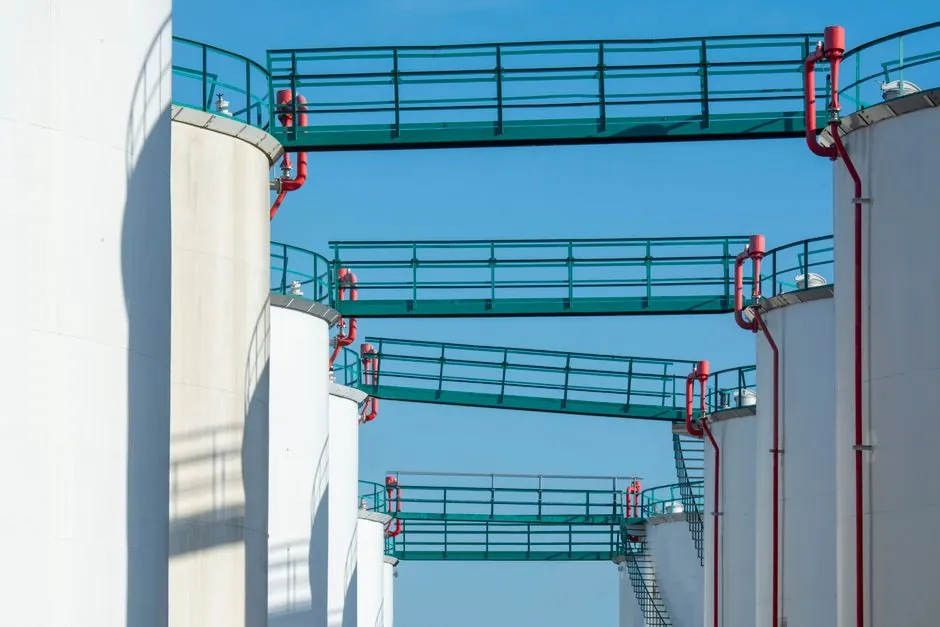
Upstream and midstream oil and gas sites stack at least four clothing hazards in the same bay: flash fire from hydrocarbon release, arc flash during live switchgear work, chemical splash from H2S scavengers and methanol injection, and cryogenic burn risk at LNG loading arms, so a single garment class cannot cover all four exposures.
Procurement decisions in 2026 are driven by per-zone certification rather than a generic "FR coverall," and operators from Nigeria's Niger Delta to the North Sea increasingly demand a documented hazard register before any protective clothing order is released [S2][S3].
Hazard Zoning: What Each Site Area Actually Demands
Refining and petrochemical operators typically separate clothing programs into four zones: upstream drilling/production (flash fire + H2S dominant), midstream pipelines and terminals (flash fire + arc flash at pump stations), downstream refinery turnarounds (chemical + heat), and LNG/cryogenic handling (cryogenic burn + flash fire) [S2][S3].
Each zone maps to a different governing standard family: NFPA 2112 with NFPA 2113 for flash-fire garments worn by upstream and midstream field crews, NFPA 70E for arc-rated PPE used during energized electrical work, EN ISO 11612 for European-coded letters (A=limited flame spread, B=convective heat, C=radiant heat, D=molten aluminum splash, E=molten iron splash, F=contact heat), and EN 943 for limited-use or reusable gas-tight chemical suits. EN 13034 covers light spray against low-volume chemical exposure, which is the typical case for operator-tour refinery jackets. Cryogenic loading crews additionally require EN 511 rated gloves and aprons, since liquid LNG contact at -162 °C causes immediate tissue adhesion to non-rated fabrics.
Flash Fire PPE: NFPA 2112 vs EN ISO 11612 vs Nomex/Kevlar Construction
Garments certified to NFPA 2112 must pass a 3-second flame engulfment test with predicted body burn under 50%, and are paired with NFPA 2113 for selection, care, and use guidance, which is the dominant upstream specification in the Americas, West Africa, and the Middle East.
EN ISO 11612 takes a different performance-letter approach: a Level B1 garment resists 4-10 seconds of convective heat exposure, B2 covers 10-20 seconds, and B3 exceeds 20 seconds before the temperature rise on the back side of the fabric reaches the 24 °C heat-transfer threshold; the same lettering scale applies to C (radiant heat), D (molten aluminum), E (molten iron), and F (contact heat, 250-500 °C). For upstream flash-fire exposure, the practical minimum on the A/B/C codes is A1, B1, C1, with a fabric weight of 6-7 oz/yd² for Nomex IIIA and a 4.5-8.5 oz/yd² range for Protera-style blends; multi-layer systems (flame-resistant underwear under a coverall) raise protection and are mandatory on many offshore platforms. The same fabric technology also feeds oil seal housing workshops and rotating-equipment maintenance crews on the same site, where hydrocarbon splash risk is comparable.
Arc Flash PPE: NFPA 70E, ATPV, and PPE Category Mapping
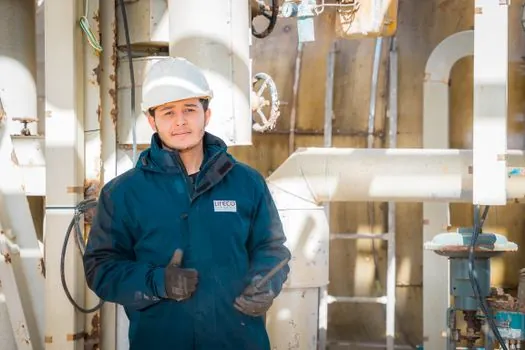
Arc-rated (AR) garments used in oil and gas electrical work are rated by Arc Thermal Performance Value (ATPV) or Energy Breakopen Threshold (EBT) in cal/cm², and NFPA 70E PPE Category 2 corresponds to 8 cal/cm² minimum, Category 3 to 25 cal/cm², and Category 4 to 40 cal/cm², with many upstream sites now requiring 100+ cal/cm² switchgear suits for 480 V to 38 kV work. [S2]
Selection starts with the calculated incident energy at the working distance, taken from IEEE 1584 short-circuit calculations, and the PPE category is then assigned by that number, not by job title. Common fabric systems pair a 6-7 oz/yd² Nomex IIIA outer with a 4.5-7 oz/yd² Protera or PYRAD inner, layered to push total system ATPV from roughly 8 cal/cm² (single layer) into the 30-100+ cal/cm² range used on production-platform switchrooms. Two pitfalls recur: (1) treating NFPA 2112-certified flash-fire coveralls as arc-rated, which they are not unless dual-certified, and (2) under-rating PPE for maintenance work because the utility-study assumed normal operating current. The same mis-specification pattern shows up in lighting equipment and electric lamps decisions on the same rigs, where hazardous-area luminaire zones are routinely mislabelled.
Chemical and H2S Protection: EN 943, EN 13034, and EN 374-3 Permeation Data
Chemical suits for oil and gas fall into Type 1 (gas-tight, EN 943-1), Type 2 (non-gas-tight with positive pressure), Type 3 (liquid-jet tight), Type 4 (liquid-spray tight), Type 5 (airborne particulate), and Type 6 (limited spray), and the type label is printed on every suit along with the chemical letter codes (A= methanol, B= acetone, D= dichloromethane, etc.) for which permeation has been tested. [S2]
Permeation performance is graded by EN 374-3 breakthrough time at a fixed 1 µg/cm²·min permeation rate: Class 1 = 10 min, Class 2 = 30 min, Class 3 = 60 min, Class 4 = 120 min, Class 5 = 240 min, Class 6 = 480 min, and the practical H2S (hydrogen sulfide) selection window is Class 4 minimum, Class 6 preferred for sour-gas operations above 100 ppm exposure. Methanol injection skids, common in hydrate-suppression systems on subsea flowlines, demand a Type 3 suit at minimum with Class 6 methanol breakthrough, and any glove used with the suit must carry the same letter code (A) at the same class level. Lighter EN 13034 Type 6 disposable coveralls (microporous film laminates, 60-80 g/m²) are the right answer for routine operator tours on a process unit, not for loading-rack or turnaround work.
Decision Matrix: Matching Garment Class to Work Activity
The four common work activities and their minimum-certified clothing classes are: (1) upstream wellhead and separator rounds = NFPA 2112 + H2S escape hood + EN 13034 chemical overspray; (2) pump-station and MCC switchgear = NFPA 70E PPE Cat 2 minimum, often Cat 3 for 480 V-4.16 kV gear; (3) LNG loading and BOG compressor = EN ISO 11612 A1/B1/C1 plus EN 511 grade 2/2/1 cryogenic gloves and apron; (4) refinery turnaround with open-vessel entry = EN 943-1 Type 1a fully encapsulating suit with supplied air. [S1]
Material options on the FR side are dominated by Nomex IIIA (Nomex/Kevlar/anti-static blend, typically 4.5-8.5 oz/yd²), Protera (modacrylic blend, 6-9 oz/yd²), PYRAD by Gore (laminated, lighter weight, higher ATPV per ounce), and Westex DH (indura cotton blend, 7-12 oz/yd²). Cost per garment runs roughly: Nomex IIIA coverall 80-180 USD, Protera coverall 60-130 USD, Westex DH coverall 40-90 USD, and PYRAD laminated jacket/pant 250-450 USD; laundering cycles typically span 50-100 industrial washes for aramids and 75-125 for PYRAD before the FR rating is considered degraded. For teams sourcing related PPE alongside clothing, glove selection follows a parallel logic, and the Welding Glove Selection by Process, Leather, and Cuff breakdown is a useful comparator for the cut-and-heat risks a welder-fitter faces on the same site.
Inspection, Laundering, and Replacement Signals
FR garments fail in service not by melting but by thinning, abrading, and contamination: oil-soaked Nomex loses its anti-static dissipative property, bleach degrades Protera, and PTFE-laminated PYRAD delaminates after 75+ wash cycles at 75 °C, and these are the three most common field-driven reasons for retirement before a 5-year service life. [S1]
A practical next step for any procurement team is to request the manufacturer's test certificates by lot number (not by generic catalog page) and to log each garment's wash count on a sewn-in barcode label, since a clothing program without per-garment traceability is the most common audit finding on major-operator safety reviews.