Chemical protective clothing splits into two parallel classification tracks that every safety buyer must reconcile: the European Type 1 through Type 6 scheme, mapped to specific chemical and particulate states [S1], and the US EPA Class A through Class D scheme, anchored to NFPA 1991 vapor-protective suit performance [S4]. Type 1 designates gas-tight suits for unknown or immediately dangerous-to-life-and-health (IDLH) atmospheres, while Type 6 covers limited spray exposure where penetration is brief and intermittent [S3]. The US system runs in parallel: Class A is the gas-tight, highest-skin-and-respiratory tier; Class B retains the same respiratory protection but trades airtight fabric for splash-resistant construction; Class C adds enhanced function with air-purifying respirators; Class D is general work clothing with no chemical-protective certification [S4].
Both tracks are mandatory reference frameworks rather than vendor marketing tiers, and the numeric-versus-letter split is the single most common audit finding when cross-border sites specify protective suits without normalizing the codes [S1][S4]. A buyer working off a Chinese or US-origin spec sheet will see EPA Class A/B/C/D language; a buyer working off an EU spec sheet will see EN 943 / EN 14605 Type 1-6 language, and the two are not drop-in interchangeable because the test chemicals and exposure durations differ.
European Type 1-6 Scheme: What Each Tier Actually Withstands
Type 1 gas-tight protective clothing is engineered for full encapsulation against gases, vapors, and aerosols, with subtypes 1a (self-contained breathing apparatus worn inside the suit), 1b (SCBA worn outside), and 1c (airline-supplied) defining the respiratory integration [S1]. Type 2 is a non-gas-tight positive-pressure suit, used where limited inward leakage is tolerable. Type 3 covers protection against liquid jets under pressure, Type 4 covers liquid spray saturation, Type 5 covers airborne solid particulates, and Type 6 covers limited liquid mist exposure where the contact time is short [S3]. For arc-rated work, NFPA 70E is the governing standard and the energy limit is expressed in calories per square centimeter: the Arc Thermal Protective Value (ATPV) defines the incident energy that causes the onset of second-degree burns, so apparel is selected by ATPV band rather than by fabric weight [S2].
Material families for these tiers span treated wool and cotton, duck, leather, and various rubber/plastics laminates, with Tyvek and Tychem constructions common on the disposable side of Type 4-6 [S2]. The defining difference is permeation time and penetration rate, not fabric weight. A Type 4 suit that passes jet-spray testing can still fail a Type 1 vapor challenge within minutes on the same chemical.
US EPA Class A-D Scheme and the NFPA 1991 Anchor
Class A chemical protective clothing is the highest tier, providing full respiratory, skin, and eye protection against vapors, liquids, and solids in unknown or IDLH environments; it is built around an airtight zipper and is typically paired with positive-pressure SCBA or a long-tube respirator [S4]. The airtight seam requirement traces to ASTM F 1052, which prescribes the pressure-inflation test used to verify that no gas leaks past the closure, while the chemical permeation test protocol requires the suit material to be exposed to a defined chemical list for 60 minutes with a maximum allowable permeation rate of 0.1 micrograms per square centimeter per minute [S4]. The test chemical list under NFPA 1991 includes acetone, acetonitrile, anhydrous ammonia, 1,3-butadiene, carbon disulfide, chlorine, dichloromethane, diethylamine, dimethylformamide, ethyl acetate, ethylene oxide, n-hexane, hydrogen chloride, methanol, methyl chloride, nitrobenzene, sodium hydroxide, sulfuric acid, tetrachloroethylene, tetrahydrofuran, and toluene [S4].
Class B suits hold the same respiratory protection as Class A but switch to splash-resistant construction, used where vapors are not present but liquids are. Class C adds the air-purifying respirator and is the workhorse for known-chemical, measured-concentration environments. Class D is general workwear with no respiratory or chemical certification, and should not be specified where dermal chemical contact is credible [S4]. This four-tier structure is widely used in Chinese import specifications because so many products originate from US supply chains, so the EPA/NFPA language flows downstream [S4].
Selection Criteria: Match the Hazard State, Not the Garment Label
The first decision node is chemical state: gas/vapor drives toward Class A or Type 1; pressurized liquid jet drives toward Type 3; spray drives toward Type 4 or Class B; mist drives toward Type 6; particulate drives toward Type 5 [S1][S3]. The second node is concentration certainty: unknown or IDLH demands the highest tier regardless of cost, because the consequence of under-specification is acute, while known and below-threshold exposure can be served by Class C/Type 4 with documented exposure assessment [S2][S4]. The third node is duration: a 60-minute permeation rating that suffices for a short intervention fails a multi-hour turnaround job, and the suit should be re-evaluated or rotated. The fourth node is heat stress: many chemical-protective garments restrict airflow and inhibit sweat evaporation, so cooling vests and work-rest cycles are necessary adjuncts for sustained tasks, and the protective clothing selection must be paired with a heat-stress program rather than treated in isolation [S2].
For arc-rated work, the matching protocol is mechanical: perform an arc flash hazard analysis, calculate the incident energy at the working distance, then specify an ATPV (or Energy Breakopen Threshold, EBT) rating that exceeds that value, with NFPA 70E Category 2 typically starting at 8 cal/cm² and Category 4 at 40 cal/cm² and above [S2]. Buyers should treat the ATPV rating as the primary purchase specification, and treat fabric weight, single-layer versus multi-layer construction, and color as secondary, because the ATPV number is what the test lab actually measures and what the audit will check.
Comparison: European Type vs US EPA Class Across Four Decision Criteria
A direct comparison of the two systems is unavoidable in cross-border procurement, and the four criteria that matter most are protection target, test protocol, respiratory integration, and use environment. The Type 1 / Class A pairing covers gas-tight, fully encapsulated protection, but Type 1a/1b/1c further breaks down the SCBA integration while Class A treats the SCBA as a single integrated package. The Type 3 / Class B pairing differs more sharply: Type 3 is tested against pressurized liquid jets, while Class B is tested against liquid splash without jet pressure, so a Type 3 suit is generally conservative against a Class B hazard but a Class B suit cannot be substituted for a Type 3 jet exposure [S1][S3][S4]. On the test-protocol axis, European types reference EN 943, EN 14605, EN ISO 13982, and EN 13034, while US classes reference NFPA 1991 plus ASTM F 1052 for airtight seams, and the test chemical sets overlap but are not identical, which is why a garment certified to one system is not automatically qualified under the other.
For buyers writing specifications, the cleanest approach is to write the requirement in performance terms (permeation rate, ATPV, seam test method) and then accept either classification system as evidence of compliance, rather than mandating a single letter or number code. This avoids the common audit gap where a Type 4 suit is rejected at a US site because it does not display a Class C label, even though the permeation data shows equivalent performance.
Use Cases: Matching Tier to Job, Not Vice Versa
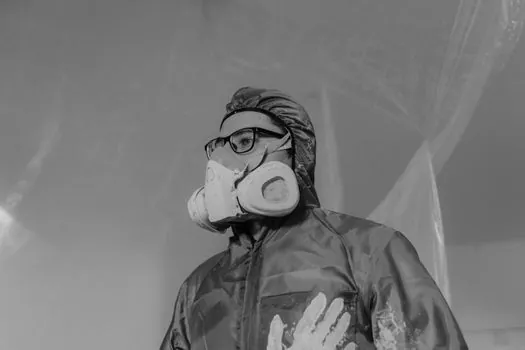
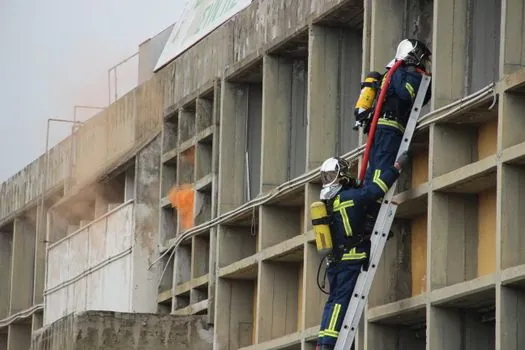
For HazMat entry into an unknown atmosphere, a typical IDLH chemical spill, or a confined-space entry with credible vapor presence, Class A or Type 1a/1b is the only defensible choice, and the suit is paired with positive-pressure SCBA, double chemical gloves, chemical-resistant boots, and a two-way radio because communications and decontamination logistics are part of the specification, not afterthoughts [S2][S4]. For known-chemical liquid handling below the IDLH threshold, such as batch chemical transfer, pesticide application, or laboratory spill response, Class C or Type 4 with an air-purifying respirator is the typical specification, with the filter cartridge matched to the chemical via the manufacturer's compatibility chart. For spray painting, agricultural spraying, and pharmaceutical powder handling, Type 5/6 and Class C cover the dominant exposure mode, with the recognition that Type 5 is particulate-only and does not address liquid splash [S3][S5].
For arc flash work inside the arc flash boundary, the right approach is to layer the chemical-protective decision onto a separate arc-rated decision, because arc-rated garments carry their own ATPV rating and layering a chemical suit over an arc-rated coverall can change the system-level ATPV in non-obvious ways. Disposable protective clothing also serves the inverse function of protecting the environment from the worker, which is the common case in cleanroom semiconductor lines, pharmaceutical aseptic processing, and biological containment, where the suit is selected to keep human-borne contamination out rather than to keep chemicals in [S5]. This dual-use reality is why disposable clothing is not automatically lower tier, and the tier assignment should be based on the standard it is tested to, not on the disposability label.
Limitations, Failure Modes, and Sourcing Standards
The dominant failure mode for chemical protective clothing is permeation breakthrough at the seam and closure, not bulk fabric failure, which is why the closure system (gas-tight zipper in Class A, taped seam in Type 3/4) deserves as much inspection attention as the fabric. Heat stress is the second failure mode and the most common cause of workers doffing suits mid-task, so a specification that ignores cooling vests, rotation schedules, and hydration is a specification that will be bypassed in the field [S2]. Disposable garments that contact hazardous substances become hazardous waste themselves, so disposal cost and waste classification belong in the procurement total cost, not just the unit price [S5].
Relevant standards include NFPA 1991 (vapor-protective suits), NFPA 70E (arc-rated clothing), ASTM F 1052 (airtight seam pressure test), ANSI/ISEA 107-2010 for high-visibility apparel, and the EN 943 / EN 14605 / EN ISO 13982 / EN 13034 family on the European side [S2][S4][S5]. For buyers working alongside related safety equipment, see the oxygen detector selection guide and the toxic gas detector comparison for the atmospheric monitoring layer that pairs with Type 1/Class A entry, and the warning sign selection reference for the hazard-communication layer that should accompany any chemical-protective clothing program. The protective clothing category encyclopedia page consolidates the full tier mapping.
Trackable signals for 2026 procurement: any spec sheet that names only "Type 5/6 disposable coverall" without naming the EN 14605 or EN ISO 13982 test reference is incomplete; any Class A suit offered without an ASTM F 1052 pressure-test certificate or NFPA 1991 chemical list is non-compliant; any arc-rated garment offered without a printed ATPV in cal/cm² is unverified for NFPA 70E use.
For component-level specifications, see construction machinery and equipment, and lamps and light fittings.