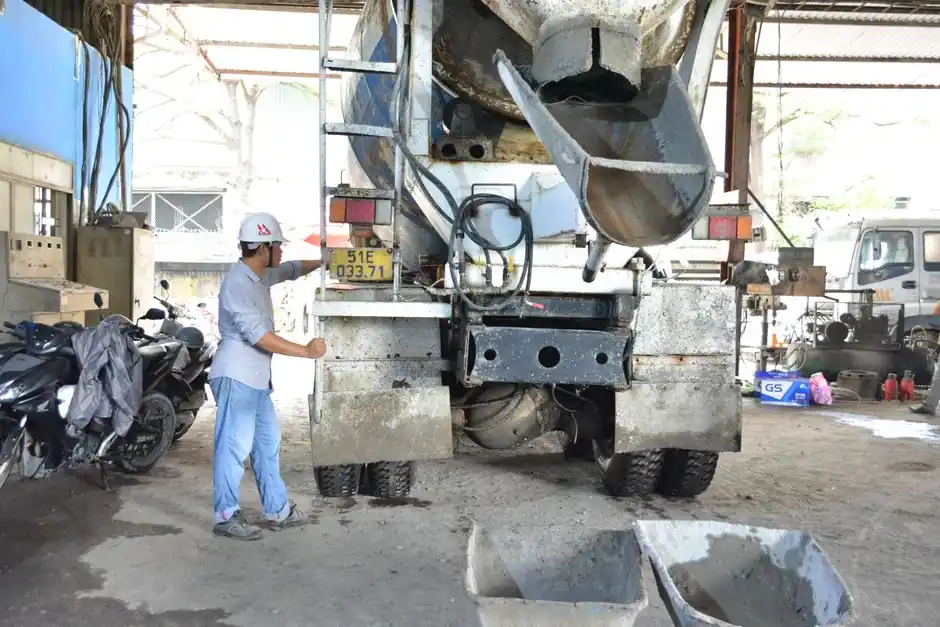
On a transit mixer the drum always turns through hydraulics: a pump feeds a hydraulic motor at the drum head, geared down to the 1-3 RPM the mix needs in transit [S2]. What changes between machines is which engine turns that pump, and that single decision drives fuel burn, payload, service intervals, and what happens to a loaded drum when the truck dies [S1].
The two practical options are a power take-off (PTO or REPTO) from the truck's own diesel, or a small auxiliary engine bolted to the mixer unit itself, typically rated 52-109 HP (39-81 kW) on Indian-built machines [S1]. A PTO drum drive shows up on factory builds such as the Universal 6 m³ unit, the Conmat MR 80C, and AJAX's 10 m³ AF 10XP truck-PTO configuration [S1].
How each drive actually powers the drum
A PTO (power take-off) is a gear-driven output on the transmission that lets one engine run two loads, in this case the wheels and the mixer pump. US patent US20080198686A1 describes exactly this layout: "The PTO drive gear is engine driven and provides direct engine power at a PTO port located at the side of the transmission" [S3]. On most North American small-load (2-5 yd³) mixers the same idea was historically done through a flywheel PTO, which the patent notes "has some disadvantages for smaller or medium-sized commercial trucks which are not specifically manufactured to carry concrete drums" [S3].
An auxiliary (slave) engine drive skips the transmission entirely. A small diesel of roughly 39-81 kW sits on the mixer subframe, drives its own hydraulic pump through a belt or gearbox, and runs independently of whether the truck is moving, idling, or shut off [S1][S2]. The "controller showing the speed dial" at the back of the truck commands this pump whether it is fed by PTO or by a separate engine [S2].
REPTO: the third path most buyers miss
REPTO (rear engine power take-off) takes the drum's hydraulic pump drive off the back of the engine rather than off the gearbox [S1]. The drum's power path therefore does not run through the transmission, which means mixing speed stays steady while the truck is stopped at a gate or crawling in traffic, without the drum speed following whatever ratio the gearbox is in [S1].
REPTO machines are sold as complete trucks with a factory-built mixer platform. The Tata Signa 2830.K 8 Cum REPTO RMC is one example listed as a 28,000 kg GVW ready-mix concrete configuration with the REPTO drive built in for both mixing and auxiliary systems [S1]. For fleet specifiers comparing truck-mounted concrete pump and mixer platforms, the REPTO option is the one that decouples drum speed from transmission state.
Failure modes: what happens when the truck dies loaded
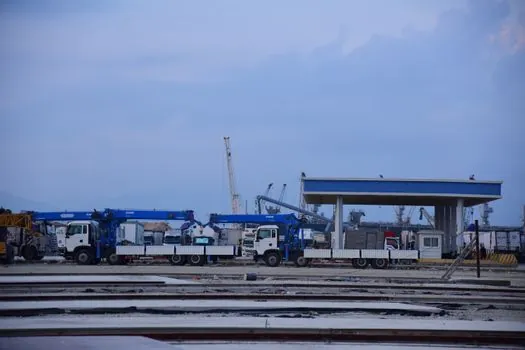
If a PTO-driven truck breaks down with a full load and the engine cannot restart, the drum stops. Concrete begins to set in a warm drum, and there is no on-engine hydraulic flow to spin it [S1]. Fleet practice, documented on driver forums, is to call a second mixer, disconnect the hydraulic lines from the dead truck's drum motor, and re-hose them to a live truck's hydraulics so the dead drum can be emptied before the mix goes off [S4].
An auxiliary engine drive largely removes that single point of failure: a dead truck engine does not stop the drum, because the mixer carries its own power plant [S1][S4]. The same forum thread recalls that "back in the days of mixers with 'pony engines' to drive the barrel, it must have been near impossible to empty a disabled mixer before the concrete 'went off'," referring instead to early mechanical-PTO chain drives where the only recovery was a pipe wrench on the driveshaft and a jacked-up trap door [S4]. Compared with a dump truck that just tips, a stopped drum is a load-loss event, which is the core reason fleet buyers weigh the two drive types.
Operating cost, weight, and service trade-offs
A PTO or REPTO drive leaves only one engine on the vehicle: one fuel tank to fill, one air filter, one oil change, one set of belts, and a hydraulic pump plus pipework as the only added hardware on the chassis [S1]. The mixer unit itself stays lighter, which means higher payload on the same GVW plate.
An auxiliary engine drive carries a second diesel of roughly 39-81 kW, a second radiator, a second fuel feed, a second set of service items, and several hundred kilograms of additional weight that comes straight off payload [S1]. Operators pay for that weight twice: once at the weighbridge and again in the maintenance schedule, with every engine hour adding a service interval that a single-engine truck does not have. A similar trade-off logic shows up in stationary plant decisions such as the skid steer vs compact wheel loader for tight yards: 2026 spec decision, where an extra on-board power unit is weighed against machine size and utilization.
Selection criteria by use case
For high-utilization urban and highway ready-mix fleets running predictable routes with reliable trucks, PTO or REPTO is the standard fit: lower tare weight, simpler maintenance, single fuel source, and the hydraulic cross-connect recovery method is well understood by drivers [S1][S4]. A REPTO unit is the right pick when the truck spends long periods idling or low-speed crawling and the drum must hold a steady mixing speed independent of transmission state [S1].
An auxiliary engine drive earns its keep on machines that face harsh on-site conditions, very long discharge cycles, remote pours, or operations where the truck is routinely stopped with the engine off but the drum must keep turning. The extra weight and service cost are a deliberate insurance policy against load loss [S1]. For plants that also run a concrete pump truck on the same site, matching the drum-drive philosophy (PTO simplicity vs auxiliary independence) across the fleet simplifies driver training and spares.
Maintenance and inspection pointers
On PTO and REPTO units the published maintenance checklist centres on the driveline: inspect the PTO engagement, the hydraulic pump coupling, the hydraulic hoses from pump to drum motor, and the gearbox reduction at the drum head, then disconnect batteries before any electrical work on the cab controller [S6]. Chain-driven legacy PTO set-ups on older mixers need regular chain lube and sprocket inspection, because the small driven sprocket wears against the large drum sprocket under continuous load [S5].
On auxiliary-engine units, the second power plant needs its own hourly service interval, its own coolant circuit, and its own fuel-water separator, all of which sit outside the truck's standard PMI schedule [S1]. Two practical signals to track on either platform: hydraulic oil temperature at the drum motor return (a creeping trend usually points to a worn motor or a partially blocked cooler), and drum-speed deviation at the back-of-cab controller versus nameplate 1-3 RPM in transit, which flags pump wear before the mix quality drops [S2][S6].
Buyers comparing the two drives should spec the decision by three numbers: expected loaded wait time at site, annual payload-sensitive kilometres, and tolerance for a single engine's downtime. Match those against the auxiliary engine's 39-81 kW continuous rating, the PTO unit's tare advantage, and the fleet's existing hydraulic cross-connect kit, and the choice between a single-engine PTO/REPTO chassis and a two-engine auxiliary drive comes down to which failure mode costs more per year on that specific route.