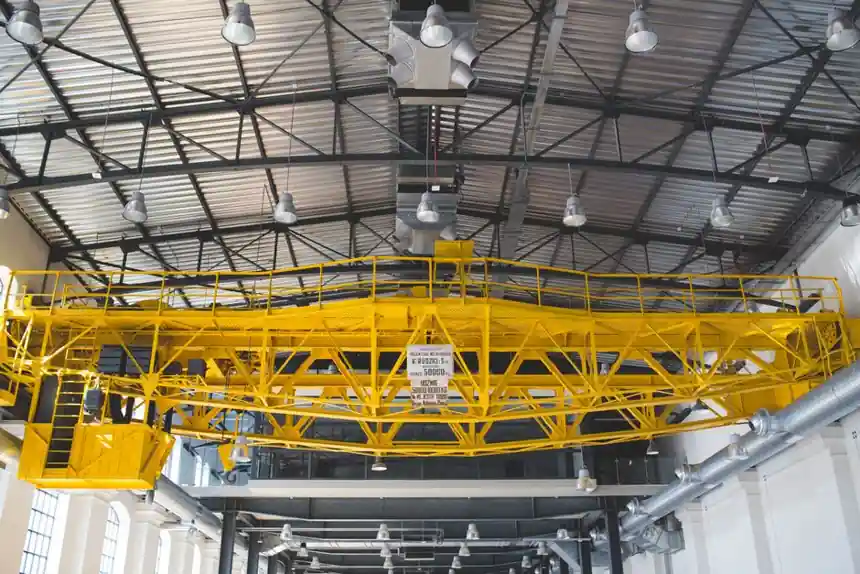
A PVC resin manufacturing facility in 2026 is typically scoped between 100,000 and 200,000 metric tons per year, balancing economies of scale against feedstock and VCM supply variability [S2].
Vinyl chloride monomer is polymerized into a white PVC powder, then compounded with stabilizers, plasticizers, and colorants before downstream lines extrude pipe, sheet, or profile [S1][S4]. The global PVC resin market was valued at USD 74.93 Billion in 2025 and is projected to reach USD 111.35 Billion by 2034 at a 4.5% CAGR [S2].
Three polymerization routes, one compounding chain
Suspension, emulsion, and bulk polymerization are the three industrial routes to PVC resin, each producing a different particle morphology and K-value distribution [S5]. Suspension-grade PVC dominates rigid pipe and profile feedstock because of its high bulk density, narrow particle size, and low plasticizer absorption [S1].
Emulsion-grade resin is used in plastisols, coatings, and flexible calendered sheet where fine particle size and high plasticizer uptake matter [S5]. Bulk polymerization, though less common, yields a very pure resin with low residual VCM and is typically reserved for specialty grades [S5]. The choice of route is set at the front end of the line and cannot be re-blended downstream without re-compounding.
Capacity sizing and unit-operation sequence
Reference plant layouts sequence VCM polymerization, stripping and degassing, drying, blending, quality inspection, and packaging as the core unit operations [S2]. Annual capacity is sized in the 100,000-200,000 MT band to keep CapEx per ton and steam-reboiler duty within typical utility envelopes [S2].
Heat-integrated dryer steam consumption is one of the largest OpEx line items, so most new layouts co-locate a VCM recovery column and a heat-recovery loop on the dryer vent. For an engineer selecting a site, the critical inputs are VCM logistics, chlorine supply, and the ability to handle HCl off-gas from the EDC cracker. A process-engineering synthetic resin reference is useful for sanity-checking mass-balance closure around the dryer.
Pipe line layout: extruder, calibration, haul-off, cut
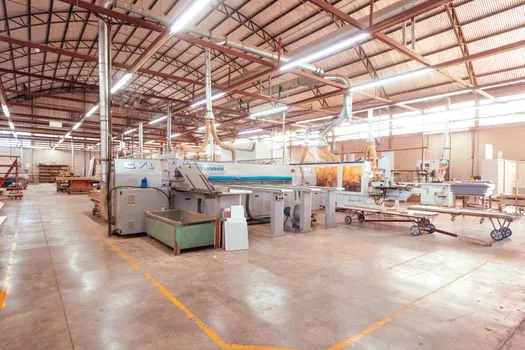
A standard PVC pipe production line is built around eight stations: high-speed mixer, screw loader, SJSZ series conical twin-screw extruder, die/mould, vacuum calibration tank, haul-off, cutter, and stacker [S3]. The conical twin-screw geometry is preferred over parallel screws for PVC because of the short residence time and stable melt at 160-200°C, which limits thermal degradation of HCl.
Vacuum calibration tank length and vacuum setpoint determine final OD tolerance on pressure-rated pipe (typically PN 10, PN 16, PN 20 per ISO 1452 for water-supply applications). The haul-off belt speed and cutter synchronization set the cut-length accuracy, normally within ±2 mm on standard 6 m sticks. For a deeper look at the downstream conversion, the PVC-U pipe encyclopedia entry covers pressure-rating classes and joint systems.
Sheet line: feeding, calender, cooling, cut
PVC sheet production runs raw resin and additives through a high-speed hot mixer, a cooler, a single- or twin-screw extruder, a T-die, calender rollers, cooling/branding units, and an inline cutter [S4]. The PVC sheet market is projected to reach USD 39.90 Billion by 2034, with rigid sheet consuming the largest share of suspension-grade resin [S4].
Process control focuses on three variables: melt temperature at the T-die (typically 175-195°C for rigid, lower for flexible/plasticized), calender roll gap (sets final thickness tolerance, often ±0.05 mm on 1-3 mm sheet), and take-up speed (sets MD/TD orientation and shrinkage). Stabilizer package selection is the single largest lever for both impact retention and color hold after long-term UV exposure.
Decision map: choosing between pipe, sheet, and profile
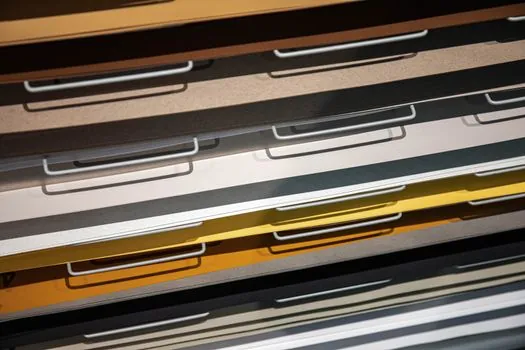
Selection boils down to four criteria: end-product form factor, polymer grade, line capex, and tool/complexity cost. [S2]
Pipe lines favor SJSZ conical twin-screw extruders with vacuum calibration, suited to rigid suspension-grade resin at high throughput (200-800 kg/h typical) [S3]. Sheet lines favor a single-screw or parallel twin-screw extruder with a T-die and calender stack, suited to either rigid or plasticized formulations [S4]. Profile lines (window frames, cable trunking) use the same SJSZ platform as pipe but with a different die and downstream sizing sleeve, sharing upstream feeding and mixing equipment. The molding line encyclopedia entry is a useful cross-reference for how compounding upstream drives the choice of downstream conversion technology.
Selection checklist for new plant builds
For engineers specifying a new build, the first gating decision is the VCM supply contract and HCl off-gas treatment route; without those locked in, the reactor train and utility balance cannot be finalized. Watch items: regional chlorine and ethylene supply, EDC/VCM import duty exposure, and demand from construction pipe versus flexible cable-grade resin.
Background reading: Industrial 5G Module Landscape 2026: Five Vendors, 5.60% CAGR, and a Private-Network Pivot.