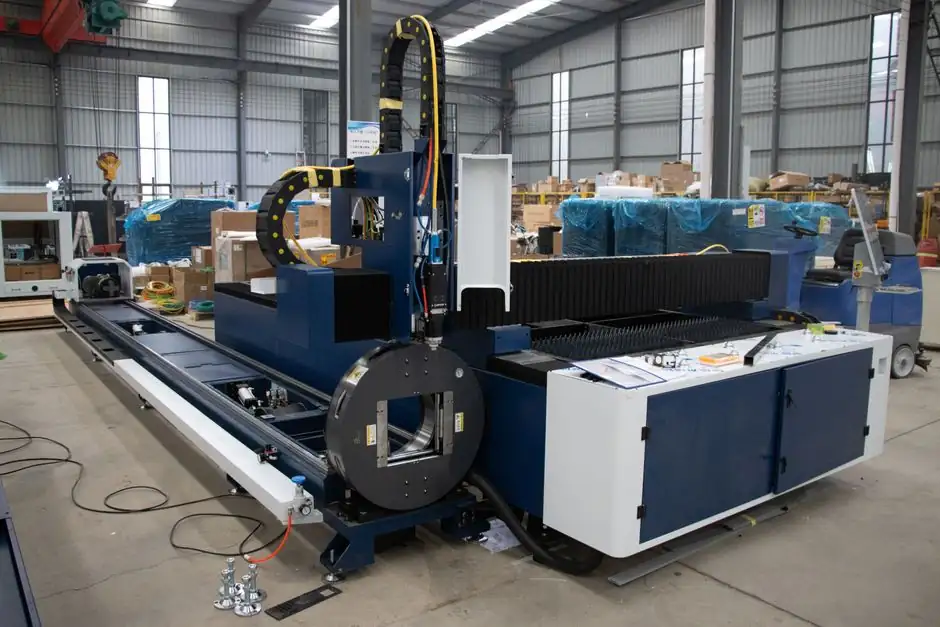
Kontron began series production of automotive network-access devices and M.2 industrial 5G modules in Düsseldorf on 2026-07-15, with module design owned by its Berlin development team and around 120 staff on a 3,700 m² production floor plus 2,000 m² of warehousing [S1].
The Düsseldorf facility is targeting roughly 15 million PCB assemblies and more than 1 million electronic control units during 2026, with FRMCS rail modules named as a forward product line alongside industrial IoT, energy, and medical connectivity [S1].
Process Architecture: From Berlin Design to Düsseldorf Volume
Industrial 5G module production is not a single SMT line; it is a chain of soldering, RF shielding, calibration, firmware loading, and end-of-line test steps, each of which gates the next [S1]. The Berlin site owns schematic, layout, RF, and certification work, while the Düsseldorf line inherits the automated placement, AOI, X-ray, and ICT already qualified for Kontron's other ECUs [S1].
Engineers moving a radio design from engineering samples to volume have to control impedance on M.2 edge fingers, thermal pad stack-ups, antenna matching networks, and shield-can coverage, since any of these will desensitize the modem or fail carrier conformance [S1]. A standard M.2 form factor helps the assembly side: pick-and-place recipes, stencil apertures, and reflow profiles already exist for the connector and keying, which is the same reason 5G modules are now used inside edge gateways and routers on the factory floor [S1].
RF and Networking Specs the Line Must Support
The ComIn I5100 5G industrial router exposes 5G SA/NSA dual-mode, 2.4 Gbps downlink peak in SA, 4G/3G fallback, and dual Nano SIM with automatic carrier failover for line-side uptime [S3]. On the same hardware class, the InHand IR624 aggregates PLC, robot, and inspection data and uplinks over 5G, with Ethernet and serial ports for legacy brownfield kit [S4].
Firecell's reference architecture for industrial 5G specifies uplink 4–8 Mb/s per HD camera, round-trip latency below 20 ms with jitter under 5 ms, handover below 50 ms for mobile robots, and device scale of 100 to 1,000 SIMs per hall, with 1–2 indoor radios covering 3,000–6,000 m² [S2]. The MovingComm I5100 reports stable end-to-end 5G LAN latency of 10–16 ms, supporting PROFINET and EtherCAT plug-and-play without IP reconfiguration [S3].
Selection Criteria: SA vs NSA, LAN, and Router Class
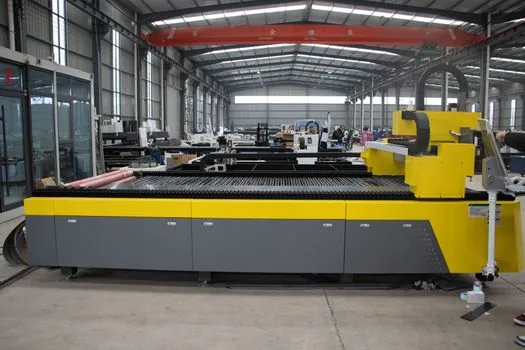
Buyers picking hardware for a 5G-enabled production line should compare on five axes: SA vs NSA support, 5G LAN presence (3GPP Release 16 Layer-2 group), dual-SIM failover, Wi-Fi 6 endpoint offload, and industrial temperature range. On those axes, the I5100 offers SA + NSA + 5G LAN + dual SIM + Wi-Fi 6 in one box, while the IR624 is positioned as a site aggregation node rather than a LAN group switch [S3][S4].
For an molding line or any line that re-tasks weekly, 5G LAN matters more than peak throughput, because it lets PLCs and EtherCAT nodes behave as one Layer-2 domain and removes the two-to-three-day rewire window that workshop managers report under fixed cabling [S3]. One auto-parts supplier cited in the MovingComm brief cut line changeover from three days to eight hours by moving newly deployed robots onto the existing 5G LAN group rather than re-pulling cables [S3].
Latency, TSN, and Control-Loop Reality
Vendor material on 5G industrial routers quotes end-to-end latency inside 1 ms using URLLC, versus over 50 ms on 4G, and cites an SMT placement line where material-change time dropped from 12 s to 3 s after the 5G cutover, a 300% efficiency gain in that case [S5]. The same source describes IEEE 802.1AS time-sync, TSN support, and multi-sensor fusion error falling from ±5 mm to ±0.2 mm on a wind-turbine blade inspection robot [S5].
These numbers are vendor-anchored, not independently audited, so they should be treated as design targets, not field guarantees. Realistic control-loop planning still budgets 10–20 ms one-way air-interface latency, 5 ms jitter, and a hard upper bound on handover interruption of 50 ms if AGVs and cobots are to keep state machines coherent across cells [S2][S3].
Hardware Hardening and EMC Envelope
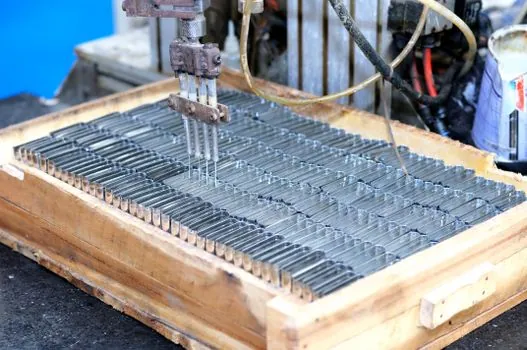
Industrial 5G routers in this class are typically specced to −40 °C to +85 °C operating range, 9–58 V DC input, IEC 61000-4-6 EMC compliance across 150 kHz–80 MHz for inverter and welder environments, and conformal coating or sealed metal housings for shop-floor dust [S5]. The Kontron Düsseldorf line, by contrast, is the upstream build site for the module itself, so its process control is more about solder joint reliability, RF shielding, and end-of-line calibration than about field hardening [S1].
Module-level thermal design still matters at the point of use: a 5G M.2 card dissipating 4–6 W in a sealed gateway will throttle unless the host board provides a thermal pad path to a metal chassis, and the base-station assembly line must keep that thermal interface in spec across every SKU it ships [S1].
Standards Anchor: 5G LAN and FRMCS
5G LAN is defined in 3GPP Release 16 and lets devices in different physical sites behave as one Layer-2 group without core-network routing, which is why it fits PROFINET and EtherCAT without IP reconfiguration [S3]. On the rail side, FRMCS is the 5G-based successor to GSM-R, intended to carry operational voice, ETCS train control, and data services across European networks, with module lifecycles that have to span far longer than commercial cellular generations [S1].
Production lines that have to ride a 5G-to-FRMCS transition should plan for long-term firmware maintenance, certificate management, and configuration control, since cellular modules in rail and energy assets stay in service for 10–20 years even as the radio access network evolves around them [S1].
Who This Is For, and Where It Breaks
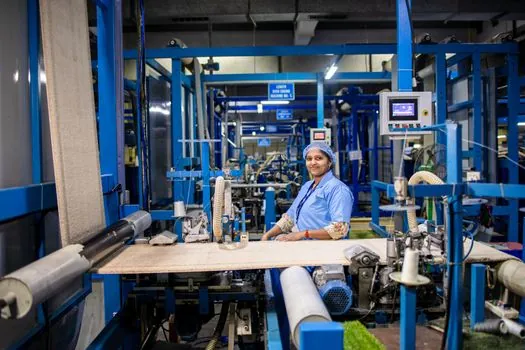
A purpose-built 5G industrial module line is the right answer for OEM-scale builders shipping automotive TCUs, industrial gateways, FRMCS onboard units, and certified critical-infrastructure modems, where Kontron's 15 million PCB / 1 million ECU scale is the relevant benchmark [S1]. It is the wrong answer for an end user wiring up a single plant, who should buy industrial 5G routers and edge gateways off the shelf, not stand up a Düsseldorf-class SMT line.
Watch points over the next two quarters: Kontron's reported 2026 throughput versus plan, the first carrier-certified FRMCS module on the Düsseldorf line, and any published 5G LAN field data that moves the cited 10–16 ms latency figure out of vendor labs and into multi-vendor plant audits [S1][S3]. Procurement teams sizing harmonics, filters, and EMC for the line should also revisit the harmonic filter decision map, since 5G routers and edge gateways still ride the same DC bus as the VFDs they monitor.