
Epoxy resin procurement from Chinese manufacturers in 2026 hinges on three gates: matching grade to application (E-44 liquid BPA-epoxy, E-12 solid, n-epoxy novolac, or finished FRP tubing), insisting on TDS and COA documentation tied to CAS and epoxy equivalent, and verifying the supplier channel fits the order size from 1 kg sample to container load.
The mid-2026 public supplier pool spans generalist B2B platforms (Made-in-China.com, Alibaba.com), chemical directories (ChemicalBook, ChemNet) carrying CAS 38891-59-7, 25068-38-6 and 61788-97-4 entries, and dedicated compounders such as Epolab (established 1975) covering electronic, electric, composite, coating, adhesive, and thermal-interface lines [S5][S9]. Buyers who treat the grade selection and documentation discipline as inseparable will cut qualification cycles dramatically compared to those who chase the lowest headline price.
Grade and Spec Snapshot: E-44, E-12, n-Epoxy, Cured FRP
E-44 is the workhorse liquid BPA-epoxy grade, and ChemicalBook's 2026 "E-44 Epoxy Resin Manufacturers" entry tags manufacturer profiles under that label rather than as a separate product code, with viscosity typically 900-12,000 mPa·s and density 1.1-1.4 g/cm³ per Sinochem Nanjing's published spec sheet [S5][S7]. E-12 solid epoxy resin shows up on ChemicalBook's 2026 supplier page with two member companies offering 99% purity in 25 kg / 5 kg / 1 kg and 500 g packs, with epoxy equivalent typically in the 700-900 g/eq range for solid grades in this class [S5].
n-Epoxy (Novolac-type multifunctional) intermediates, the upstream feed for high-temperature-cure laminates and electronic encapsulants, are listed on ChemNet 2026 by Zibo Saibo Import & Export Co. in Zhangdian District, Zibo (zip 255000), with directory metadata surfacing CAS, EINECS, and molecular-formula data [S5]. Finished cured-matrix artifacts, pultruded epoxy-fiberglass round tubes from Hebei Yingnai Environmental Protection Technology, list at US$100.00 per meter MOQ on Made-in-China.com 2026, sharing resin chemistry with the synthetic resin matrix family used as binder in foundry resin-sand molds and as matrix in cured-in-place piping [S5]. Glass transition temperature spans 50-180°C across the published Sinochem spec, tensile strength reaches 30-90 MPa, and the cured system conforms to ASTM D638 for tensile-property testing, with typical 2:1 or 1:1 resin:hardener mix ratios and 24-72 hour room-temperature cure [S7].
Platform Tier and Supplier Channel Differences
Made-in-China.com's 2026 Epoxy Resin entry shows Diamond Member and Audited Supplier badges separating factory-trading hybrids from audited factories, with related cross-sell anchors like "Casting Resin," "Epoxy Glue," and "Polyester Powder Coating" appearing on category pages, and a representative sample-stage listing from Qinmu Biotechnology (Jinan) at 1 kg MOQ and US$2.00-2.80/kg [S5]. Alibaba.com's 2026 listings skew toward craft-grade 3:1 epoxy+resin kits targeting DIY and resin-art buyers with US shipping as the default filter, useful for small-batch craft but not representative of industrial procurement volumes [S5].
ChemNet functions as a chemical-focused directory where supplier entries surface CAS, EINECS, and molecular-formula metadata rather than live SKU pricing, while Epolab's site positions itself as a custom-formulation compounder with 50 years of operating history and an explicit product split across Epoxy Compounds for Electronic, Electric, Composite, Coating applications, plus Epoxy Adhesive/Sealants and Thermal Interface Materials [S5]. A 2026-09-02 ChemicalBook product page for EP (epoxy resin) CAS 38891-59-7 from Wuhan Biet Co., Ltd. (Hanyang District, Wuhan, Hubei, since 2010-07-28) lists 99.9% purity, 1 kg MOQ, 100-ton supply ability, and US$470.00/200 kg, a useful reference point on the high-purity, low-MOQ end of the spectrum [S1].
Spec Gates B2B Buyers Should Enforce
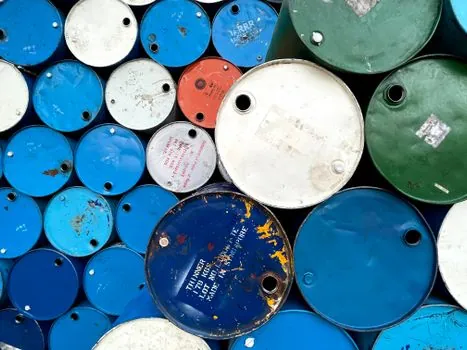
Procurement managers should treat the technical data sheet and certificate of analysis as non-negotiable: for Bisphenol A Diglycidyl Ether Resin (CAS 25068-38-6), critical specifications include epoxy equivalent weight, viscosity range, hydrolysable chlorine content, and volatility, and these parameters must match the target application whether that is high-strength adhesives, solventless paints, self-leveling coatings, insulation materials, or anti-corrosion treatments [S3]. For Epoxy Resin CAS 61788-97-4 used in coatings, adhesives, and composite materials, viscosity, density, and purity are the gating parameters, and high purity plus consistent viscosity are non-negotiable for advanced coatings and demanding adhesive applications [S4].
UV-curing formulations require specialized grades, so the buyer must confirm the supplier actually carries a UV-curable variant rather than assuming all epoxies are thermally cured [S4]. For buyers moving into high-temperature laminates or electronic encapsulants, the PEEK high-performance thermoplastic is often spec'd alongside novolac epoxy as a comparator material in the same laminate stack, and the n-epoxy Novolac route is the one that delivers the higher crosslink density required for >180°C service. The published Epoxy Resin Procurement Strategy: Spec Gates, Grade Map, and Sourcing Workflow walks the same gate logic step-by-step, complementing the platform-tier decisions in this guide.
Waterborne Epoxy: A Separate Sub-Channel
Waterborne epoxy resin sits in a distinct sub-channel where product quality and consistency hinge on precise manufacturing and quality control, and reputable China manufacturers will have ISO 9001-certified quality management systems, supply detailed technical data sheets covering solid content, viscosity, epoxy value, pH, particle size, and stability, and provide samples for in-house testing before large orders [S2]. Application fit drives the grade split: anticorrosive coatings, floor finishes, adhesives, and composites each pull a different formulation, and a knowledgeable supplier will guide the buyer to the correct resin or offer custom formulation when standard products do not fit [S2].
Commercial terms on waterborne epoxy require a clear quotation that bundles unit price, packaging, inland freight, and export documentation fees, with payment terms (L/C, T/T) and MOQ clarified upfront, and a responsive supplier will surface those details without prompting [S2]. For the broader matrix context, the synthetic resin encyclopedia entry maps how waterborne epoxy sits relative to solvent-borne BPA-epoxy and phenolic systems, and the POM acetal engineering plastic page documents the comparator thermoplastic used in adjacent precision-parts applications where epoxy adhesives bond metal inserts.
Commercial Terms: MOQ, Pricing, and Logistics
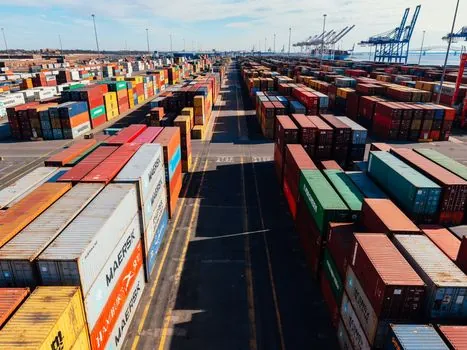
Made-in-China.com's 2026 Epoxy Resin entries show craft-grade resin price bands of US$2.00-2.80 per kilogram, with industrial pipe and tube SKUs running from US$2.00-50.00 per 100 pieces to US$100.00-670.00 per piece on FRP pipe and tube SKUs, a spread that reflects grade and curing format rather than negotiated discount [S5]. Wuhan Biet's CAS 38891-59-7 high-purity (99.9%) offering prices at US$470.00/200 kg, equivalent to roughly US$2.35/kg, with 1 kg MOQ and 100-ton supply ability, so a buyer paying for purity is paying a modest premium over craft-grade rather than a punitive one [S1].
Industrial-procurement pricing on full container loads sits well below the published per-kilogram sample rates, and the audit badge on Made-in-China.com confirms business-license and on-site audit but is not a substitute for an independent epoxy-equivalent and viscosity verification on the inbound lot [S5]. Liaoning Siyou New Material Co., Ltd.'s 2026 wholesale guide, published 2026-08-29, lists 2026 industry data on bulk epoxy resin pricing and supplier vetting practices useful as a second-source benchmark for cost-down negotiations [S6]. For buyers who need to compare epoxy-resin procurement to a different specialty-chemical sourcing project, the Carbon Fiber Procurement Strategy: 2026 Spec, Price, and Supplier Map applies the same platform-tier logic to a related composite-input supply chain.
Application Fit and Decision Matrix
For procurement decisions, the grade-to-application matrix is concrete: E-44 liquid BPA-epoxy fits solventless paints, self-leveling floor coatings, and general adhesives; E-12 solid grades feed powder coatings and electrical laminates; n-epoxy novolac intermediates deliver high-temperature-cure laminates and electronic encapsulants; cured FRP pipe and tube SKUs serve as finished artifacts in chemical and desalination piping [S3][S5][S7]. Mixing ratio is typically 2:1 or 1:1 resin:hardener, room-temperature cure runs 24-72 hours, glass transition temperature spans 50-180°C, and tensile strength lands 30-90 MPa depending on hardener selection and post-cure, with thermal conductivity around 0.2 W/mK [S7].
Buyers who skip the grade-fit step and order on price alone routinely receive a craft-grade resin for an industrial coating line, a common failure mode in 2026 spot procurement from generalist B2B platforms [S5]. The 2026 Accio top-10 manufacturer comparison reinforces the same gate sequence: align grade to application method (casting, coating, infusion), confirm Tg against maximum operational temperature, lock down pot life/gel time against production planning, and verify mechanical properties including tensile, flexural, impact resistance, and hardness [S10]. For complementary process context, the resin-sand line production entry documents how the same epoxy binder system feeds foundry mold production, which is a downstream application that shares chemistry with the composite-laminate supply chain.
Failure Modes and Risk Controls

The dominant failure modes in 2026 China-sourced epoxy procurement are grade-substitution (receiving E-44 where n-epoxy was specified), viscosity drift between sample and production lot, hydrolysable chlorine exceeding spec for electronic-grade applications, and logistics damage on moisture-sensitive hardener packs [S3][S5]. Mitigations are procedural: lock epoxy equivalent and viscosity ranges in the purchase contract with accepted-variation clauses, request COA per lot rather than per quarter, and require sealed desiccant packaging on hardener shipments during summer transit through the Yangtze and Pearl River delta export hubs [S2][S5].
Buyers running bonded assemblies with metal inserts often spec POM acetal for the plastic part and an epoxy adhesive for the metal-plastic joint, and the synthetic-resin reference documents the wider polymer-family context that a buyer needs when qualifying a new supplier. Independent third-party pre-shipment inspection on the first three lots, with epoxy value titration and viscosity at 25°C, catches the grade-substitution and drift modes that a paper audit cannot [S2][S3].
Trackable signals for the next sourcing cycle: the release of new E-12 solid entries on ChemicalBook (currently two suppliers, 99% purity, 25 kg/5 kg/1 kg/500 g pack options), any update to the Accio top-10 manufacturer ranking as 2026 capacity additions in Shandong and Hebei come online, and Liaoning Siyou's 2026 wholesale pricing guidance as Liaoning Siyou New Material Co., Ltd. publishes follow-on data points after its 2026-08-29 guide [S5][S6][S10].