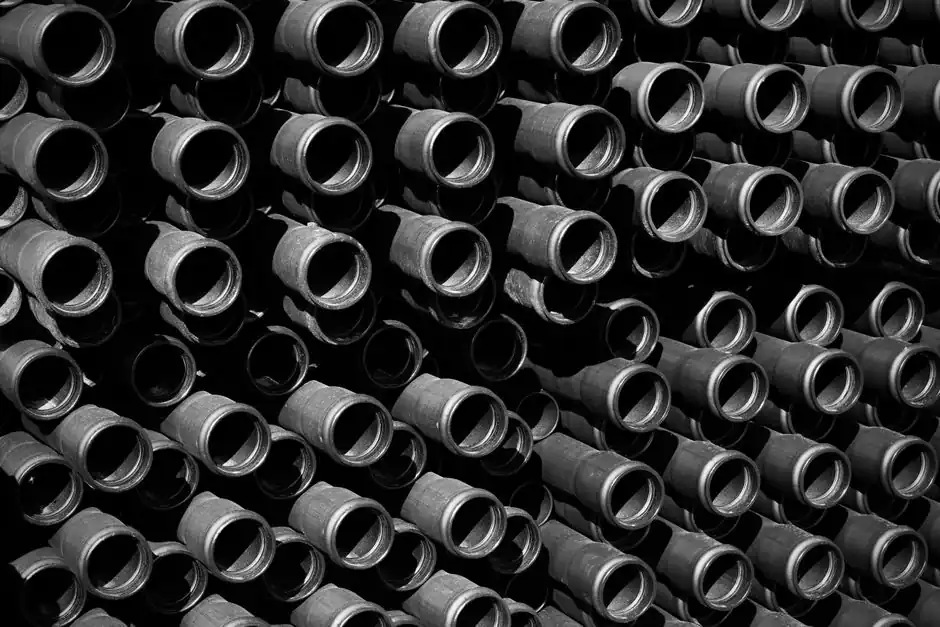
A complete pipe fitting datasheet must declare six core parameters: nominal pipe size, schedule or wall thickness, material grade, end connection type, pressure-temperature rating, and the governing dimensional standard (typically ASME B16.9 for buttweld or ASME B16.5 for flanges) [S2][S6].
Equally important are the service envelope (design code such as ASME B31.3, corrosion allowance, and required NDE) and a flange rating table that maps allowable pressure to operating temperature, because a Class 150 flange rated above 200 psi at 100°F can drop sharply in capacity as temperature rises [S2]. The pipe wall is almost never the weakest link; the flange class, gasket material, or valve body rating usually controls [S2].
Mandatory Header Data: Size, Schedule, Material, End Type
Every fitting datasheet must list the nominal size (NPS or DN), wall thickness expressed as a schedule number (SCH 40, SCH 80, XS, XXS) and the exact material specification. Common carbon-steel references include ASTM A234 for buttweld fittings and ASTM A105 for forged steel, while stainless is typically A403 [S1][S2][S4].
End connections are a separate decision and must be declared explicitly: buttweld (BW), socketweld (SW), threaded (NPT per ASME B1.20.1), flanged (RF, RTJ, FF), or grooved. Buttweld fittings shall have a wall thickness matching the adjoining pipe or the next commercially available heavier wall [S8]. Infrabuild's ASME B36.10 data chart shows that a 6-inch Schedule 40 carbon-steel pipe weighs 28.26 kg/m with a 7.11 mm wall, while the same NPS in Schedule 80 jumps to 42.56 kg/m at 10.97 mm, illustrating how schedule choice ripples into both weight and pressure capacity [S5].
Pressure-Temperature Rating and the Limiting Component
The rating block on a fitting datasheet is not a single number; it is a table that pairs pressure with temperature and identifies the weakest component. A Class 150 flange can exceed 200 psi at 100°F but loses allowable pressure as temperature climbs, which is why the rating is plotted as a curve rather than stated as a flat figure [S2].
Designers should treat the fitting's stamped class as an upper bound and cross-check it against the gasket material (spiral-wound, compressed sheet, RTJ), bolt grade, and the mating valve body. In a process skid, the limit is almost always the flange class or the valve rating, not the pipe wall [S2]. The datasheet should therefore name the pressure class, the temperature range over which the rating applies, and the standard referenced (commonly ASME B16.5 for sizes NPS 1/2 through 24, and ASME B16.47 for larger). For reference, pipe fitting datasheets that omit the temperature derating curve are not safe to specify on thermal service.
Material, Corrosion Allowance, and Chemical Compatibility

Material data on a datasheet must go beyond the generic family (carbon steel, stainless, PTFE-lined) and name the actual grade: for example, A106 Grade B for seamless pipe, A312 TP304/304L or TP316/316L for stainless, or A671 for electric-fusion-welded pipe [S4]. The datasheet should also state the corrosion allowance (commonly 1/16 inch for carbon-steel process piping), the required hardness limits, and any NACE MR0175 statement if the service is sour [S2][S3].
Chemical compatibility deserves its own line item. Pipe materials and accessories must be compatible with the system they serve across pressure, temperature, and the corrosive species present, and the datasheet is the place that compatibility is documented for the inspector [S3]. When the medium is aggressive (chlorides, sour H2S, hot caustic), a generic "CS" entry is not enough; the datasheet should call out the lining, the alloy upgrade, or the test coupons required. Engineers sourcing plastic pipe for chemical service face the same rule, with the datasheet required to cite the ASTM cell-class rating rather than only the generic "PVC" or "PP" name.
Dimensional Standards and End Connection Geometry
Dimensional conformance is what lets a fitting interchange with the pipe and the flange on the other end. The datasheet must name the standard that governs center-to-face, wall thickness, and bore: ASME B16.9 for buttweld fittings, ASME B16.11 for socketweld and threaded, ASME B16.5 for flanges NPS 1/2 to 24, and ASME B16.47 for larger flanges [S2][S4][S6].
For threaded ends, the datasheet should also declare the thread standard (NPT per ASME B1.20.1, BSPP, BSPT) because NPT and BSP will not seal against each other even when the nominal diameter matches [S7]. For socketweld fittings, the bore and socket depth must be stated so the pipe does not bottom out before the gap required for the fillet weld is maintained. Generic "1-inch fitting" labels that lack the dimensional standard are a frequent source of field rework, particularly when components are sourced across regions with different default standards (ASME vs. JIS vs. EN) [S2].
Testing, Examination, and Fabrication Requirements
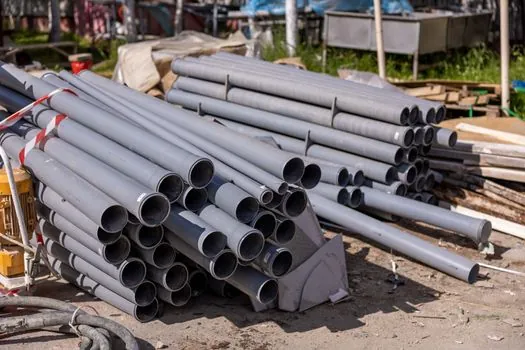
The notes section of a datasheet is where the project-specific rules land: required testing (hydrostatic test pressure and hold time, typically 1.5 times the design pressure for ASME B31.3), examination method (radiography, ultrasonic, magnetic particle, liquid penetrant), weld procedure qualification, and any mandatory stress relief or post-weld heat treatment [S2][S3].
Forged fittings and flanges frequently carry a marking check (heat code, manufacturer mark, standard, material grade) that the datasheet should mirror so receiving inspection can verify identity. When the project is code-stamped (ASME Section I boiler, B31.1, B31.3), the datasheet must also include the certificate type (EN 10204 3.1 or 3.2) and any traceability chain required by the owner [S3]. Cutting these notes from the datasheet to save space is one of the most common reasons a fabricator's submittal is rejected on first review.
Fitting Type Comparison on Selection Criteria
Choosing between the common fitting families comes down to four criteria: pressure-temperature rating, joining method, cost and lead time, and service cleanliness. Buttweld (BW) fittings give the highest rating and are required for ASME B31.3 process piping in sizes NPS 2 and above for most hydrocarbon services; socketweld (SW) is used for small-bore instrument and drain lines where disassembly is not expected; threaded (NPT) fittings are limited to lower pressure classes and non-cyclic service, with a hard ceiling around Class 300 in most plants [S2][S6].
On cost and lead time, threaded malleable-iron fittings are the cheapest and most available, buttweld carbon-steel fittings are mid-range, and stainless or alloy fittings (A403 WP304/316, A234 WP11/WP22) carry both higher cost and longer lead time, particularly in non-standard schedules. For sanitary, clean, or high-purity service, orbital-welded buttweld stainless or cleanroom-packed PE pipe systems out-perform threaded options because there is no thread sealant pocket to trap bacteria or particulates. The datasheet must reflect which family was selected, because the rating and the test regime both change with the joining method.
Common Datasheet Gaps That Trigger Field Rework
Three gaps show up repeatedly on rejected submittals: a missing temperature-derating chart, a material call-out that names a family but not a grade, and a thread or end standard that is left generic. Each of these is fixable at the desk and expensive in the field [S2].
A second cluster of gaps is dimensional: the datasheet states "150# flange" when the project is code-stamped to ASME B16.5, where the correct nomenclature is "Class 150," and "150LB" or "150#" on a threaded fitting is not a guaranteed equivalent [S2]. A third cluster is certification: missing EN 10204 3.1/3.2 certificate type, missing NACE statement for sour service, or missing CE/PED marking for European projects. Closing these gaps before the datasheet is issued typically eliminates the bulk of receiving-inspection rejections.
Tracking Signals Worth Watching
Two signals in the next 12 months will reshape datasheet practice: tighter alignment between datasheet marking rules and the EU Pressure Equipment Directive's conformity assessment, and broader adoption of digital datasheets (MDR/PDS) so that the ASME B16.9 dimensions, material certificates, and test reports are linked rather than re-keyed. Watch for revisions to ASME B16.5 and B16.9 that consolidate pressure-temperature tables, and for owner specifications that start to require datasheet traceability to the heat number rather than to the fitting family. [S3]
Related analysis: Digital Twin for Injection Molding: Process Window Engineering in 2026.