
Around 70 percent of a standard air compressor's total life cycle cost is electricity, and demand for compressed air fluctuates in roughly 88 percent of all installations, which is why a variable speed drive (VSD) is positioned as the largest single TCO lever on motor-driven assets [S3][S5]. A variable speed drive matches motor RPM to actual demand via an inverter, avoiding the unload-cycle waste that fixed-speed machines dump into heat.
The same OEM framing applies to pumps, fans, and blowers: when the asset is motor-driven and the load is variable, the VSD vs fixed-speed decision is fundamentally a TCO question rather than a capex question [S1][S2]. Buyers who evaluate the inverter only on purchase price consistently underestimate the lifetime exposure.
Where the TCO money actually sits
Energy is the dominant line item: industrial electric motors absorb roughly 70 percent of industrial electrical consumption, and compressed-air systems alone can draw up to 20 percent of a plant's electrical capacity, so even a single-digit efficiency gain on a motor driver rewrites the lifetime arithmetic [S3][S4][S7]. Maintenance, downtime, and heat-recovery offsets form the next tier, and only the residual is the initial inverter premium and installation cost [S6][S8].
For a TCO model that mirrors industrial vacuum and compressor practice, the cost stack should be broken into: acquisition (drive + motor + cabinet + cabling), installation (harmonic filtering, line reactors, cooling), energy (kWh × load-weighted specific power), maintenance (bearings, filters, oil, capacitor banks), and end-of-life (recycling, disposal) [S6][S8]. Energy typically dominates 60-80 percent of that stack on continuously running motor loads, so a VSD that trims 20-35 percent of motor kWh usually pays back its premium in 1-3 years on three-shift duty [S1][S3].
When a VSD pays back, and when it does not
A VSD pays back fastest on assets that run above 60-70 percent load for long stretches and below 40-50 percent for the remainder, because the inverter recovers the most energy during the partial-load hours and the fixed-speed unit bleeds the most into blow-off or unloading during those same hours [S1][S5]. Conversely, an asset that runs flat-out near its nameplate 24/7 sees almost no VSD benefit, since the inverter is already commanding maximum speed and the motor itself is the efficiency limit [S2][S8].
Process suitability also matters: variable torque loads (centrifugal pumps, fans, blowers) are ideal because power scales with the cube of speed, so a 20 percent speed cut removes roughly 49 percent of motor power; constant-torque loads (positive displacement compressors, conveyors) see a linear power-vs-speed curve, so the savings are smaller but still material on fluctuating duty [S1][S2]. A spec-first map of drive types, inverter topologies, and matching duty cycles is laid out in Variable Speed Drive Types and Classifications: A 2026 Spec Map.
Side-by-side comparison: fixed-speed, VSD, and VSD+ on TCO

On a criterion-by-criterion basis, fixed-speed machines win on acquisition cost and simplicity, VSD wins on energy and part-load efficiency, and VSD+ (variable speed drive plus permanent-magnet motor, premium efficiency IE5 class) wins on full-load efficiency and heat, at the highest premium [S1][S3][S8].
The table makes the TCO logic explicit: the lower the acquisition tier, the more you spend on energy and heat over a 10-15 year horizon, while the higher the acquisition tier, the more you depend on energy savings to amortize the premium [S3][S6][S8]. For a deeper benefits-versus-limits read, see Variable Speed Drive Advantages, Limits, and Spec Gates.
Cost drivers that move the VSD premium up or down
Four variables move the VSD acquisition price the most: power rating, enclosure class, harmonics package, and communication bus. Below ~7.5 kW, the inverter is a small fraction of the package and TCO flips fast; above 250 kW, the harmonic filter, line reactor, and cabinet cooling start to dominate and the payback stretches unless energy is expensive or load is highly variable [S1][S6][S8].
IP54 or NEMA 4 enclosures for washdown or dust environments, integrated EMC/RFI filters for CE-marked panels, and fieldbus options (PROFINET, EtherNet/IP, Modbus TCP) each add discrete cost tiers but also unlock monitoring that improves the OEE side of TCO [S1][S3]. An engineering note worth repeating: harmonics on shared buses can force site-level mitigation (active filters, transformer re-spec) that is invisible in the drive quote and visible only in the TCO model, so insist on THDi data and a single-line diagram before signing [S6][S8].
Hidden cost tiers: heat, downtime, and disposal
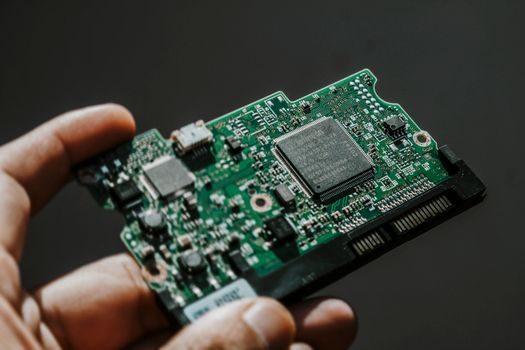
Heat rejection is a TCO line that buyers routinely omit. Every kW the drive saves is a kW the room HVAC no longer has to remove, which is worth roughly 0.3-0.5 kW of cooling per kW of motor input in a typical compressor room, so a 50 kW VSD saving 15 kW can also shrink cooling load by 5-7 kW [S3][S8]. Downtime is the second hidden tier: inverter Mean Time Between Failure in industrial service routinely exceeds 70,000-100,000 hours, but capacitor-bank life of 5-10 years and fan life of 3-5 years should be scheduled, not surprised [S6][S8].
Disposal is a smaller but non-zero line: VFDs contain aluminum electrolytic capacitors, PCBs, and copper that must be handled under WEEE-type rules in the EU and analogous e-waste frameworks elsewhere, so an end-of-life reserve of 1-3 percent of acquisition cost is conservative [S6]. Together, heat, downtime, and disposal typically add 5-15 percent to the lifetime cost stack and are easy to under-account for in a quick TCO [S6][S8].
Standards and qualification gates that affect TCO
Two standardization tracks shape the TCO envelope: efficiency classes for the driven motor, and EMC/harmonics classes for the drive itself. Motor efficiency classes progress from IE3 through IE4 to IE5 (with IE5 including permanent-magnet and synchronous reluctance variants), and each step lowers motor losses by roughly 15-20 percent, which compounds with VSD part-load savings [S1][S3][S8]. Drive-side, EN 61800-9 series covers energy-efficiency classification for power drive systems and is the spec to anchor the inverter's loss data to in any TCO submission [S6][S8].
For hazardous-area sites, the drive must also be matched to the zone classification: ATEX Category 3G (Zone 2) panel-mount VFDs are widely available and do not require a flameproof enclosure, while Zone 1 typically pushes the inverter outside the hazardous boundary with a motor-rated for the zone, which adds cabling and may shift the TCO equation [S1][S6]. Buyers should require a declaration of conformity and efficiency class data on the drive nameplate, not just a vendor brochure, before locking the TCO model [S6][S8].
Building a defensible TCO model in 7 lines

A workable TCO model for a VFD on a motor-driven asset fits on a single page. Inputs: motor kW, annual operating hours, load-weighted average speed, electricity tariff (USD/kWh or local equivalent), acquisition cost, annual maintenance, expected service life, and residual/disposal cost [S3][S6][S8]. Outputs: annual energy cost, annual energy savings vs fixed-speed, simple payback, NPV over service life, and CO2 avoided [S3][S6].
The single most common modeling error is using nameplate kW instead of load-weighted average power, which overstates fixed-speed consumption and inflates the VSD saving. The second most common error is ignoring the part-load efficiency penalty of the inverter itself, which costs 2-5 percent versus direct-on-line at full speed. A 20-35 percent VSD saving versus a fixed-speed baseline, net of inverter losses, is the realistic band the OEM materials consistently support [S1][S3][S5].
Who VSD TCO is for, and who should skip it
VSD TCO discipline pays off for plant engineers specifying pumps, fans, blowers, and compressors on variable duty; for energy managers chasing kWh reduction; and for procurement teams that must defend a 15-40 percent premium to a CFO with numbers, not narrative [S1][S3][S8]. It is overkill for sub-1 kW fractional-horsepower motors where inverter cost dominates, and it is the wrong tool for assets that genuinely run at constant nameplate load for 90 percent+ of operating hours [S2][S6].
The TCO case also weakens on low-tariff sites (below ~USD 0.06/kWh industrial average) and on short-life or throwaway installations, where the energy-savings horizon never covers the inverter premium [S3][S8]. For process engineers evaluating a servo-drive upgrade in parallel, the same TCO logic applies but the duty profile and feedback-resolution premium shift the breakeven arithmetic materially.
Track these two signals before committing the model: (1) a 30-day logged load profile of the existing motor, not a nameplate assumption, since fluctuating demand in roughly 88 percent of compressed-air installations is what makes the VSD case in the first place [S5]; and (2) the drive vendor's declared IE-class loss map and THDi spec sheet, which together convert a brochure claim into a defensible lifetime kWh number [S3][S6][S8].