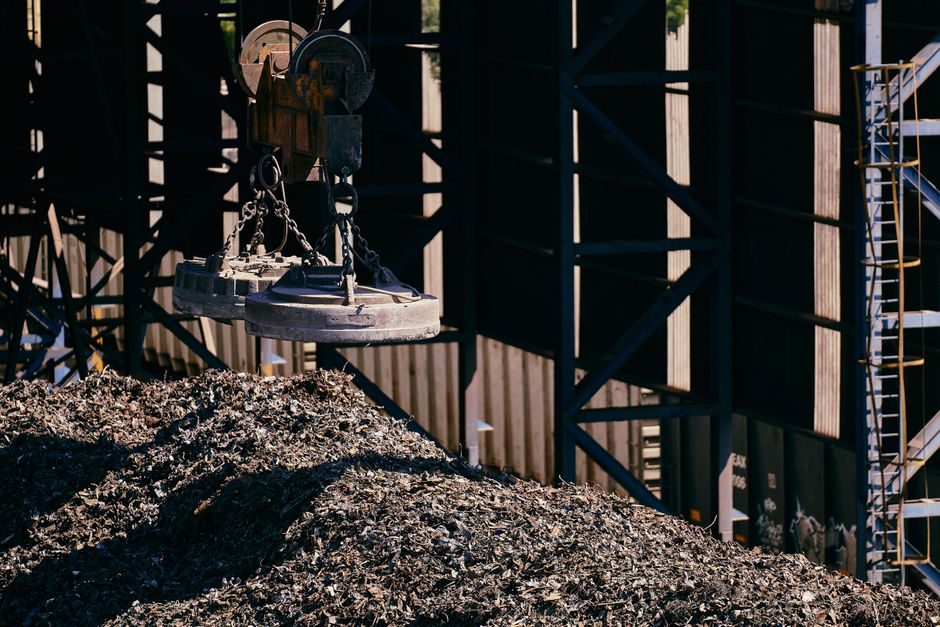
Rare-earth manufacturing equipment is the capital-hardware layer between mined concentrate and finished oxide, metal, or magnet alloy; the Bonnery rare-earth line in Fuyang reports an aggregate output of 10 t/day of high-purity oxides and 600 t/day of polishing powder from one 12,000 m² workshop [S2].
The equipment stack covers solvent-extraction cells, calcination/roasting furnaces, cold isostatic presses, vacuum induction melting, and sinter furnaces; the cold isostatic pressing (CIP) units for yttria-stabilized zirconia powder forming were listed at US $1,980–$2,860 per set on the Hebei Suoyi storefront in April 2026 [S5].
Primary Equipment Classes and Throughput Bands
Four equipment classes dominate a greenfield rare-earth plant: hydrometallurgical separation (cracking + SX mixer-settler trains), oxide finishing (roasting/calcination + jet milling), metal reduction (vacuum induction, calciothermic, or electrolytic cells), and alloy processing (strip casting + hydrogen decrepitation + jet milling + sintering presses) [S2][S3].
Bonnery's 12,000 m² Fuyang workshop runs complete extraction and separation lines plus dedicated oxide, nitrate, metal, and polishing-powder halls, with daily output stated as 10 t/day of rare-earth oxides and 600 t/day of polishing powder [S2]. The Baotou Rare Earth High-tech Industrial Development Zone, in turn, has built out mining-vehicle, wind-power equipment, and rare-earth chain clusters supported by 3 national-level and 54 autonomous-region-level R&D centres (2022) [S3]. For high-precision linear motion inside the sintering-press and strip-caster tooling, suppliers typically reference linear guide and crossed-roller guide duty classes sized to the press tonnage. Plant instrumentation for solvent-extraction pH and flow loops, plus the calciothermic reactor's vacuum and temperature channels, commonly uses HART/4-20 mA pressure transmitters with IEC 60079-series or ATEX 2014/34/EU ratings for the acid-cell galleries.
Selection Criteria: Match the Unit to the Purity Target
The first selection gate is the target purity. 3N (99.9%) oxides for glass polishing can run on single-pass SX and direct calcination; 4N–5N (99.99–99.999%) oxides for NdFeB magnet feed need multi-stage SX, resin-chelation polishing, and clean-room packaging, which is why Bonnery lists separate oxide, nitrate, and metal workshops rather than a single mixed hall [S2].
The second gate is feedstock form. Oxide-route plants need roasting kilns (rotary or pusher), jet mills, and CIP presses; metal-route plants need vacuum induction furnaces, calciothermic reactors, and inert-atmosphere bagging. Hebei Suoyi's offering pairs CIP equipment with downstream ceramic materials (yttria-stabilized zirconia, dental zirconia) at the same storefront, signalling that the same press hardware is used across REE-oxide and ZrO₂ powder forming duty [S5].
The third gate is throughput and capex per tonne. Bonnery's 600 t/day polishing-powder line is capital-light (oxide-feed, mechanical sizing, no reduction step), while a 10 t/day high-purity oxide line is capital-heavy (multi-stage SX, clean-room finishing) [S2]. For a new entrant, polishing powder gives the fastest payback but the lowest margin; for a magnet-chain entrant, NdPr oxide from a 4N SX train is the strategic target.
Comparison: Oxide-Route vs Metal-Route vs Magnet-Alloy Lines
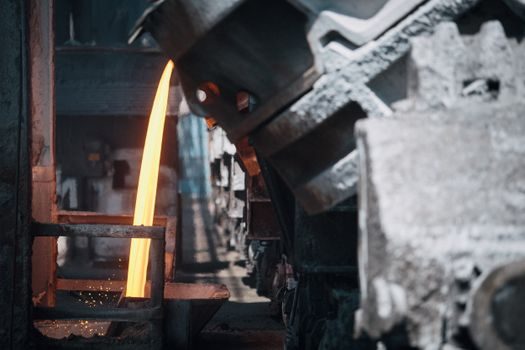
The three main line types line up against four decision criteria: feedstock, purity ceiling, key unit operations, and indicative daily throughput per workshop. Oxide-route lines take mixed REE carbonate or oxide and run SX + calcination; metal-route lines take the separated oxide and run calciothermic or electrolytic reduction; magnet-alloy lines take NdPr metal and run strip casting, hydrogen decrepitation (HD), jet milling, and field-orientation pressing. [S5]
On purity, oxide-route lines routinely reach 4N–5N at the calcination outlet [S2]. On throughput, Bonnery's dedicated oxide workshop clears ~10 t/day of 4N-class oxides, while the polishing-powder workshop clears ~600 t/day at lower purity [S2]. On unit operations, the rare-earth sintered-magnet supply chain (NdFeB) adds strip casting, HD, and sintering furnaces that an oxide-only plant does not need, and Rizinia (Ganzhou) markets the full sintered NdFeB magnet family — arc, block, cone, cube, disc, ring, rod — as the downstream user of that alloy [S4]. On capex per tonne, CIP press units land in the low US$ thousand range per set, while vacuum induction and strip-caster systems are typically an order of magnitude higher [S5].
Who This Equipment Is For — And Who Should Stay Out
Buyers of rare-earth manufacturing equipment are typically (a) integrated miners extending downstream from concentrate, (b) chemical companies entering polishing powder or battery-grade lanthanum, (c) magnet makers securing in-house NdPr oxide, and (d) toll processors running SX separation for third-party feedstock [S2][S3][S4].
Buyers who should stay out include: small toll shops without multi-stage SX capability chasing 5N purity, because the resin-chelation polishing step is non-trivial; entrants wanting to skip straight to sintered NdFeB without owning the upstream NdPr oxide source, since the alloy line is brittle on feedstock quality [S4]; and any party needing a guaranteed REE-separation purity, since multi-stage cascade configuration is what determines the final assay [S2]. For surface-finish tolerance and mill classifier accuracy, plant designers cross-reference the additive manufacturing material page to spec metal-powder feedstocks for the jet-mill output.
Failure Modes and Operating Constraints
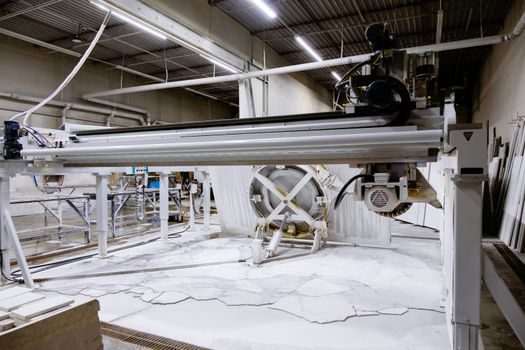
The dominant failure modes on a rare-earth line are acid corrosion in the SX cells, zirconia contamination in calcination, and oxygen/moisture ingress on the metal-finishing side. Bonnery's process specification states that all product indicators "fully comply with the national standards, environmental protection and no pollution," which is a regulatory claim, not a hardware guarantee, so buyers still need to validate tank linings, gasket materials, and off-gas scrubbing [S2].
On the metal side, the calciothermic reduction of Dy or Nd requires sealed reactors and inert-atmosphere transfer; any leak drives oxygen pickup and metal yield loss. On the magnet-alloy side, hydrogen decrepitation must run under controlled H₂ pressure, and the subsequent jet-mill and press steps must keep oxygen below the ~600–1000 ppm ceiling typical for sintered NdFeB. Related capital-equipment categories — for example, the steel rebar supply chain covered in Top Steel Rebar Companies 2026 — share similar induction-furnace and continuous-caster constraints, so the process-control lessons transfer directly to rare-earth metal lines.
Sourcing Map and 2026 Vendor Signals
Three sourcing channels are active as of mid-2026: (1) Chinese oxide/SX specialists such as Bonnery (Fuyang, Anhui), listed with a 10-year operating history and 8-doctor/15-master R&D headcount [S2]; (2) capital-equipment vendors like Hebei Suoyi, offering CIP presses from US $1,980–$2,860 per set on Made-in-China, paired with downstream ceramic and REE powder-forming applications [S5]; and (3) downstream NdFeB magnet integrators such as Rizinia in Ganzhou, which represent the demand pull for NdPr alloy [S4].
Baotou Rare Earth High-tech Industrial Development Zone remains the highest-density Chinese cluster, with national- and regional-level R&D centres explicitly tasked with intelligent-manufacturing upgrades for the rare-earth chain as of 2022, and a 5G + smart-manufacturing overlay that has since been carried into the 2024–2026 expansion round [S3]. Adjacent mechanical-handling demand — including the baler machine supplier band — sits one tier down the value chain and reflects the same capex cycle currently lifting the rare-earth line builders.
The trackable signals over the next 6–12 months are the FOB pricing of NdPr oxide out of Fuyang, the price-per-set trend on the Hebei Suoyi CIP listing, and any 2026 capacity-add announcements from the Baotou zone's three national-level R&D centres; each one moves the equipment-buying math for new entrants. Buyers should also watch the next O-Ring Seal Suppliers 2026 update, since seal and gasket selection in the SX acid loop is a frequent spec-drift item on retrofits of older Chinese rare-earth lines.