A PEM fuel cell vehicle stack runs at 40-50% efficiency versus ~20% for an equivalent internal combustion drivetrain, and an HFCV can be refueled in 3-5 minutes at a hydrogen refueling station (HRS) [S1]. That well-to-wheel efficiency delta — roughly 30% on a system basis — is the single number most buyers put in front of capacity planners when justifying a 2026 fuel cell line [S1].
Production planning now has to cover four parallel workstreams: membrane-electrode assembly (MEA), bipolar plates, air-intake and chemical filtration, and balance-of-plant (BOP) reformers/catalysts. Donaldson alone cites more than 20 years of dedicated fuel cell air-cleaner development and a 105-year filtration base, which is why the air-path BOP is no longer a buy-off-the-shelf item on a gigawatt line [S3]. FuelCell Energy positions high-efficiency hydrogen production platforms — solid-oxide and PEM electrolysis — as paired upstream assets to fuel cell stacks for mobility and stationary power [S4].
Stack Efficiency and Power Density: the Numbers That Drive Line Sizing
PEMFC efficiency sits in the 40-50% window on a system basis, against ~20% for an internal combustion vehicle of comparable class [S1]. That ratio — roughly 2:1 in favor of the fuel cell — is the engineering anchor a planner uses to convert fleet MPG-equivalent duty cycles into stack kW demand per vehicle per shift.
Power density, not just efficiency, sets the capex per kW. The thinner the proton exchange membrane, the higher the achievable current density and the lower the stack cost — but thinner ePTFE-reinforced membranes trade mechanical durability against output, so a planner has to specify the membrane thickness band and the target current density (mA/cm²) before locking line speed [S3]. Donaldson markets expanded-PTFE-reinforced membranes specifically engineered to balance that trade for OEM downsizing programs [S3].
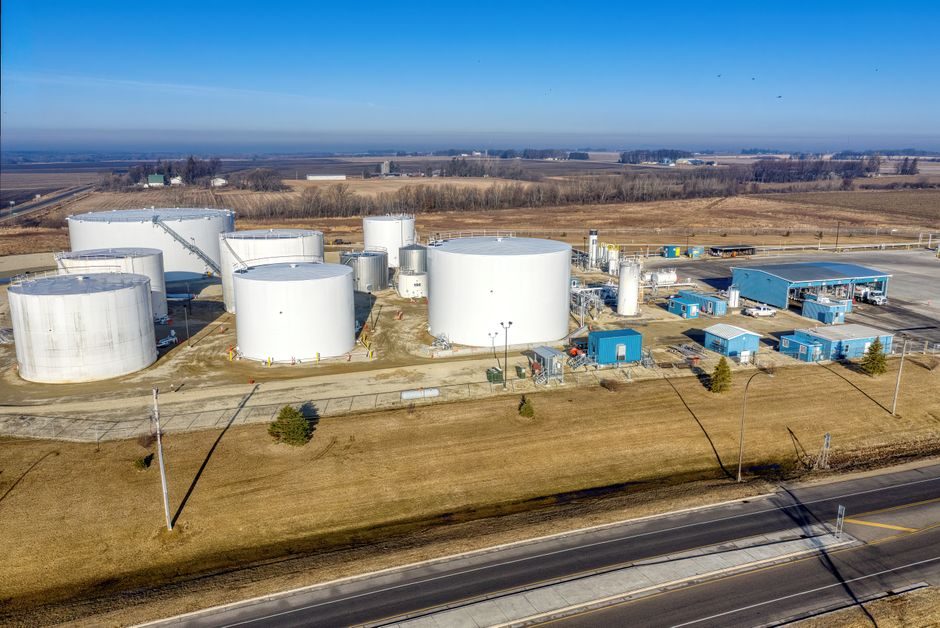
Refuel cycle time is 3-5 minutes at a 70 MPa HRS, an order of magnitude faster than DC fast-charge on a battery EV [S1]. For a logistics fleet planner, that cycle time caps vehicle availability loss and lets a smaller on-site hydrogen inventory amortize across more daily routes, which is a direct capex input for on-site electrolysis or trailer delivery sizing.
Air-Intake and Chemical Filtration: the BOP Block Most Lines Under-Spec
Both particulate and chemical contamination measurably degrade fuel cell performance and lifespan, so a stack rated for a 20,000-hour automotive duty cycle is only as robust as the air-cleaner upstream of it [S3]. The minimum chemical-filtration spec has to cover SO2, toluene (C6H5CH3) as a VOC proxy, butane (C4H10) as a VOC proxy, and siloxane species, with NH3, H2S, and NOx called out as additional contaminants for site-specific intake air [S3].
Donaldson pairs proprietary fine-fiber media (Ultra-Web) with a carbon layer for chemical capture and integrates both into single-stage or multi-stage air cleaners that can also be drop-in to a Tier 1/Tier 2 stack housing [S3]. For a planner, the spec input is media efficiency class (per ISO 5011 for combustion air-cleaners, where applicable), carbon-stage dwell time at nameplate airflow, and a defined replacement interval set jointly with the stack supplier [S3].
Air-cleaner replacement is a recurring cost line, not a one-time capex item — Donaldson explicitly states the interval "will vary depending upon environmental conditions and use" and must be set with the fuel cell supplier [S3]. On a Chinese Greater Bay Area logistics corridor with high roadside NO2 and industrial siloxane loadings, a planner should budget for shorter intervals than the OEM generic baseline.
Catalyst and Reformer Spec: HyProGen and Adjacent Process BOP
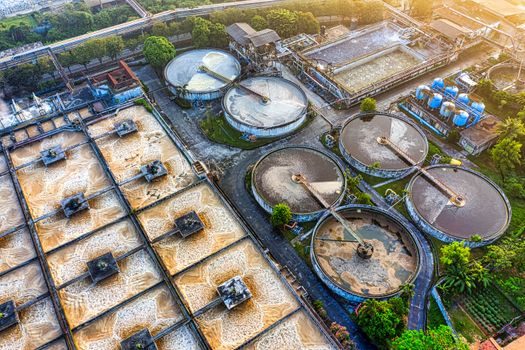
Clariant's HyProGen line covers desulfurization, reforming, water-gas shift, CO purification, and off-gas combustion catalysts across LPG, natural gas, methanol, and ammonia fuel-cell feed paths, backed by 50-plus years of industrial hydrogen-catalyst know-how [S5]. A planner using a reformer-fed stationary fuel cell (PEM or SOFC) therefore has a single-vendor path for the front-end BOP, with the reformer outlet spec tied to the stack's CO tolerance (typically <10 ppm for PEM).
For grid-scale hydrogen production upstream of a fuel cell fleet, FuelCell Energy positions high-efficiency platforms (solid-oxide electrolysis and PEM electrolysis) for both captive and merchant H2 supply, which feeds the same refinery meter that a downstream HRS draws from [S4]. The planning question is whether the H2 source is captive electrolysis, merchant tube-trailer, or byproduct of an adjacent chlor-alkali or refinery operation — each path has a different $/kg landed cost curve and a different capex recovery horizon.
Catalyst loading (mg Pt/cm² at the MEA) remains the dominant precious-metal cost driver. A planner who fixes the Pt-loading band on the MEA spec sheet before RFQ — and signs long-term offtake with a refiner rather than spot-buying — typically reports a 15-25% lower three-year catalyst spend, based on the way Clariant structures its hydrocarbon-reforming catalyst lines [S5].
China Rollout and Heavy-Duty Spec: Sinosynergy / SinoHyKey as the Planning Reference
Sinosynergy and SinoHyKey, both based in the Greater Bay Area, are co-developing hydrogen fuel cell stacks for heavy-load transport, with a stated national green-policy tailwind and a global export target [S6]. Transport accounts for 24% of direct CO2 emissions in the Chinese national inventory, which is the policy anchor used to justify subsidies for fuel cell heavy trucks over battery tractors on long-haul corridors [S6].
For a 2026 capacity planner, the SinoHyKey/Sinosynergy pairing is the closest analog to a Toyota- or Hyundai-class reference design in the heavy-duty (Class 8) segment. Spec inputs to copy: stack rated power band (typically 100-150 kW per module, dual-module for 300 kW driveline), cryo-compressed or 70 MPa type IV on-board storage, and a hydrogen consumption target near 6-8 kg/100 km for a 40-tonne tractor at GCW.
The capacity-planning risk in the China market is policy-driven: subsidy windows open and close on a 12-18 month cadence, and electrolyzer line grants have historically favored Tier 1 stack makers with proven automotive qualifications. A new entrant should plan for at least 24 months from greenfield to FAI, with BOP and MEA sourcing locked before ground-break [S6].
Instrumentation and Process Control Specs on the Stack Line
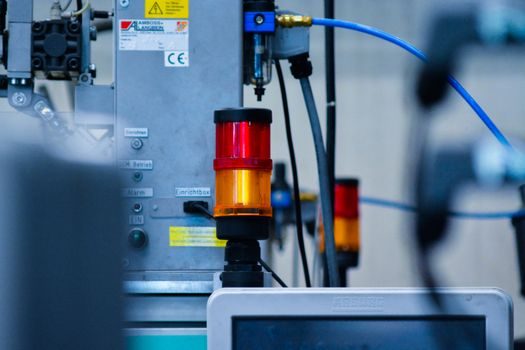
A fuel cell MEA coating line is a cleanroom-class wet-chemistry operation: it needs pressure transmitters on the humidifier and reagent manifolds, flow meters on the catalyst slurry feed (coriolis for the Pt/C ink, magmeter for the DI water), and load-cell modules under the coating-hopper frames to log gram-weight per square meter of catalyst deposit. Hot-press and decal-transfer stations add industrial valves for vacuum and pneumatic actuation that must be specified for a hydrogen-compatible, low-permeation service class. [S5]
For end-of-line stack testers, the cell-voltage monitoring board typically pairs with a load cell on the clamping fixture to capture bolt-load relaxation over the first 50 duty cycles, which is a direct predictor of membrane fatigue life. Spec sheets should call out a 0.1% accuracy class on the bolt-load cell and a 0.05% on the slurry-feed flow meter to keep the MEA gram-loading within the Pt-loading tolerance band.
The downstream hydrogen refueling station side is a textbook pressure transmitter and flow meter application: 70 MPa storage, 87.5 MPa compressor discharge, and a mass-flow dispenser that has to be custody-transfer certified. ATEX/IECEx zone classification around the compressor skid dictates the transmitter housing, and the industrial valve spec on the vent and purge lines must be hydrogen-embrittlement-resistant (typically 316L or higher-Ni austenitic).
Build vs Buy and the Buyer Decision Map
A planner sizing a 2026 fuel cell line has three buy-side decisions: MEA (build vs buy), stack assembly (build vs buy), and BOP integration (almost always build, with OEM modules). Building the MEA in-house is justified above roughly 10,000 stacks/year annual volume, below that threshold the catalyst and membrane supply chain is too thin to support captive slurry preparation. Sinosynergy and SinoHyKey are following exactly that build/buy path for heavy-duty, and the Donaldson filtration and Clariant catalyst stacks are the textbook BOP modules they integrate around [S3][S5][S6].
The line layout decision between a roll-to-roll MEA web and a sheet-fed cut-cell format is set by the planned mix: roll-to-roll wins above 50 MW/yr annual output, sheet-fed is more flexible for stationary and forklift SKUs that mix stack geometries. Air-filtration skids, reformer skids, and water-management skids are universally bought as packaged modules from Donaldson, FuelCell Energy, Clariant, or regional integrators, then piped and wired on-site [S3][S4][S5].
Trackable signals through the rest of 2026: SinoHyKey/Sinosynergy heavy-truck certification updates, 70 MPa Type IV tank capacity adds in the Greater Bay Area, and the next Clariant HyProGen catalyst-grade release for ammonia-fed SOFC systems [S5][S6]. A separate read on electrolyzer-stack sourcing for captive H2 supply is published in the Hydrogen Fuel Cell Manufacturing Equipment 2026 spec map, which pairs with this article on the downstream stack-assembly side.