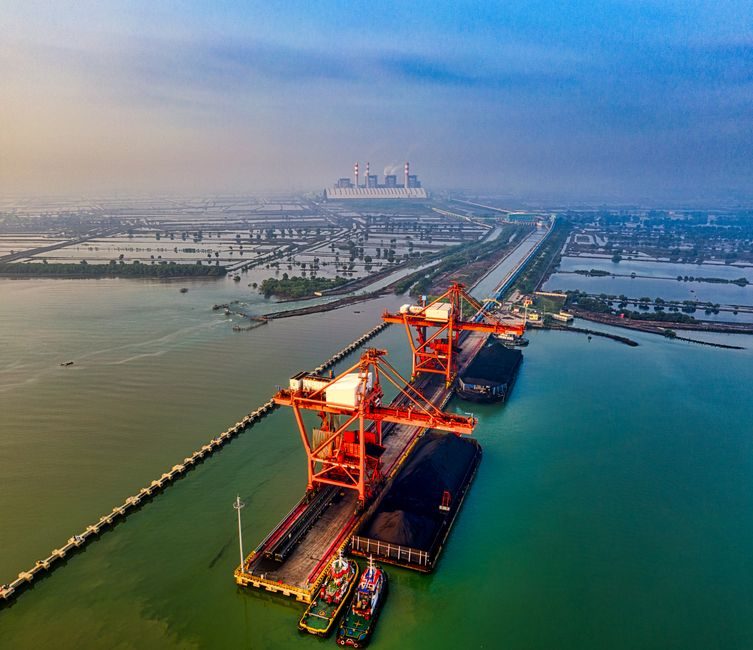
Rare earth oxide separation capacity in 2026 is still concentrated in Chinese facilities, with downstream NdFeB sintered magnet demand from EV traction motors and wind turbine generators pulling hardest on neodymium (Nd) and praseodymium (Pr) volumes [S3][S5].
The chain has three contested nodes: oxide separation, metal/alloy reduction, and sintered magnet production, while end-of-life magnet recycling has moved from pilot scale to commercial feedstock in North America and Europe [S4][S6].
Separation Capacity and Oxide Pricing Signals
China's midstream dominance means a single quarterly export-volume change shifts the global NdPr oxide reference price, and June 2026 reporting tracks NdPr oxide and dysprosium oxide price moves on this single-channel sensitivity [S3].
Heavy rare earths (Dy, Tb) used in high-temperature NdFeB grades are still almost exclusively co-produced in Chinese ion-adsorption clay operations in southern China, and the same midstream chokepoint applies to both light and heavy fractions [S5]. For buyers, the practical rule is: separated oxide offtake contracts, not concentrate contracts, are the only instrument that hedges the separation bottleneck.
NdFeB Magnet Demand Pull from EVs and Wind
Sintered NdFeB magnets remain the highest-volume rare earth end use, with EV traction motors typically requiring 1–2 kg of NdFeB per motor depending on power class, and direct-drive wind turbine generators historically requiring several hundred kilograms per megawatt of installed capacity [S2][S4].
EV and wind pull-through is what sets the structural floor on NdPr demand; if either segment softens, the oxide price does not collapse because heavy rare earth demand for high-coercivity grades (N48SH, N48UH, 38UH and above) is set by automotive high-temperature duty cycles, not by wind [S2]. A two-axis demand stack — NdPr for volume, Dy/Tb for coercivity — is the realistic way to forecast 2026–2027 oxide requirements rather than a single "rare earth" line item.
Reduction Metallurgy: From Oxide to Metal
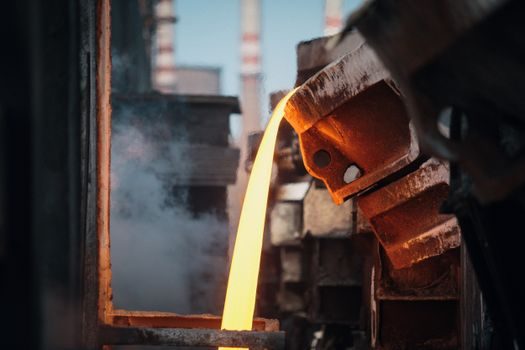
Reduction of rare earth oxides to metals is done primarily by molten salt electrolysis (oxide-fluoride bath) for the light group (Nd, Pr, Ce) and by calciothermic reduction (reduction-distillation) for heavy and refractory rare earths (Dy, Tb, Sm) [S4]. The molten salt route runs at roughly 1000–1100 °C with carbon anodes and graphite or tungsten cathodes, while calciothermic reduction requires sealed retort furnaces and vacuum distillation to separate the rare earth metal from Ca/CaF2 slag.
Process selection matters to buyers because Nd metal produced by electrolysis is typically 99.0–99.9% purity, sufficient for grain-boundary-diffusion NdFeB grades; Dy and Tb metal for sintered magnet alloy additions usually need to be 99.5% or better, which is why calciothermic routes persist for the heavy end [S4]. A second relevant lever is NdFeB scrap-to-alloy return: clean swarf and rejected magnets are remelted back into strip-cast alloy, displacing fresh metal demand by a measurable fraction in 2026 commercial practice [S6].
Recycling: Magnets, Motors, and EOL Electronics
End-of-life recycling is now a commercial feedstock, not a pilot project: hydrometallurgical routes (acid leach, solvent extraction, selective precipitation) recover Nd, Pr, Dy and Tb from spent magnets, motors, hard drives, and fluorescent phosphor waste, with multiple North American and European recyclers processing multi-tonne monthly feedstocks in 2026 [S6].
Recycled oxide typically tests at 99.5–99.99% REO purity after separation, which is competitive with primary Chinese supply for magnet-grade applications; the constraint is collection logistics and demagnetization, because NdFeB magnets must be thermally demagnetized or processed in inert atmosphere to avoid oxidation and pyrophoric losses [S6]. For B2B buyers building a circular sourcing policy, the realistic blended target is 10–25% recycled content in the NdPr oxide pool by 2030, with the rest still tied to primary concentrate flows.
Comparison: Primary Sourcing vs Recycling vs Stockpiling
Primary mining-plus-separation, recycling, and strategic stockpiling are not substitutes — they cover different risks on the same chain, and a 2026 sourcing policy should weight all three. [S1]
Primary concentrate from non-Chinese sources (Australia, US Mountain Pass, African projects) reduces the upstream mining risk but does not eliminate the midstream separation chokepoint, because most non-Chinese concentrate is still shipped to Chinese separation facilities [S3][S5]. Recycling removes both the mining and the separation risk at the same time, but only at the cost of collection logistics and slightly higher unit oxide cost; commercial recycled NdPr oxide typically prices at a modest premium to primary Chinese oxide in 2026 [S6]. Stockpiling hedges price spikes and short-term export-licence disruptions, but it does not solve structural demand growth above the existing stockpile drawdown rate, and the metals oxidize or adsorb moisture if stored without inert gas or vacuum packaging.
Decision rule of thumb: a long position in stockpiled NdPr metal or Dy oxide covers roughly a single quarter of magnet-line demand at typical buffer ratios, recycling covers a slowly growing share of annual NdPr oxide volume, and diversified primary concentrate contracts cover the residual volume. Treating all three as one pool — and tracking each on its own lead time — is the only way to avoid mistaking a stockpiled safety net for a structural supply solution.
Selection Criteria for B2B Specifiers
BUYER-PROFILE MATRIX: Permanent magnet motor and generator manufacturers in the EV and wind turbine segments should prioritize NdPr oxide with documented Chinese or recycled origin plus a secondary heavy rare earth (Dy or Tb) supply, with a baseline Dy/Tb content calibrated to the magnet grade's maximum continuous operating temperature. Consumer electronics and HDD actuator makers can usually accept lower-purity NdPr with tighter cerium tolerance, because their magnet volumes per unit are small and high-temperature coercivity is less critical. Hydrogen-fuel-cell, BESS, and aluminum-furnace buyers do not use rare earths as process materials and should NOT be drawn into rare earth sourcing plans even though "critical minerals" language sometimes groups them together. A useful adjacent reference is this hydrogen fuel cell supply chain bottleneck map — the catalyst and membrane risk sits in platinum-group metals and PFSA polymers, not in rare earths, and the two chains should be sourced on separate contracts.
Engineering Constraints and Failure Modes
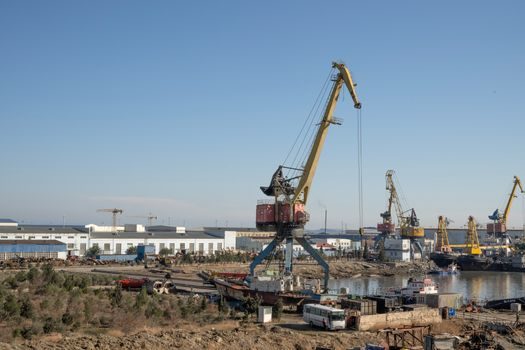
Three failure modes recur in 2026 rare earth sourcing: oxide purity drop-out, heavy-rare-earth shortage on high-temperature grades, and reduction-process inconsistency. Oxide purity drop-out usually traces back to upstream concentrate variability rather than separation plant error, so a quality-control plan that samples oxide lots for Th and U trace content is as important as the headline REO assay [S5].
Reduction-process inconsistency shows up as variable oxygen and nitrogen content in the metal, which directly degrades magnet coercivity; specifying a maximum O and N content in the metal (typically a few hundred ppm total) and requiring a vacuum-induction or inert-atmosphere melt history is the practical mitigation.
Standards, Sourcing Signals, and Watch Items
No single ISO or IEC standard prescribes rare earth oxide or NdFeB alloy composition; the binding documents are magnet-grade specifications (N35–N54, 35M–54M, 35H–48H, 35SH–48SH, 28UH–42UH, 28EH–35EH) and customer-specific alloy datasheets, layered on top of the underlying ASTM B869-style test methods for REO assay and trace impurity work [S4].
Trackable signals for the second half of 2026: (1) non-Chinese separation capacity commissioning in the US, Europe, and Australia (each new line reduces midstream concentration by a measurable fraction), (2) recycled NdPr oxide offtake contracts at multi-tonne monthly scale (each one shifts the primary/secondary ratio), and (3) heavy-rare-earth export licensing data from southern China (the leading indicator for Dy and Tb pricing). Adjacent critical-mineral chains worth tracking on the same sourcing calendar: top nickel producers and refiners 2026 for NiMH and prismatic cell casing, and aluminum market 2026 spec map for the die-cast and rolled alloy housing around the magnet motor assembly.
For component-level specifications, see earth ground tester, dc power supply, and switching power supply.