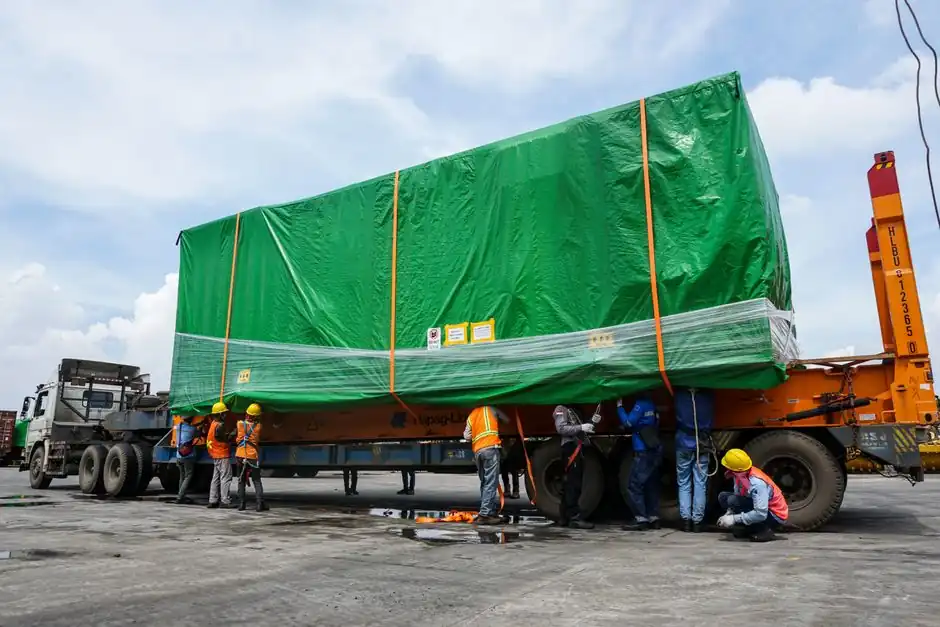
A reach truck is a narrow-aisle electric forklift built for indoor pallet racking, using a pantograph mechanism to extend loads into deep bays at 2.4 to 3.0 meter aisles and lift heights commonly reaching 12 meters or more [S2]. The machine is purpose-built for warehouses, not for the rough, outdoor, heavy-load work that defines a marine terminal.
Port logistics is dominated by reach stackers handling 10 to 46 tons under the spreader, loaded container handlers moving 26 to 45 tons, and empty handlers stacking units up to 8 high in the 8 to 11 ton class, plus heavy 4x4 RoRo tractors for ramps [S4]. Buyers mixing up these classes end up with a reach truck on a job site that needs a reach stacker, or with a diesel handler stuck in a bonded warehouse aisle.
Port Machine Classes and the Slot a Reach Truck Can Realistically Fill
A modern container terminal runs four lift-truck classes plus tractors: reach stackers, loaded container handlers, empty container handlers, and material handlers, with RoRo tractors handling ramp moves [S4]. Reach stackers are the most versatile machine in the yard, working 10 to 46 tons under the spreader, while purpose-built loaded handlers stack full boxes at cycle speeds reach stackers cannot match in a dedicated stack [S4].
The reach truck sits in a different envelope: electric narrow-aisle indoor pallet handling at 2.4 to 3.0 m aisles and roughly 12 m lift height, designed to extend forks into deep racking bays from a compact chassis [S1][S2]. That makes it usable in port-side cross-dock sheds, empty-pallet buffer zones, and CFS (container freight station) unpack halls, not on the quay or in the container yard. A buyer evaluating port logistics equipment should treat the reach truck as a warehouse-on-the-dock asset, with the heavy outdoor classes sourced separately.
Selection Criteria That Actually Matter at a Port
For a port cross-dock reach truck, the binding specs are aisle width, lift height, residual capacity at height, and indoor-rated duty cycle. Standard reach trucks need 2.4 to 3.0 m (8 to 10 ft) aisles to turn 90 degrees for a pallet, while a VNA turret truck can drop that to roughly 1.6 m (5.5 ft) at the cost of super-flat floors and higher mast complexity [S2]. Modern reach trucks commonly reach 12 m and maintain usable residual capacity at height thanks to stable base legs, which matters when stacking import pallets in a 3-high racking layout inside a shed [S2].
Duty cycle at a port is irregular, with peaks during vessel cutoffs and lulls between ships, and the floor is concrete with possible rebar transitions, not the smooth slab of a dedicated DC. Buyers should match these conditions to the OEM's published floor-loading and gradient ratings rather than generic catalog lift charts. Outdoor rated chassis, sealed connectors, and corrosion-resistant mast coatings become hard requirements in coastal CFS halls with salt-air infiltration, not optional extras.
Comparison: Reach Truck vs Reach Stacker vs Empty Container Handler
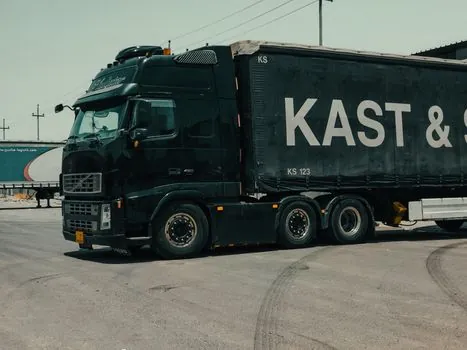
Putting the main options against a fixed set of port decision criteria is the fastest way to see the gap. A standard reach truck wins on aisle footprint (2.4 to 3.0 m) and indoor electric emissions, but loses on lift capacity (typically 1.5 to 2.5 t) and outdoor duty [S2]. A reach stacker wins on 10 to 46 t lift and yard versatility, but needs 3 to 4 lanes of turning space and diesel or large-battery electric power [S4].
An empty container handler in the 8 to 11 t class is the bridge option, designed specifically to stack empty boxes up to 8 high in the empty depot, where reach trucks are simply not rated for the load and reach stackers are oversized [S4]. For bonded-warehouse pallet work, a 4-wheel electric forklift is a fourth option, but it needs 12+ ft aisles, so it cannot match a reach truck's storage density [S2]. The right answer in a port setting is usually a mixed fleet, not a single machine class covering all jobs.
Energy, Battery, and Charging Reality for Port Duty
Port reach trucks will rarely be the heaviest battery load on a terminal, but their charging window is the hard constraint. ASEAN Ports and Logistics 2026 (Kuala Lumpur, July 7-9, 2026) put heavy-load electrification back on the agenda, with Linde presenting heavy-duty forklifts, custom attachments, and port-specific equipment, and the wider point being that buyers must spec the battery as part of an energy system, not as a standalone component [S3].
For an indoor reach truck that does 2 to 3 shifts, lithium-ion with opportunity charging during vessel-cutoff gaps is the common path, while lead-acid remains relevant where shift length and charger capital are constrained [S3]. The OEM battery data plate should list nominal voltage, capacity in Ah, and the compatible charger profile, and that data should be checked against the actual shift energy audit, not the marketing spec sheet. Buyers mapping energy for a fleet that also includes aerial work platforms and yard equipment need a port-level charging plan, not per-truck defaults.
Limits, Failure Modes, and When to Walk Away
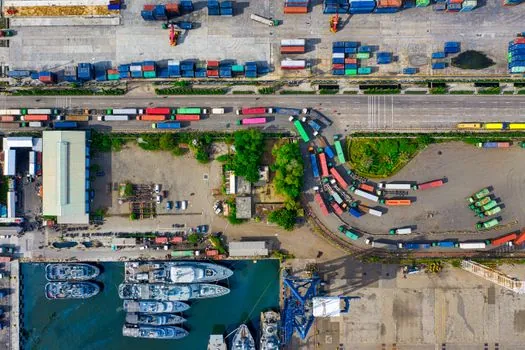
Three failure modes dominate when a reach truck is misapplied in a port. First, outdoor ground with rebar joints and standing water will defeat indoor-rated wheels and mast seals within months. Second, lifting full loaded containers or 20 ft box pallets is outside the reach truck's load-moment envelope and will trip the cutout repeatedly, slowing the operation. Third, narrow-aisle reach trucks require trained, certified operators and super-flat floors; a port shed originally designed for counterbalanced trucks will not give the residual capacity and cycle time the spec sheet promises [S2].
A reach truck is also the wrong answer where a truck scale or weigh-in-motion lane feeds the workflow, since the throughput bottleneck there is the inbound/outbound gate, not pallet storage density. If the real bottleneck is gate turnaround, the right capex is gate OCR, scale automation, and yard tractor dispatch, not a denser warehouse truck.
Sourcing, Standards, and Rental Options
For short-term or pilot port-side deployments, rental is often the lower-risk path. The European rental market lists 1.5 to 30 ton capacity options, electric, diesel, and LPG drivetrains, with delivery, transport, and on-site service typically included, useful when a port operator wants to validate a reach truck in a CFS hall before committing to a fleet purchase [S5]. A concrete mixer truck operator looking for adjacent fleet specs is not the target customer; reach truck sourcing should stay inside the narrow-aisle electric and empty-handler supplier base.
Trackable signals over the next planning cycle: OEM announcements of higher-lift (14 m+) reach truck platforms aimed at 3 to 4-high cross-dock racking, and port electrification roadmaps from the major terminal operators tying indoor reach trucks into a port-wide lithium opportunity-charging map. Buyers should also watch the ASEAN Ports follow-up events and Konecranes / Sennebogen service network expansions, which together set the practical ceiling on indoor reach truck deployment at container terminals [S3][S4].
Background reading: Shotcrete Machine Selection for Tunnel Construction: Wet vs Dry, Output, and Fit.