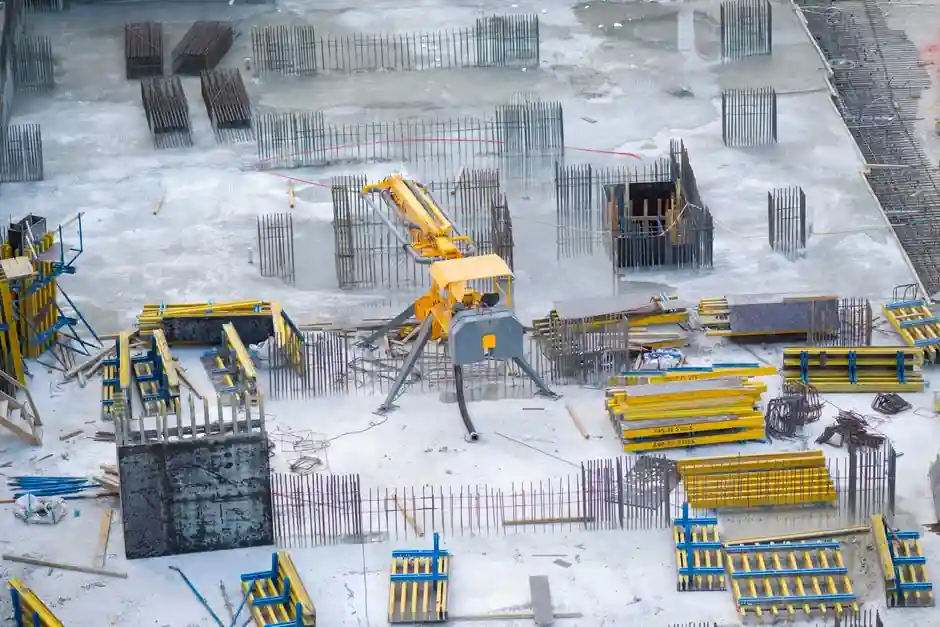
A wet-mix shotcrete pump, paired with a robotic arm, is the default specification for full-face tunnel cycles above 50 m³/h on metro and rail projects, because continuous pumping and accelerator dosing at the nozzle deliver uniform early strength and lower rebound than dry-mix setups [S2][S3].
Dry-mix shotcrete sprayers remain the workhorse for short repair drives, portal reinforcement, and shaft collars, where hose weight, rig mobility, and the ability to throttle output on the fly outweigh the productivity of a pump rig [S2][S3]. For readers new to the wider tunnel equipment package, the shotcrete machine entry gives the equipment-class definition, and the construction machinery and equipment overview places the sprayer inside a full TBM, drill-jumbo, roadheader, rock-bolt, and grouting train [S1].
Selection criteria that actually move the decision
Three criteria drive most tunnel shotcrete machine picks: required output (m³/h), target early strength (typically J2 or J3 classes for NATM primary support), and rebound rate at the designed layer thickness [S2]. Specifying teams should size the pump on peak demand from the top-heading plus bench pass, then derate by 20-30 percent for accelerator setting time and nozzle-man rhythm.
Beyond output, the construction tools envelope matters as much as raw capacity. A 16 m² horseshoe drives a different machine footprint than a 100 m² TBM back-up cross-cut, and the boom reach must cover the crown from a safe operator stand-off to keep personnel out of the unsupported zone [S1][S2]. For demolition or rehabilitation where shotcrete has to be removed later, compact hydraulic power packs driving concrete pulverizers and splitters are the standard pairing, and the selection logic is described in detail in this tunnel demolition methods piece, which shares the same working-envelope-first decision pattern.
Wet-mix vs dry-mix vs hybrid: a side-by-side comparison
Wet-mix rigs premix water, cement, aggregates, and admixtures in the pump, then push the homogeneous material through the hose to a nozzle where air and accelerator are added; this is why wet-mix achieves higher output, lower rebound (often under 10 percent in competent rock with a good accelerator), and more consistent early strength [S2][S3].
Dry-mix rigs convey dry or damp aggregate-cement blend through the hose, with water and accelerator added at the nozzle; output is lower, dust is higher, and rebound on overhead work runs 15-25 percent, but the machine is lighter, easier to move on narrow track, and the operator can throttle mix on the shot [S2][S3]. Hybrid or two-component systems dose the accelerator separately at the nozzle, which tightens the early-strength window and is increasingly specified for permanent tunnel linings where the spec binds alkali-free accelerators to a strict J-class curve [S2].
Compared on four decision axes:
Output: wet-mix pump greater than 30 m³/h continuous, dry-mix sprayer typically 5-15 m³/h, hybrid similar to wet-mix with tighter accelerator control [S2][S3].
Rebound: wet-mix and hybrid under 10 percent in good conditions, dry-mix 15-25 percent overhead [S2].
Mobility: dry-mix wins on small cross-sections and short drives, wet-mix needs a concrete-delivery truck and pump bay [S2][S3].
Dust and ventilation load: dry-mix is the worst, wet-mix the best, hybrid sits between and benefits from enclosed booms [S2][S3].
Shotcrete mix design: what the machine must handle
Max aggregate size is set by hose diameter, and most tunnel wet-mix pumps run 65-76 mm inside-diameter hose taking 8-16 mm aggregate; dry-mix can stretch to 20 mm because water is added only at the nozzle [S2]. Fibers (steel at 30-50 kg/m³ for structural support, polypropylene at 1-2 kg/m³ for fire spalling control) must be added through a dedicated dosing unit to avoid balling in the pump, and silica fume at 6-10 percent of cement weight is a common addition for cohesion and lower permeability on permanent linings [S2].
Accelerator choice is binding on machine selection: alkali-free liquid accelerators are pumped and metered separately at the nozzle for wet-mix and hybrid, while powder accelerators are common on dry-mix rigs. Either way, the machine must deliver the dose within 1-2 seconds of concrete exit, and the operator must control stand-off distance (typically 1.0-1.5 m) and angle (90 degrees to the substrate) for proper compaction [S2]. On TBM segmental linings, where shotcrete still appears at cross-passages and invert fills, a robotic arm on the same carrier as the cutting machine erector is increasingly common, and the same accelerator-window logic applies.
Use cases by tunnel type and method
NATM / sequential excavation in drill-and-blast: wet-mix pump with robotic arm on a dedicated shotcrete platform, accelerator-dosed at the nozzle, layer build-up in 50-150 mm passes, J2 early strength (around 1 MPa at 6 h) for primary support, J3 for permanent inner lining [S2]. TBM back-up tunnels: smaller wet-mix or hybrid rig for invert fill, cross-passage walls, and niches; the rig lives in the back-up train, so envelope and noise dominate the spec [S1][S2].
Rehabilitation and selective deconstruction: dry-mix or low-output wet-mix sprayer paired with concrete pulverizers and hydraulic splitters on compact power packs for material-appropriate, low-vibration removal of old shotcrete layers, as laid out in the Darda knowledge base [S2]. The pattern (remove then re-spray in confined space) is the same selection logic used in safety fence work in oil and gas, where the working envelope, not the headline spec, decides the equipment. For portal stabilization, short adits, and small-diameter service tunnels, dry-mix rigs are still common because they travel on a single track and start fast.
Limitations, failure modes, and what the machine will not fix
A bad nozzle operator will produce poor compaction and high rebound on any machine, so selection is not a substitute for crew competence [S3]. A wet-mix pump will not save a mix with too little fines, because segregation in the hose and at the nozzle still produces sand streaks and laminations that show up as delamination under hammer tap or coring [S2]. Dry-mix will not cure the dust problem inside a poorly ventilated dead-end, and many tunnel authorities now require wet-mix or hybrid with a coding machine-style automated additive logger for environmental compliance [S2].
Common failure modes: hose wear on the outside of every bend, nozzle tip wear changing the spray pattern, accelerator pump failure giving unset concrete on the wall, and pump stall when aggregate oversize reaches the hopper. A planned-maintenance schedule (hose rotation every 200-400 m³, nozzle replacement every shift on continuous pours) is part of the machine selection, not a separate decision [S2][S3].
Standards, sourcing, and what to ask the supplier
European tunnel shotcrete is commonly specified against EN 14487 (sprayed concrete) and EN 14488 (testing), with early strength classes J1/J2/J3, and durability against exposure classes per EN 206. ASA (American Shotcrete Association) guidance frames mix, process, and operator qualification, including the compaction-by-impact principle cited in 2026 industry explainers [S3]. Project specs typically bind accelerator type (alkali-free for permanent linings), max rebound, and a target early-strength curve with a defined J-class window [S2].
When asking suppliers, request: declared continuous output at the rated pressure (typical wet-mix pumps run 50-70 bar hose pressure, dry-mix air pressure 5-7 bar at the nozzle), max aggregate size, accelerator dosing accuracy, hose ID, and concrete cylinder data from a similar geology, plus the robotic-arm reach diagram overlaid on your tunnel cross-section. Cross-check the working envelope against the core machine and shotcrete machine reference pages before signing the PO, and confirm the construction machinery and equipment list covers the full support train, not just the sprayer. The next trackable signal to watch is the 2026 update to fiber-reinforced shotcrete residual-strength test data for tunnel linings, and the wider adoption curve of two-component hybrid rigs on metro projects in Europe and East Asia, where the same equipment-class references in this article will surface first.