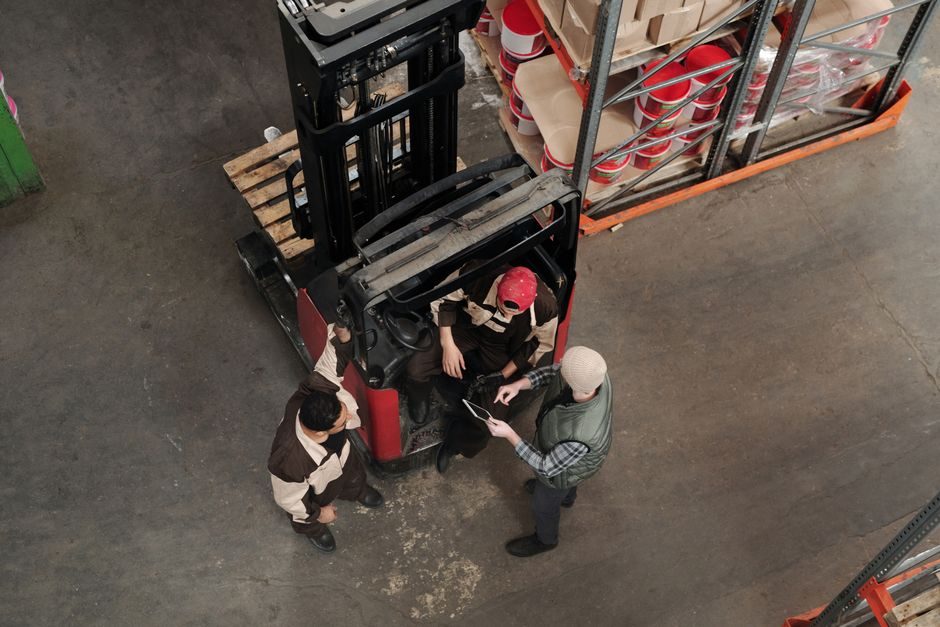
For buyers specifying a 2026 narrow-aisle reach truck, the working envelope sits at 1,200-2,000 kg capacity, 7,000-12,000 mm lifting height, and 1,000-1,270 mm overall width, with FOB China list pricing clustered between US$6,000 and US$18,500 per unit depending on mast stages, battery voltage, and operator platform [S2][S5].
Reach trucks are the dominant Class II truck for pallet handling in aisles below 2,800 mm, and the live 2026 vendor set spans 38 manufacturers and 149 products on the European-facing industrial index [S1] and 18 manufacturers / 63 products in the warehouse-reach subset [S3].
Capacity, Lift Height and Chassis Width: The Three Hard Numbers
Capacity is the first spec to lock. CESAB R100 ships in three discrete ratings — 1,200 kg, 1,400 kg, and 1,600 kg — paired with 7,000 mm or 8,500 mm lift and a 1,270 mm chassis, with travel speed capped at 10 km/h and lift speed peaking at 0.43 m/s [S2]. Hyster's R1.0-1.4E series matches that envelope at 1,000-1,400 kg with a tilting mast design that targets retail and confined-aisle operations [S7].
For heavier 2-tonne duty, Made-in-China 2026 listings show 2,000 kg seated-type reach trucks reaching 10-13 m with three-stage masts, sold as battery stackers built for warehouse narrow-aisle work [S5]. The Raymond 7310 4-D, while an older 2022 reference, illustrates the upper end at 4,500 lb (2,041 kg) and 270 in (6,858 mm) of lift in a multi-directional stand-on configuration for pallet handling [S4] (2022-10).
Power, Battery Voltage and Operator Configuration
Every 2026 reach truck in the spec set is electric, with battery voltage typically 24 V (walkie) or 36-80 V (seated and high-capacity). Xiamen Runtx Machinery's 3-tonne seated reach truck list explicitly pairs a 36 V battery charger with the chassis [S5]. Toyota's walkie reach stacker line targets 24 V-class walkie applications where the operator stands behind the mast rather than on an integrated platform [S6].
Operator position splits the catalog into three groups: stand-on pallet units like the Raymond 7310 [S4] (2022-10), side-facing seated units like the CESAB R100 [S2], and walkie / stand-behind units like the Toyota reach stacker [S6]. Side-facing seated has become the default for sustained-shift narrow-aisle work above 8 m lift because seated ergodynamics cut operator fatigue in shift-length picking.
Mast Stages, Lift Speed and Tilting Visibility
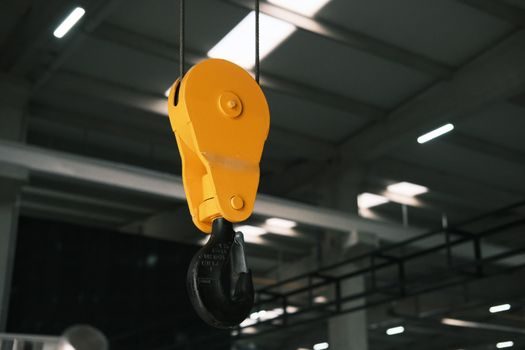
Mast configuration drives both lift height and residual capacity at full elevation. Three-stage masts are the baseline for any lift above 8 m, and the 2026 high-reach listings pair three-stage masts with 10-13 m lift [S5]. Tilting-mast geometry, as on the Hyster R1.0-1.4E, is engineered to keep fork tip deflection in view from the operator position, a hard requirement above 9 m where fork alignment against the pallet becomes the rate-limiter [S7].
Lift speed at the CESAB R100 caps at 0.43 m/s unloaded [S2], a typical envelope for 1.2-1.6 t electric reach trucks. Higher figures are achievable on 80 V chassis with AC traction motors, but buyers should treat any published lift speed as an unloaded, nominal benchmark — loaded lift speed on 1.6 t at 8.5 m typically falls 20-30% below the published peak.
Maneuverability: Multi-Directional vs Mono-Directional
The Raymond 7310 4-D reach truck eliminates right-angle stacking turns by rotating the chassis, so the truck can transition between forward and sideways travel without repositioning — a feature that compresses effective aisle width to roughly the truck length plus pallet length, typically 2,400-2,700 mm in operation [S4] (2022-10). Mono-directional reach trucks need a turning bay at the end of each aisle, and that bay adds 1,000-1,500 mm to the floor plan.
Where picking aisles are fixed and pallet throughput is unidirectional, mono-directional reach trucks remain the lower-cost path. Where the warehouse needs long-load, narrow-pallet, or non-standard pallet handling, multi-directional is a justified spend — Raymond's design is the reference implementation, with BYD Europe, Cat Lift Trucks, and MAXAGV AB all offering 4-D or multi-directional options in the 2026 catalog [S1][S3][S4] (2022-10).
Vendor Field, Price Bands and Sourcing Path
The 2026 active vendor field for electric reach trucks includes Aisle-Master, Anhui HeLi, Blue Giant, BYD Europe, Cat Lift Trucks, CESAB, CLARK, Daewoo Industrial Vehicles, EP Equipment, Hyster, Linde Material Handling, Mitsubishi Forklift Trucks, NINGBO RUYI, Noblelift, Raymond, and Toyota, plus Chinese exporters Xiamen Runtx Machinery and GenkingSU KING-LIFT [S1][S3][S5][S6][S7]. Made-in-China's 2026 reach-truck price index shows the dominant FOB China band at US$6,000-18,500 per piece, with MOQ typically one unit on seated reach trucks and higher MOQs on 3-stage high-reach specials [S5].
European OEM pricing (Hyster, CESAB, Linde, Toyota) sits materially above Chinese FOB once duties, batteries, and service contracts are added — a realistic delivered-and-commissioned European price for a 1.4 t seated unit is typically 2-3x the FOB China sticker. For warehouse buyers also evaluating pallet and tote handling at scale, the Turnover Box Buying Guide 2026 covers container-side spec levers, while AS/RS System Price & Cost Guide is the natural read-back for sites considering crane-based automated storage alongside reach-truck aisles.
Selection Criteria: A Side-by-Side Comparison
For a 1.0-1.4 t reach truck decision, four criteria separate the options: (1) capacity and lift envelope — CESAB R100 hits 1,200-1,600 kg at 7.0-8.5 m and 1,270 mm wide [S2], while Hyster R1.0-1.4E covers 1,000-1,400 kg with a tilting-mast geometry aimed at retail and narrow-aisle [S7]; (2) operator configuration — stand-on (Raymond 7310 [S4] (2022-10)), side-facing seated (CESAB R100 [S2]), or walkie (Toyota [S6]); (3) battery and mast — 36 V seated with 3-stage mast to 12-13 m in Chinese OEM lines [S5] versus 24 V walkie stacks for lighter duty; (4) maneuverability — mono-directional standard versus 4-D multi-directional where aisle width is at a premium [S4] (2022-10).
The clear shortlist for a greenfield narrow-aisle warehouse is: Hyster R1.0-1.4E or CESAB R100 for tier-1 European OEM service, Raymond 7310-class 4-D for mixed-pallet aisles, and a 2-tonne seated Chinese OEM build for cost-driven sites that can accept longer parts lead times.
Limitations, Failure Modes and What Reach Trucks Cannot Do
Reach trucks are not a substitute for dump truck class haulers, rough-terrain yard trucks, or any outdoor application — every catalog unit in the 2026 set is rated for indoor finished-floor duty only [S1][S3]. They also cannot match the throughput of a counterbalance forklift in dock-door staging, because the reach mechanism introduces a lift cycle roughly 2x longer than a standard counterbalance stack.
Common spec traps: (1) treating lift height as usable fork tip height — real usable fork height is mast-collapsed length minus 100-150 mm, so a "10 m" reach truck rarely stacks above 9.7 m; (2) ignoring residual capacity at full lift, which on most 1.6 t units drops to 800-1,000 kg at 8.5 m; (3) over-spec'ing chassis width where aisle width allows — 1,000 mm chassis units exist for tight retail back-of-house, but they trade lift capacity for footprint. A useful second-read for buyers cross-checking warehouse equipment is the Overhead Conveyor Price & Cost Guide 2026, which covers complementary handling hardware for mezzanine and tote-flow layouts.
Trackable signals for the next 90-180 days: (1) any refresh of the Hyster R1.0-1.4E spec sheet, given its 2026 EMEA launch positioning [S7]; (2) the next round of Made-in-China FOB index updates for 2-3 tonne seated reach trucks in the US$6,000-18,500 band [S5]; (3) whether Linde Material Handling and Cat Lift Trucks release a 1.6-2.0 t class to close the gap with the Chinese OEM offering [S1][S3].
For component-level specifications, see reach truck, and linear guide.