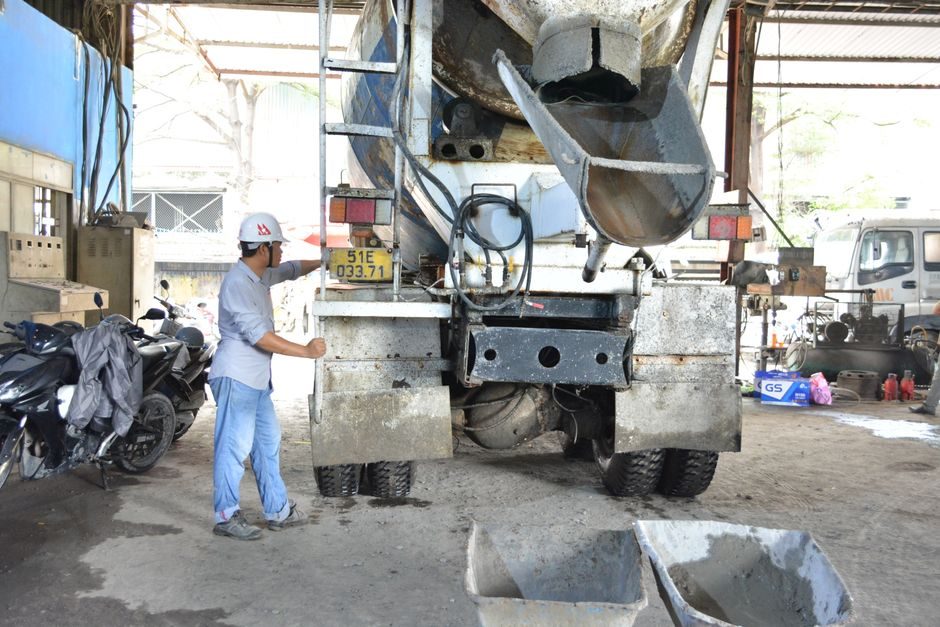
Ready-mix concrete is centrally batched at a fixed plant and shipped in a rotating drum concrete mixer truck; volumetric/site-mixed concrete is batched on the truck at the point of pour [S4][S7]. The two delivery models diverge on cost structure, mix-design flexibility, waste profile, and the ASTM standard that governs them — C94 for central-mix truck-delivered concrete, C685 for volumetric-mixed concrete [S4].
For jobs under roughly 6–8 yd³, partial-load ready-mix typically bills the full minimum load; a 10-yd³ drum running half-empty still costs the truck time plus the booked yardage [S4][S2]. Volumetric mixers meter cement, water, and aggregate independently and only charge for concrete poured [S4][S10].
Delivery Model and Equipment Definition
A concrete mixer truck — also called an in-transit mixer — is a truck-mounted rotating drum that keeps the centrally-batched ready-mix in a semi-liquid, homogeneous state between plant and pour [S3]. Drum sizes in the North American ready-mix fleet commonly run 10 yd³, as evidenced by Mar-Con Products' ten 10-yard ready-mix trucks operating in San Diego County since 1975 [S2].
A volumetric concrete mixer is a mobile batch plant on wheels: separate compartments carry cement, sand, aggregate, water, and admixtures, and mixing occurs in an auger at the truck's rear [S7]. ProAll markets this format as a way to reach remote sites, switch mix designs between pours, and eliminate short-load waste [S7]. Both equipment families fall under the broader ready-mix concrete delivery category but differ in where the batching event occurs.
Applicable Standards: ASTM C94 vs ASTM C685
ASTM C94 governs ready-mixed concrete produced at a batching plant and delivered in a truck mixer; it covers mixing-agitation time, delivery window, slump tolerance at the point of discharge, and the requirement that the load be completely discharged within 1-1/2 hours after water is added to the mix, or before the drum has revolved 300 revolutions, whichever comes first. [S2]
ASTM C685 covers concrete produced by volumetric batching and continuous mixing on the truck; site-mixed suppliers in Colorado reference C685 compliance on their product pages and pair it with CDOT-approved mix designs [S4]. The On-Demand Concrete 4-hour rapid-set mix is a C685-governed application where extended travel time is built into the volumetric mixer's ability to hold dry components and hydrate on demand [S4].
Picking the wrong standard for the equipment is a quality-systems failure: a C94-spec mix left in a drum past the time/revolution limit is non-conforming regardless of measured slump.
Selection Criteria: Pour Size, Mix Variability, Waste, Travel Time
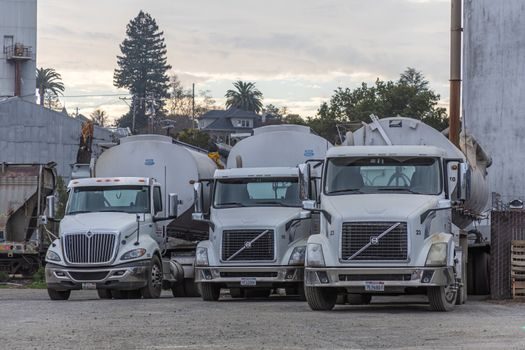
Pour size is the first hard constraint. Mar-Con's documented range spans from a few yards up to 8,000 yd³ continuous placements — but every yard above the drum's rated capacity must be scheduled as multiple trucks from a stationary plant [S2]. For pours under 4 yd³, a volumetric mixer from a supplier like Niagara Concrete or Pro-Mix Concrete (London) typically bills only the concrete poured, eliminating short-load overpayment [S10][S8].
Mix-design variability is the second criterion. Ready-mix dispatched from a single plant is the lowest-risk path when one mix design repeats hundreds of times in a day; volumetric mixers win when adjacent pours need different strengths, fibers, or accelerators and the contractor cannot afford a washout between loads [S7].
Travel time and ambient temperature drive the third decision. On the U.S. Eastern Seaboard and Gulf Coast in July, a 60-minute plant-to-site haul in a 10-yd³ drum is standard; longer hauls push the mix toward retarders or ice-batch water, both of which raise plant-side cost. Volumetric mixers sidestep the haul-clock entirely because hydration begins at the auger [S4][S7].
Cost and Waste Comparison
Ready-mix customers pay for the full booked yardage regardless of what is poured; short-load fees, washout fees, and demurrage kick in past the scheduled unload window [S4]. Niagara Concrete, serving Central Florida since 1979, advertises the volumetric model's "only pay for what is poured" model as a primary cost lever against ready-mix short-load charges [S10].
ProAll's commercial case for the volumetric mixer is the elimination of jobsite delay cost: a truck that arrives ready to batch does not hold up a crew waiting on a late central-plant delivery [S7]. Quantifying that delay at typical crew day-rates versus a 6–9 m³/h volumetric output, the breakeven often falls in the 4–6 yd³ total project size when access or scheduling is constrained.
Geographic and Project-Type Fit
For high-volume commercial and infrastructure work in metro areas served by a stationary batch plant — San Diego, London, Tampa, Sarasota, Dhaka — central-mix ready-mix dispatched in concrete mixer trucks remains the default [S2][S8][S10][S5][S6]. Mar-Con's 8,000-yd³ continuous placements and Bashundhara's portfolio of "amazing concrete" grades for Bangladesh's commercial sector are representative of plant-supplied scale [S2][S6].
For remote sites, residential driveways, post-hole pours, and small structural repairs, the volumetric concrete mixer truck configuration is the operationally superior match [S4][S7][S10]. For projects requiring both — a large slab plus a sequence of small ancillary pours — contractors frequently dual-source: plant-batched main pour, volumetric backup.
Limitations and Failure Modes
Ready-mix central-plant batching depends on the plant's quality-control system: aggregate moisture meters, calibrated cement scales, and admixture dosing accuracy are upstream of the truck and outside the contractor's sight. Any deviation in slump at the point of discharge must be measured before the load is rejected under ASTM C94, and rejected loads cannot be re-tempered past the agreed water-cement ratio without engineering sign-off. [S2]
Volumetric mixers carry their own failure modes: cement-compartment bridging in humid climates, auger wear altering mix homogeneity, and meter calibration drift if water/cement ratio is not checked at shift start [S4][S7]. Operators must hold current volumetric-mixer certification in jurisdictions that require it; the equipment is only as accurate as its last calibration. Comparing equipment families against a 4-criterion decision matrix — pour size, mix variability, travel time, waste tolerance — makes the choice defensible.
Sourcing and Verification Steps
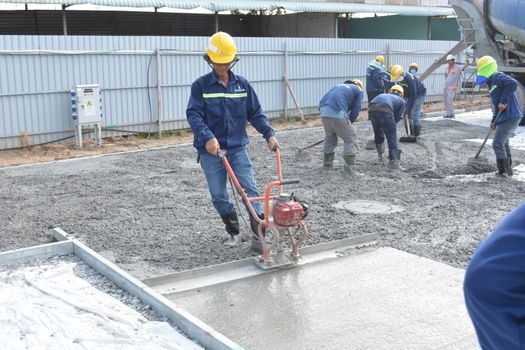
Specify ASTM C94 when contracting central-plant ready-mix delivery; specify ASTM C685 when contracting volumetric/site-mixed delivery; require the producer to state the standard on the delivery ticket [S4]. Cross-check that any claimed CDOT or BSTI approval maps to the same standard the equipment actually produces — a plant-stamped C94 ticket from a volumetric truck is a non-conformance [S4][S6].
For selection workflows that pair this decision with mobile equipment tradeoffs, the Reach Truck vs Forklift aisle-and-lift spec comparison follows a similar volume-versus-access matrix, and the [Crawler Crane vs Stacker Crane selection map](/news/crawler-crane-vs-stacker-crane-spec-first-selection-map-for-heavy-lift-and-warehouse-duty.html) applies a comparable stationary-versus-mobile batching lens to lifting equipment. For yard-material decisions that surround any concrete pour, the Stainless Steel Sheet vs Alloy Steel Plate spec-first map lines up rebar-embedment and form-face material selection in the same decision-first style.
The underlying component specifications are covered under concrete pump truck.