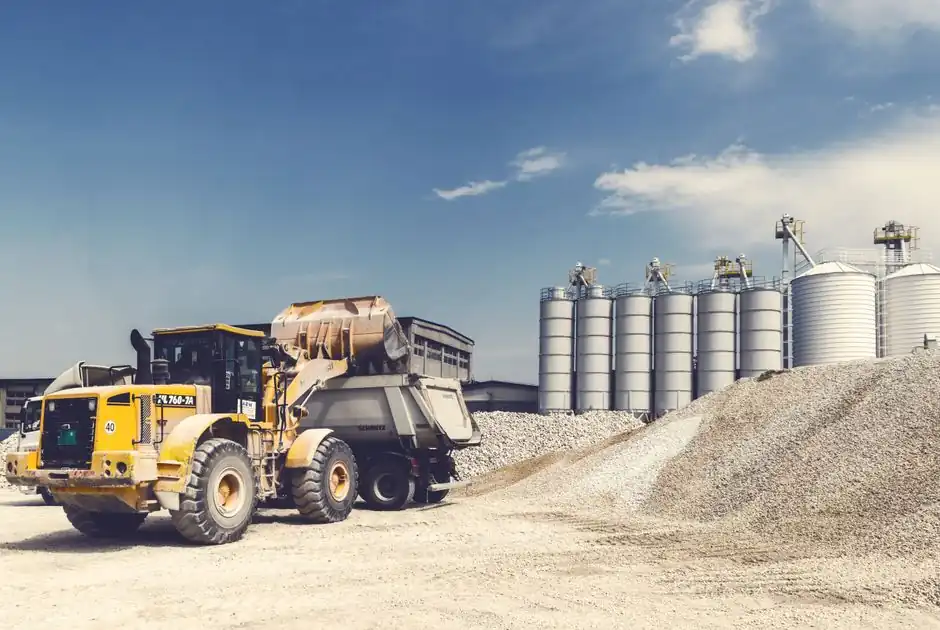
A volumetric concrete mixer meters cement, sand, aggregate, and water at the job site, while ready-mix concrete is batched centrally and delivered in a rotating drum. Ready-mix usually has the lower unit price for large pours near a plant, but volumetric batching gives operators control over volume, timing, and mix changes.
The decision depends on pour size, delivery distance, working time, labor, waste, and the number of mix designs. A 100-yard placement can expose the limited per-truck output of volumetric equipment, while a remote or multi-stage project can lose ready-mix value through travel time, returned loads, and scheduling pressure.
Mixing Location Changes Time and Control
Ready-mix concrete is weighed and mixed at a centralized concrete batching plant, then placed in a concrete mixer truck with a rotating drum. Typical ready-mix working time is 60–90 minutes from loading to placement, so dispatch, traffic, and site readiness directly affect usable concrete [S1].
A volumetric mixer carries the dry ingredients and water in separate compartments, then combines them at the point of discharge. The auger controls mixing and discharge, while individual materials are metered before entering the mixing chamber [S2][S5]. This removes the plant-to-site transport period from the working-time clock and allows concrete to be produced on demand.
The distinction is operational, not merely semantic. Ready-mix is a plant-controlled product with a delivery deadline. Volumetric concrete is a site-controlled process in which the operator manages material set-up, calibration, mixing, and discharge. For specification-sensitive work, the governing choice is therefore the delivery system, not only the nominal concrete mix.
Cost Comparison: Unit Price Against Total Delivered Cost
Ready-mix usually costs about 20% more per cubic meter than basic site mixing, but plant equipment, labor, storage, and waste can narrow that difference [S3]. In the ready-mix-versus-volumetric comparison, volumetric price per cubic yard is typically slightly higher, while ready-mix normally carries the lower rate for high-volume work located near a plant [S1].
Waste changes the effective rate. In the cited example, 7 cubic yards of ready-mix at $150 per yard cost $1,050, even though only 6.5 cubic yards were used [S1]. Volumetric metering can reduce over-ordering, but the saving only justifies its higher rate if the avoided material cost and the value of retained truck time are substantial.
The comparison should therefore be calculated per cubic yard delivered and placed. Include the concrete price, minimum-load charges, truck waiting, return trips, washout, labor, admixture needs, fuel, equipment setup, and expected surplus. For one large residential foundation, ready-mix generally wins. For a small patch where one full ready-mix load would be mostly unused, a bagged or small site-mix option can cost less because it avoids minimum truck fees [S3].
Capacity, Distance, and Working-Time Constraints
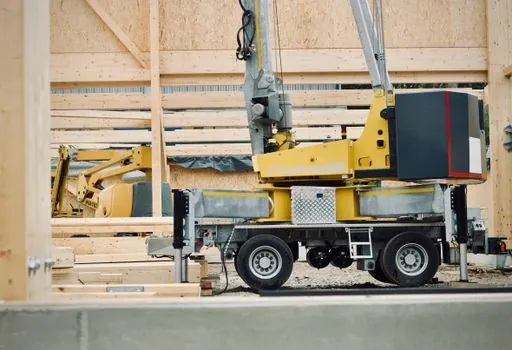
Volumetric trucks commonly provide 8–12 cubic yards per unit, while a very large placement of 100 cubic yards or more may require several volumetric trucks if it must proceed as one continuous operation [S1]. Ready-mix is better suited to large-volume delivery because rotating-drum trucks can move substantial quantities from one plant, but the number of trucks and the plant's delivery radius still need to be checked.
Distance changes the risk. A practical ready-mix radius is often about 20–30 miles, depending on traffic and the time available for placement [S1]. Long travel, hot weather, traffic delays, and restricted access consume the 60–90-minute working period. Volumetric batching removes that transport risk because concrete is mixed after the truck reaches the site [S1].
For a 200-cubic-yard standard placement in a dense suburban market, ready-mix normally has the stronger price case [S1]. For a remote site, delayed start, or uncertain arrival window, volumetric batching has the stronger operational case. The 10 m³ concrete mixer truck weight reference is relevant when checking whether one unit can enter and operate at the site.
Phased Pours and Changing Mix Designs
Volumetric batching fits work separated by hours, such as a pool floor, later steps, and a bond beam. The truck can remain on site and produce successive batches while the first placement is being finished, reducing the number of ready-mix deliveries and their synchronized working-time clocks [S1][S4].
One volumetric truck can also change mix design during the visit, such as moving from 3,000 psi concrete for a deck to 4,500 psi concrete for a bond beam [S1]. A ready-mix order is fixed at the plant, so separate strengths generally require separate batches and deliveries. The practical limit is equipment capacity: phased work still needs enough output to keep ahead of the placement crew.
Ready-mix is the better option when one specified mix must be delivered in a continuous, high-volume pour. Volumetric is better when placement is interrupted, quantities are uncertain, access prevents multiple trucks from arriving together, or several strengths are needed during one mobilization. Continuous placement is one of the operating cases in which volumetric mixing can reduce truck movements without changing the placement sequence.
Quality Control and Operator Responsibility
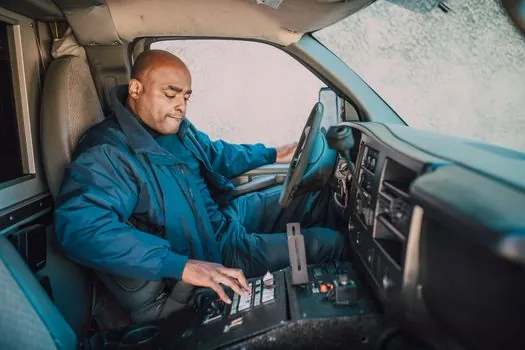
Ready-mix is mixed under centralized plant controls, so ingredient weighing and batch consistency are generally more repeatable. A plant can produce specified strength grades such as 3,000, 4,000, or 5,000 psi, and successive batches are intended to follow the same controlled recipe [S3].
Volumetric quality depends more heavily on the operator, material condition, calibration, and site environment. The truck can change a mix on demand and may reduce waste, but that flexibility transfers quality responsibility from the batch plant to the onsite team [S2]. Uncontrolled water addition is a particular risk because an extra gallon per cubic yard can reduce strength by approximately 150–200 psi [S3].
One Bay-Lynx configuration illustrates the equipment detail that has to be evaluated: a 12-inch mixing auger with two mixing sections, a 160-degree auger rotation and swivel, a 500-liter or 1900-liter polyethylene water tank, and manual aggregate proportioning handles [S5]. These figures describe one manufacturer configuration, not a universal specification, but they show why metering and proportioning method belong in the purchase comparison.
Failure Modes, Constraints, and Specification Checks
Ready-mix fails operationally when a truck waits, arrives late, loses usable working time, or cannot reach the pour point without a viable concrete pump truck. It also creates waste when the ordered quantity exceeds measured form volume. Operators must track load size, route, traffic, plant capacity, and the number of trucks required to maintain placement continuity. [S1]
Volumetric batching fails when aggregate moisture changes the effective water ratio, calibration is not verified, the operator cannot maintain uniform ingredient feed, or truck output cannot keep pace with the crew. A listed 500-liter water tank and 12-inch auger describe storage and mixing geometry, not guaranteed placement rate [S5]. The acceptance test must be based on discharged volume, mix consistency, specified strength, and actual crew demand.
For either method, confirm the project mix, strength, water-to-cement control, admixture compatibility, aggregate condition, and placement method. Concrete admixture requirements must be coordinated with the delivery mode because volumetric equipment can introduce admixtures at the site rather than during plant batching. Do not treat on-demand mixing as permission to alter a structural mix without approval from the project designer.
Project Selection by Decision Criteria

Ready-mix wins on price for high-volume pours near a plant, on plant-based consistency, and on the ability to coordinate a large single-placement operation. Its main constraints are the 60–90-minute working time, delivery distance, truck capacity, minimum-order charges, and surplus concrete [S1][S3].
Volumetric batching wins on remote-site access, exact measured output, phased pours, and the ability to change mix designs during one visit. Its constraints are 8–12-cubic-yard per-truck capacity in the cited operating case, higher unit pricing, operator-dependent consistency, and the need to match production rate to the placement crew [S1][S2].
Specify ready-mix for a 200-cubic-yard foundation within the plant's practical delivery radius, especially when a single strength and one uninterrupted placement define the job. Specify volumetric batching for a remote project, a sequence of pours spread across the day, several mix designs, or a quantity that cannot be forecast accurately. For small patching work, compare a full ready-mix load with bagged or portable site mixing before either truck-based method is selected [S1][S3].
The next procurement check is to place the plant distance, estimated travel time, pour volume, number of trucks, waiting allowance, mix changes, surplus percentage, labor, and washout method on one worksheet. Use the 60–90-minute ready-mix working time and the 8–12-cubic-yard volumetric capacity as screening values, then request supplier confirmation for the selected equipment and project conditions [S1].