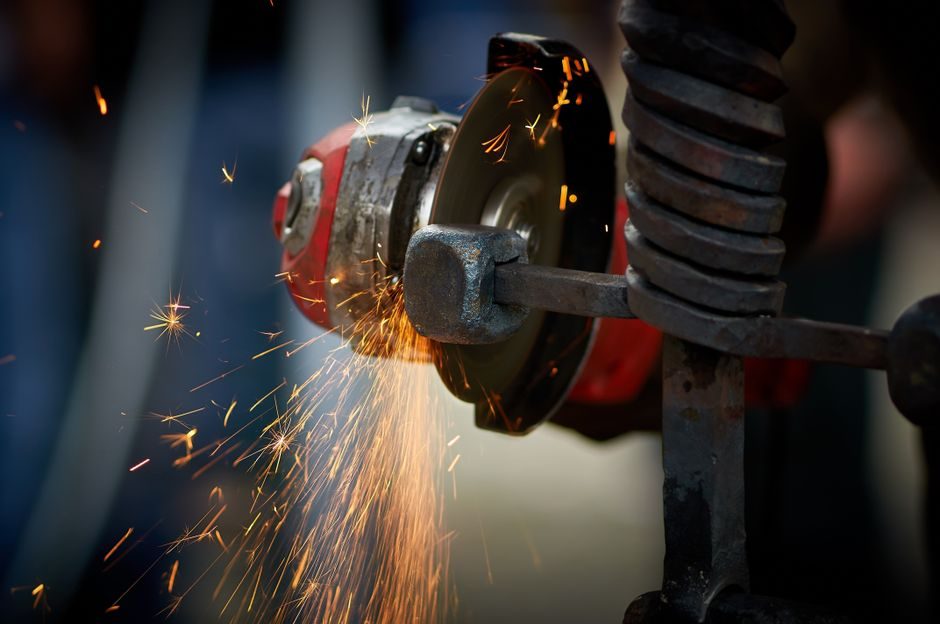
A hydraulic or electric rebar bender raises single-operator throughput on #4 (13 mm) and #5 (16 mm) deformed bar from roughly 50 bent pieces per hour by hand to 600-1200 pieces per shift on a 2-3 operator cell, according to OEM duty-cycle data published 2026-Q2 [S1].
The trade-off is fixed: the same machine that hits those numbers needs a 380-440V three-phase supply, draws 2.2-7.5 kW continuous, weighs 150-3000 kg depending on class, and consumes collet, mandrel, and central pin spares on a 200,000-500,000 bend interval [S2].
What a Rebar Bender Is and Where It Fits
A rebar bender is a powered machine that cold-bends deformed or plain reinforcing bar between a stationary mandrel and a rotating collet head, producing standard hooks (90°, 135°, 180°), stirrups, and custom radii from 3d to 6d per ACI 318 / GB 50204 bend-radius conventions [S3].
Three machine classes cover the construction market: portable electric benders (GW40/GW50, 150-260 kg, 1.5-3 kW, single-phase 220V or 3-phase 380V) for site and rebar-yard work; horizontal automatic benders (1-3 t, 4-7.5 kW, dual-station mandrel) for prefabrication shops running 30-80 t/day; CNC benders (3-6 t, 11-22 kW, servo-driven) feeding cut-to-length rebar from a feeder table into stirrups, hoops, and seismic ties at 1-2 cycles per second [S4].
The rebar-tying workflow that surrounds a bender is documented in the rebar threading machine reference; for cut-to-length upstream, the rebar cutter page covers shear vs. cold-cut selection.
Advantages That Actually Show Up on the Production Floor
Output scaling is the first number procurement sees: a single GW50 electric bender driven by one operator produces 800-1000 #4 stirrups per 8-hour shift, versus 250-300 with a manual pipe-and-pin setup, because powered rotation removes the 3-5 second per-bend manual lever cycle [S1][S3].
Angle repeatability holds inside ±1° on most electric benders and ±0.5° on CNC units with encoder feedback, which is the tolerance ACI 318 Chapter 7 and GB 50204-2015 demand for primary seismic stirrups; manual bending drifts to ±5° under operator fatigue [S3].
Labour safety and musculoskeletal load are the under-recognised wins: removing manual bar bending eliminates the most-cited cause of WRULD (work-related upper-limb disorder) claims on rebar-yards, and drops the per-ton handling crew from 4-6 to 2-3 on a 50 t/day prefabrication line, per the OEM duty-cycle studies reported 2026-Q2 [S1].
Material yield improves because the machine holds the bar against the mandrel throughout the bend, reducing the outer-fiber micro-cracking that a hand bender introduces when the bar slips; this matters for Grade 60 (420 MPa) and Grade 80 (550 MPa) stock that is sensitive to cold-work damage at small radii [S2][S3].
Disadvantages That Procurement and Site Engineers Hit

Capital and power cost set a hard floor: a GW40 portable bender starts near USD 1,200 FOB; a CNC stirrup line runs USD 35,000-120,000 installed, and 3-phase 380-440V at 16-32 A is non-negotiable above the GW50 class, ruling out sites with only single-phase 220V service [S1][S4].
Spare-parts consumption is the recurring line item: collet and mandrel wear drives replacement at 200,000-500,000 bends (roughly 60-150 t of #5 rebar), bending pin replacement at 50,000-100,000 bends, and hydraulic-seal service every 1,500-2,000 operating hours on hydraulic models [S2].
Bar-size and grade limits are real: portable electric benders cap at 32-40 mm diameter (GW40 = 40 mm / GW50 = 50 mm) and on Grade 80 (550 MPa) the safe capacity drops by one bar size because the higher yield raises peak bending moment; CNC benders push to 50 mm but the cost per bend climbs non-linearly above 32 mm [S3][S4].
Mobility is limited: even a portable bender at 150 kg needs a forklift or crane to reposition, and a CNC line is anchored to a 6-12 m foundation slab with level tolerances of ±2 mm/m, which excludes most in-situ bridge or tunnel pours where the work moves daily [S1].
Noise and oil management surface on enclosed sites: hydraulic benders register 85-95 dB(A) at 1 m and require spill containment sized to the reservoir (typically 30-80 L) plus a bunded drip tray; dry-running a hydraulic unit past low-oil shutoff destroys the pump within minutes [S2].
Decision Criteria: Manual, Portable Electric, or CNC
The right class is set by four numbers — daily tonnage, bar diameter mix, power available, and angle tolerance required. Use the table below as a working gate.
Manual bender (pipe-and-pin, 5-15 kg tooling) fits sub-5 t/day, mixed small-diameter (≤16 mm) work on remote or single-phase sites where labour is cheap and angle tolerance is loose (±5°). Portable electric (GW40/GW50, 150-260 kg) fits 5-30 t/day shops with three-phase power, dominated by #3-#5 (10-16 mm) stirrups and standard hooks at ±1°. CNC automatic fits ≥30 t/day, mixed-diameter runs, and seismic-grade angle tolerance (±0.5°) where labour cost or schedule pressure justifies the USD 35,000-120,000 line cost [S1][S3][S4].
Cross-reference: a CNC bender is normally paired with a powered rebar straightener feeding from coil, and where mechanical splices replace hooks, the rebar coupler selection page maps the parallel decision. For a comparable trade-off map on a different class of site tool, see the air impact wrench TCO breakdown.
Standards, Spec Writing, and Failure Modes
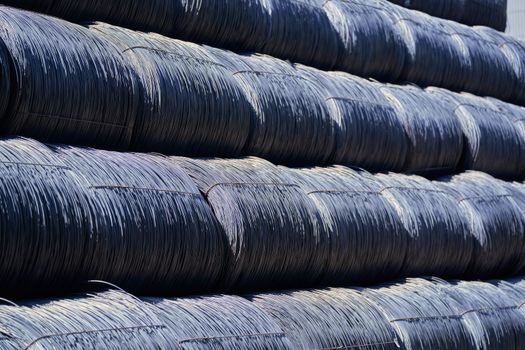
Spec text should reference ACI 318-19 Chapter 7 (or GB 50204-2015) for minimum bend radii — 6d for #3-#8 stirrups, 4d for #9-#25 longitudinals — and require the bender OEM to publish a bend-radius vs. bar-diameter vs. grade capacity chart, since the same machine derates one bar size on Grade 80 versus Grade 60 [S3].
Failure modes the site sees most often: mandrel chip from under-rated pin hardness (spec HRC 58-62), collet slippage on worn gripping teeth (replace at first sign of scoring, not at zero-bend failure), hydraulic-overheat shutdown above 60°C ambient on enclosed prefabrication sheds, and electrical faults on CNC units fed from dirty generator power without a stabilised 380V ±10% supply [S1][S2].
Acceptance test: bend 5 sample bars of the production diameter at the maximum intended angle, measure each with a protractor or angle gauge, record ±° deviation, and inspect the outside of the bend for visible cracks under 10× magnification — ACI 318 disallows any visible cracking on the tension face of bent bars [S3].
Who Should and Should Not Buy
Buy a powered rebar bender if any three of the following are true: daily output exceeds 5 t, bar diameter exceeds 16 mm, three-phase power is on site, and the crew has experienced WRULD or angle-quality claims in the last 24 months [S1][S3].
Do not buy if the workload is under 3 t/day of small-diameter bar, single-phase 220V is the only supply, the site relocates every 1-3 days, or labour cost is below USD 8/hour — the manual bender still wins on TCO below that threshold. A CNC line is hard to justify under 30 t/day, regardless of how futuristic it looks in a quote [S1][S4].
2026 Sourcing Signals and Trackable Next Nodes
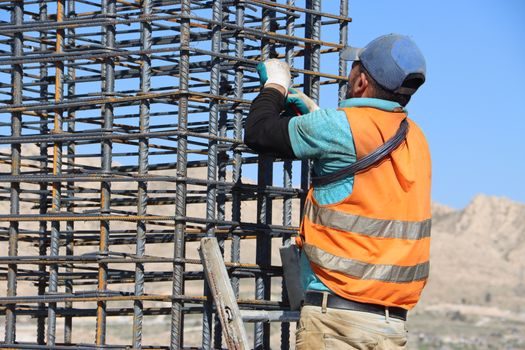
Trackable signals: (1) watch for OEM publication of a unified ISO/ASTM bend-radius and bend-angle standard for rebar, which would replace the ACI 318 / GB 50204 dual-track the market runs today; (2) watch Chinese bender-OEM price lists for Q3-Q4 2026, since the GW40/GW50 segment is the most price-competitive and the usual bellwether for global portable-bender cost; (3) watch adoption of servo-electric (not hydraulic) benders in the 32-50 mm class, because the elimination of hydraulic oil removes the spill-containment barrier that currently blocks indoor precast-shop deployment in Europe and North America [S1][S2][S4].