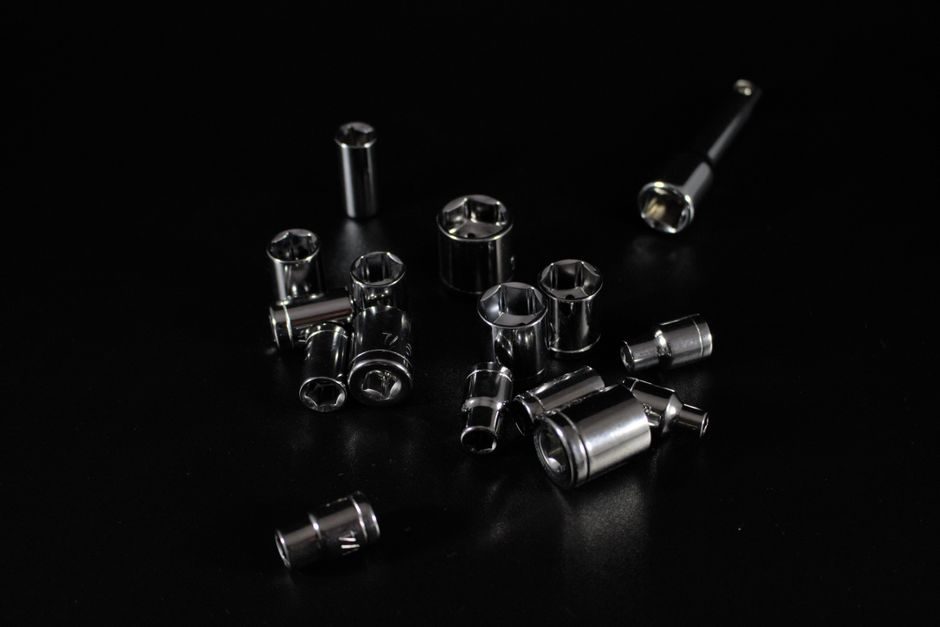
An air impact wrench bought on sticker price rarely stays cheap: over a 5-10 year service life, compressed-air energy, hammer-mechanism rebuild kits, impact sockets, FRL maintenance, and downtime typically push total cost of ownership (TCO) 4-7× the purchase invoice [S1][S5].
TCO itself is a financial-analysis tool that combines the short-term purchase price with the long-term costs of operation, maintenance, and disposal — popularised by Gartner in the late 1980s and now standard in fleet-procurement reviews [S1]. Applied to a pneumatic fastening fleet, the framework exposes the cost lines a foreman rarely sees on a quote sheet.
Air consumption: the line item that dwarfs the tool body
At a typical industrial rate of $0.08-$0.15 per 1,000 standard cubic feet of compressed air, a single 1/2" gun accrues $300-$600 in energy cost per year of two-shift operation — often more than the gun's own purchase price after year three [S1]. The SFP (specific free air per tightening) figure from a vendor's datasheet is the cleanest number to compare two guns of the same bolt class; lower CFM at the same torque output is the strongest TCO signal on a spec sheet.
Hammer mechanism, anvil and bearings: rebuild vs. replace
Inside a standard twin-hammer or pin-clutch mechanism, the wear parts are the hammer pins, hammer cage, anvil bushing, rotor blades, and front-bearing pack; a mid-frame 1/2" gun rebuild kit from Taiwan-region OEMs typically lists at 25-40% of the gun's body price [S2].
Quality manufacturer-published service intervals put a hammer-cage swap at 800-1,200 operating hours and a rotor-blade change at 400-600 hours; skipping these intervals is the most common cause of catastrophic housing failure, where repair becomes uneconomic and the gun is scrapped rather than rebuilt [S1][S3]. Brands that control their own parts — turning and milling hammer pins in-house rather than sourcing generic replacements — typically post 2-3× the mean time between overhaul seen on assembled-from-imports units, mirroring the logic A-dec applies to dental-chair longevity [S3].
Air sockets, retaining rings and consumable wear
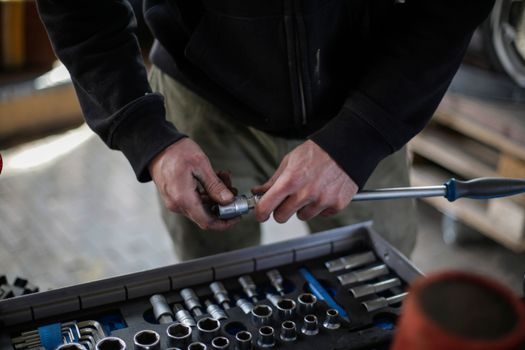
Impact sockets are not optional consumables — they are the third major cost line. Cr-Mo (chrome-molybdenum, typically 42CrMo / SCM415) impact sockets rated to ANSI ASME B107.4 / DIN 3121 cost roughly 2-3× a standard chrome-vanadium chrome socket, but survive the hammer mechanism's pulse loads without shattering [S2].
For fleet cost modelling, budget 1 socket per ~3,000 tightening cycles on M16-M22 wheel and chassis fasteners; on heavy M24-M33 structural bolts the swap rate halves. A 1" drive deep impact socket retails in the $25-$60 range from the same Taiwan sourcing channel as the wrench itself, so a 12-tool assembly bay can easily run $1,200-$2,000/year in sockets alone — a number that belongs in the TCO line, not the consumables closet [S2][S7].
Air treatment: FRL, hose and leaks
Filter-Regulator-Lubricator (FRL) units on every drop protect the hammer mechanism from moisture and particulate; a failed FRL accelerates bearing wear and is the most common root cause of premature air-motor failure [S1].
Cost-of-ownership guides flag hardware upgrades, power-grid impact, telecom links, and service-level availability as additional TCO lines — each of which applies to the shop-air side of a wrench fleet [S4][S6]. For larger infrastructure TCO framing in adjacent pneumatic fleets, see LPDC Total Cost of Ownership: Five Cost Lines That Drive a 10-Year Spend, which uses the same five-line structure for die-casting cells.
Selection criteria: matching the wrench class to the bolt
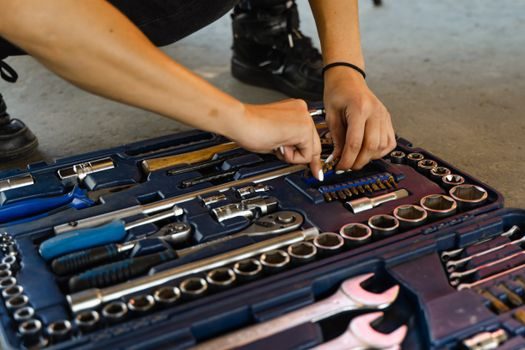
Three bolt-class bands dominate procurement: 1/4" / 3/8" small-frame (assembly, M6-M10), 1/2" mid-frame (wheel, chassis, M12-M22), and 3/4" / 1" heavy (truck, structural, M24-M36). CENS catalogues from the Taiwan pneumatic-tool OEM base explicitly segment products by drive size and listed torque, and 1" drive guns in the heavy class are sold as dedicated truck-and-structural tools rather than upsized 1/2" units [S2][S7].
Compare the three classes on four decision axes: working torque (ft-lb), free speed (RPM under no load), air consumption (CFM @ 90 PSI), and weight (lb). A 1/2" mid-frame gun at 600-900 ft-lb, 7,000-9,000 RPM, 6.2-7.0 CFM, and 4.2-5.0 lb is the most common fleet backbone; a 1" heavy gun at 1,500-2,200 ft-lb, 4,500-6,000 RPM, 12-15 CFM, and 11-17 lb is operator-fatigue-limited and reserved for bay work, not production-line use. For an adjacent spec-driven classification map, see Forklift Types and Classifications: Spec-Driven Selection Map, which uses the same axis-by-axis comparison logic for material-handling fleets.
Total cost of ownership: who benefits, who does not
TCO modelling pays off for any shop running more than four impact wrenches across two shifts, or for buyers holding a multi-year service contract where downtime carries a per-hour opportunity cost [S1][S5].
TCO is the wrong tool for a single weekend-warrior purchase, where the absolute spend is too small to recover the analysis time, and for very-low-duty maintenance rooms using a 3/8" gun a few hours per month [S1]. The framework also does not capture productivity upside — a faster gun may justify a higher price even when TCO favours the slower one, which is why traditional ROI logic sits alongside TCO rather than replacing it [S1].
Failure modes, sourcing standards, and trackable signals
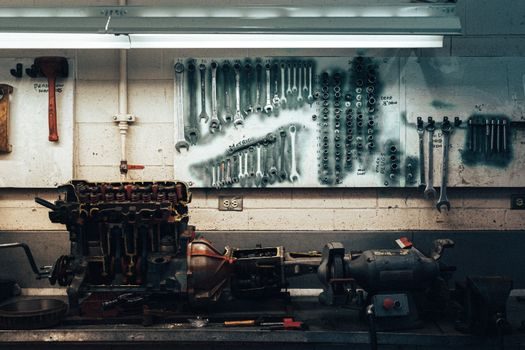
Premature scrap almost always traces to one of five root causes: contaminated air (no FRL), duty-cycle overload (gun class too small for the bolt), missed hammer-cage service, non-impact sockets (chrome-vanadium instead of Cr-Mo), and operator abuse (using a 1/2" gun on M30 truck spindles) [S1][S3]. For procurement auditing, anchor socket specs to DIN 3121 / ISO 1174-1 impact-grade standards, and air-motor ratings to ISO 15744 noise and ISO 28927 vibration data where the vendor publishes it.
The underlying component specifications are covered under total station, and impact drill.