
For a short-duration job of roughly 4-6 weeks, renting a 1700 W electric rebar bender rated to 1 inch (#8) bar typically costs a fraction of buying outright, and the rental delivers a 6-7 second bend cycle with 180° precision out of the box [S3][S2].
Three real rental SKUs already on the market in 2026 set the practical envelope: a 1" handheld electric unit [S4], a 1700 W bench bender hitting #8 rebar in 6-7 seconds [S3], and a portable hydraulic machine shipped nationwide with hoses, fittings, and a carrying case [S1].
What "Short Project" Actually Means in Bend-Hours
A short project is not a calendar window, it is a bend-hour budget: the number of hours the machine will actually be cycling bar, not the number of days it sits on site. A 6-7 second bend cycle on a 1700 W bench unit [S3] works out to roughly 500-700 bends per productive hour once feed and repositioning are included, and most slab-and-footing packages under ~2,000 bends clear the bench in 3-5 working days. Once that active window stays below ~4 weeks, rental math beats purchase math because ownership overhead (depreciation, periodic calibration, shear pin and die wear, storage, insurance) keeps accruing while the machine sits idle. A practical decision split used by GTA contractors in mid-2026: "a few bends, light bar" stays on a hickey bar, "a repeating job or ongoing bending across the project" goes to a rented electric bender, and "one job, a fixed list of cuts and bends" is sent out to a cut-and-bend shop so no machine lands on site at all [S5].
Rental vs Purchase: A Criteria-by-Criteria Comparison
Rental and purchase diverge on four measurable axes: cash profile, capacity ceiling, maintenance liability, and flexibility. On cash, a daily or weekly rental rate avoids the lump-sum capital outlay of a new electric bender and converts a fixed cost into a variable cost tied to the actual bend-hour window [S1][S2]. On capacity, rental inventory already covers the 1 inch / #8 envelope, which is the most common upper limit on short commercial and residential work [S2][S3][S4]; stepping above #8 (10M, 15M, 20M metric) is precisely where hand-bending stops working and the cost calculus flips toward a heavier machine or a cut-and-bend supplier [S5]. On maintenance, rental shifts shear-pin, die, and pump failures to the rental house, while purchase puts the contractor on the hook for spares, scheduled die replacement, and the on-site downtime that follows. On flexibility, rent-to-own programs that apply a portion of rental fees toward the eventual purchase let a contractor validate a specific model on a real job before committing capital [S1]. When a single project has a fixed bar list, a third option often beats both: shipped cut-and-bend rebar, which trades machine time for a per-pound fabricated cost that is higher than raw bar but eliminates hauling, setup, and on-site power entirely [S5][S6].
Bar Size and Bend Type Drive the Real Decision
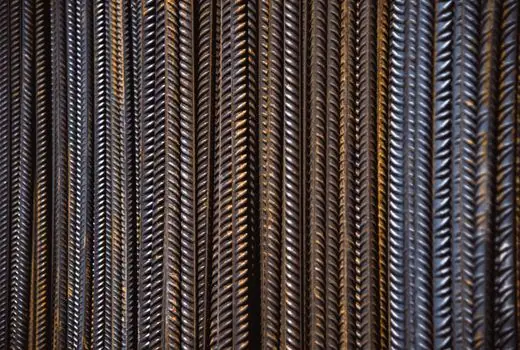
Bar diameter and bend count, not project nameplate value, are the inputs that determine whether a rented electric bender pays for itself. Light bar (10M, odd 15M) and a handful of bends are still faster to handle with a hickey bar than to mobilise a machine for [S5]. Once the work shifts to 15M and 20M bars, or to high-count repetitive shapes (stirrups, ties, L-bends, hooks, dowels), the labor savings from a 6-7 second repeatable bend cycle overtake the daily or weekly rental line in well under a shift [S3][S5]. The engineering reason matters: cold bending with a properly sized die preserves the bar's yield strength at the bend zone, while torch-heating the same bar locally weakens the steel at exactly the location where reinforcing steel is supposed to carry load [S5]. For rebar sizing reference data used to size the bend, the D²/162 derivation and kg/m chart in the rebar weight reference gives the mass per meter that drives both bend-cycle time and crane-handling decisions on site. Common on-site bend families (stirrups and column ties, L-bends and hooks anchoring into footings, and dowels tying one pour to the next) are precisely the repetitive shapes where a rented electric bender earns its rate [S5].
What a Typical Rental Package Includes
Standard 2026 rental packages bundle the bender, the matching hydraulic pump (for portable hydraulic units), hoses, fittings, a carrying case, and basic operator training [S1]. Electric bench units like the 1700 W class ship ready to plug into single-phase power and bend #8 rebar in 6-7 seconds per cycle [S3]. Handheld 1" electric benders cover the same bar capacity in a smaller footprint for crews working on scaffolding or in tight rebar cages [S4]. Terms to confirm before signing: daily, weekly, and monthly rate tiers; security deposit; insurance options; long-term discounts; nationwide shipping where the project is away from a rental branch; and whether the contract includes a rent-to-own conversion clause that credits part of the rental fees toward purchase [S1]. For a metric-project analog, the same logic applies to 10M / 15M / 20M bar (the Canadian soft-metric series), and the same rule of thumb (one person spending hours bending means the machine has already won) holds regardless of the bar standard in use [S5].
When Buying Is the Correct Answer
Purchase is the right call under three conditions, all measurable. First, sustained volume: a contractor running more than ~6-8 months of active bending per year crosses a typical 12-18 month rental-to-purchase break-even. Second, crew continuity: the same crew is shaping the same bar list on adjacent jobs, so transport and setup are not recurring soft costs. Third, capacity above the rental fleet: jobs that require bar larger than 1 inch (#8), or production-rate continuous cycling, exceed what the standard rental SKUs cover, so a heavier owned machine becomes the only option [S2][S3][S4]. If only the first condition holds but capacity stays within the 1 inch / #8 envelope, rent-to-own is the lowest-risk path because it lets the rental fees themselves fund the eventual purchase [S1].
Failure Modes and Field Constraints to Plan For
Three field constraints bite short-project bender work and they should be priced into the rental-versus-buy decision. First, power: a 1700 W electric bench bender needs a clean single-phase supply and a breaker sized for its inrush; a portable hydraulic unit needs the matching pump and enough hose length to reach the bending station [S1][S3]. Second, die wear: bending #8 bar repeatedly rounds the inside radius of the bend die, and a worn die produces inconsistent angles that fail inspection; rental houses typically swap dies between jobs, while owners must track bend count and replace on schedule. Third, operator skill: hand-bending "close enough" angles is the failure mode that pushes inspectors to reject cages, and it is the exact inconsistency a calibrated electric bender removes [S5]. On the upstream side, rebar unit weight at #4, #5 and #6 feeds the per-bend handling cost and the crane-pick sizing that has to be solved before the bender is even wheeled onto the deck. A second related constraint is that prefabricated bent bar costs more per pound than standard-length raw bar, so the cut-and-bend alternative only wins on single fixed lists; on repeating work the per-pound premium adds up faster than the rental rate saves [S6].
Sourcing, Standards, and a Trackable Signal
The 2026 rental market for electric rebar benders is broad enough that a short-project contractor can usually source a 1" / #8 unit within a single day's drive in most North American metros, with at least four major rental channels (Sunbelt, EquipmentShare, Cresco, and portable-hydraulic specialists like Pacific Benders) actively listing the class [S1][S2][S3][S4]. Bend-angle and bar-size ratings on these units follow the same #3-#8 imperial / 10M-25M metric envelope that drives the bar sizing tables published in ACI 318 and CSA A23.1, though project specifications and any local bend-radius mandates (typically 4d for #3-#5 and 6d for #6 and larger in ACI 318) govern the final die choice and must be confirmed against the project spec before any bar is bent, cold or otherwise. Trackable signals to watch over the next quarter: rental fleets adding 20M- and 25M-rated electric benders (which would shift the rental-vs-purchase break-even upward for heavier work), and cut-and-bend shops publishing per-pound delivered pricing for typical footing and column bar lists (which would let a contractor run a clean side-by-side against the daily or weekly rental rate for any single fixed bar list) [S1][S2][S3][S4][S5].
The underlying component specifications are covered under rebar bender, rebar, and rebar coupler.