
A rebar bender sized to the bar diameter and the bend schedule is the first hard gate on an interior finishing package, because undersized machines produce out-of-tolerance angles that crack the concrete cover or pop the plaster.
For tenant improvement and high-end design work, the working envelope typically runs from #3 (10 mm) up to #8 (25 mm) rebar, with electric handheld units covering the 10-16 mm band, hydraulic bench benders owning the 19-25 mm band, and 32-42 mm industrial bar benders reserved for structural columns, footings, and transfer beams that border the finish scope [S2][S3].
Capacity bands and what each one is actually for
Three capacity tiers show up in the 2026 distributor and OEM catalogs: light-duty electric benders rated for #4 to #5 rebar, mid-duty hydraulic benders rated for #6 to #8, and heavy-duty machines rated for #9 to #11 (29-36 mm) and beyond [S2][S3].
The light-duty class, exemplified by the California Concrete Tool RB-321A electric rebar bender rated for #10 (1.25 in / 32 mm) Grade 60 rebar, runs on standard 110 V power, weighs under 50 kg, and bends a single bar per cycle, which fits countertop, fireplace lintel, and decorative screen inserts where bend counts are low and bar runs are short [S3]. The mid-duty hydraulic class, including the RB-258N electric-hydraulic bender rated for #8 (1 in / 25 mm) rebar, delivers higher torque per stroke and is the right tool for slab-edge dowels, stair stringer reinforcement, and partition wall kickers that require dozens of consistent 90-degree bends per shift [S3]. The 42 mm flagship class, represented by TAEYEON B&C models distributed in the Philippines, handles 10-42 mm bar at the upper end and belongs on the structural side of a project, not inside the finish trade package [S2].
Bend angle tolerance and Grade 60 behaviour
ASTM A615 Grade 60 rebar is specified across most North American interior fit-outs, and its 60 ksi yield and 90 ksi tensile envelope means cold-bending past roughly 90 degrees without a mandrel risks micro-cracking on the tension face of the bend. [S3]
Mandrel-radius control is therefore the second selection gate, not just diameter. Most 2026-vintage electric benders in the #4-#5 class ship with a fixed-radius former sized to the bar (typically 2d to 4d for stirrups and ties), while the hydraulic #6-#8 class offers interchangeable pins so the same machine can produce code-compliant 90-degree and 135-degree seismic hooks at different bar sizes [S3]. For interior finish work that interfaces with structural slabs, ACI 318 stirrup and tie geometry drives the pin choice; 135-degree seismic hooks at #4 and #5 are a common requirement, and a handheld electric bender without a 135-degree stop should be rejected for that work. Operators should also note that Grade 60 rebar rebound 2-4 degrees off the machine, so the angle indicator on the bender should be set 2-4 degrees past the target to land on-spec, a calibration point that handheld units under $1,000 routinely miss.
Power, footprint, and the finishing-trade context
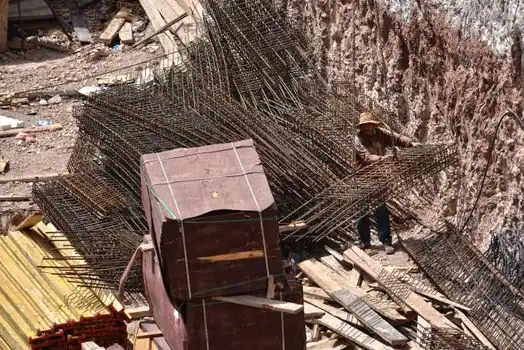
Power class is the third gate, and it tracks directly with the finishing-trade context: drywall, tile, stone, and acoustic ceiling crews do not run 480 V three-phase on the floor, so any bender above 15 A draw at 110 V needs a step-up transformer or a dedicated generator drop. [S1]
Light-duty electric benders pull 8-12 A at 110 V and can share a standard 15 A branch circuit with a chop saw or a small compressor, which is why they dominate finish-trade carts. Mid-duty hydraulic benders draw 15-20 A at 110 V (or 7-10 A at 220 V single-phase), and the RB-258N-class machine needs a dedicated 20 A circuit plus a 2.5 m cord to clear the bend table, which is workable on a ground-floor fit-out but awkward on a high-rise interior swing stage [S3]. Heavy-duty 42 mm-class units from TAEYEON B&C run on 220-440 V three-phase, weigh 200-400 kg, and are not realistic on a finished floor without crane access, which is why they sit in the structural phase and are demobilized before the finish trades mobilize [S2]. The rebar bender and rebar cutter encyclopedia pages list the typical cycle times and pin interchange kits for each class.
When to size up, and when to send it back
There are four hard reasons to send a light-duty bender back to the shop and pull a mid- or heavy-duty unit instead, even on a finish-trade scope: bend count above 200 per shift, bar diameter above 16 mm, bend angle above 135 degrees, or any bend with a code-mandated mandrel radius larger than the machine's pin set. [S2]
Conversely, there are three reasons to keep a heavy-duty machine off the finish floor even when the schedule is tight: its 200-400 kg footprint will crack unprotected concrete slabs not yet at design strength, its three-phase power requirement forces a temp drop that the finish-trade electrical budget cannot absorb, and its per-cycle cost in setup time wipes out the throughput gain when the crew is only feeding 30-50 bends per day [S2]. A practical rule: if the bar is #5 or smaller, the bend count is under 150 per day, and the angle is 90 degrees with a standard 2d-3d pin, stay on the light-duty electric bender; if any one of those three gates trips, step up to the hydraulic mid-duty class. For the rebar and rebar coupler material specs that drive these bar-diameter gates, the encyclopedia entries are the reference.
Comparison: light-duty electric vs mid-duty hydraulic vs 42 mm industrial
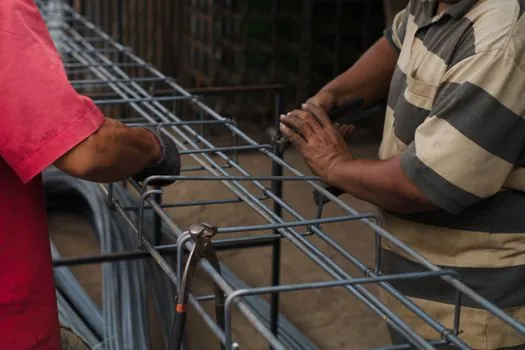
Three criteria separate the classes: bar diameter range, power requirement, and per-shift bend count ceiling. [S3]
Light-duty electric (e.g. RB-321A): 10-32 mm capacity (advertised #10), 110 V / 8-12 A, 100-150 bends per shift, $2,000-$2,500 list price, 35-50 kg, single-operator cart-mountable [S3]. Mid-duty hydraulic (e.g. RB-258N): 10-25 mm capacity (#8), 110 V / 15-20 A or 220 V single-phase, 200-400 bends per shift, $800-$1,500 list price for the bench unit, 60-90 kg, two-operator with bench [S3]. 42 mm industrial (e.g. TAEYEON B&C TYB-HD42D): 10-42 mm capacity, 220-440 V three-phase, 300-600 bends per shift at large diameters, list price on application, 200-400 kg, requires rigging and structural floor [S2]. The light-duty class is the right default for interior finish work; the mid-duty class is the right escalation when bar size or bend count exceeds the light-duty ceiling; the 42 mm class is a structural-phase tool that should not be specified inside a finish-trade scope.
Sourcing, standards, and trackable signals
ASTM A615 Grade 60 is the dominant rebar specification in the North American interior fit-out market, and ACI 318 governs the bend and hook geometry; OSHA 29 CFR 1926.702 covers the operator-side guarding and pin-retention requirements for powered benders on a jobsite. [S3]
Distributors like CNB Machinery (exclusive TAEYEON B&C distributor in the Philippines) and retailers like California Concrete Tool (RB-321A, RB-258N) carry in-stock 2026 production units with model-specific spare parts (carbon brush sets, cutter blocks, piston assemblies) on the shelf, which is the practical signal that the model is still in production and supported [S2][S3]. Two trackable signals to watch through the rest of 2026: cordless 18-36 V handheld benders entering the #4-#5 capacity band (would change the power-class gate for finish trades), and tighter OSHA enforcement of pin-retention guarding on 110 V hydraulic benders after the 2025 rebar-strike incidents. For related spec work, the finishing material and rebar straightener encyclopedia entries cover the adjacent process steps.
This topic is covered further in Engineering Plastic Selection for Medical Devices: 2026 Grade Map.