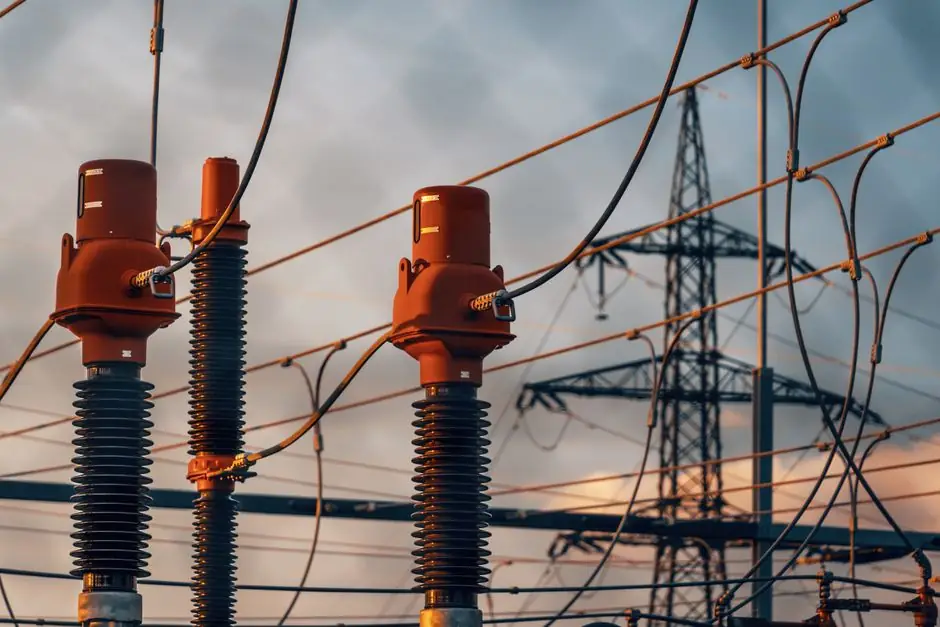
An air pick deployed on conduit, cable-tray, switchgear pad and GI trunking jobs sits in the 10-20 kg mass class with a striking rate of 1500-2000 bpm and a piston bore around 25-28 mm, and is normally fed by a portable 0.6-1.0 m³/min compressor at 6-7 bar [S3].
Electrical-installation scopes differ from general chipping: work is mostly light demolition of cured mortar around conduit entries, breakout of cable-tray penetrations, chasing of plaster for conduit runs, and pad preparation for LV switchgear bases, so impact energy matters more than raw breaking force.
Why an air pick, and not a rotary hammer, on conduit and tray work
Rotary hammers deliver percussive energy into a rotating bit, which is correct for drilling anchor holes but wrong for mortar breakout around a cable tray where the steel edge must not be nicked; the reciprocating chisel action of an air pick keeps the steel face clear while breaking out the surrounding substrate [S3].
For light LV work (conduit chasing, switchgear pad trimming, GI conduit saddle breakout) the air pick in 10-15 kg form gives a single-hit energy of 5-15 J, which is well matched to 20-40 mm cement render and brick-mortar interfaces without the rebound shock that 25-30 kg breakers deliver into switchroom floors [S3].
Spec gates that decide the model, not the brand
The four hard gates for an electrical installation air pick are: mass under 15 kg for ceiling and tray work above 2.4 m, piston bore 25-28 mm, rated air consumption 0.5-0.6 m³/min at 6.2 bar, and a built-in trigger throttle with a latch-off that fails closed on air loss [S3].
Anti-vibration handle assemblies with a measured 3-axis vibration value below 15 m/s² on the trigger hand are preferred on long shift work, since chiselling 30-40 m of conduit saddle per day inside a live plant room exceeds the daily A(8) exposure threshold; see the parallel air pick selection for road maintenance map for the same tool on heavier substrate, where the mass and vibration limits differ.
Compressor and air-treatment pairing
A 0.6-1.0 m³/min portable compressor at 6-7 bar dynamic pressure is the standard pairing, with the receiver sized at least 1.5x the tool's per-minute air consumption to prevent the compressor cycling into the pressure band where the pick loses impact energy [S3].
Inline lubrication is mandatory for piston air picks used on electrical sites, since moisture in plant-room air is high; fit a near-tool lubricator set to 2-3 drops per minute plus a moisture separator with auto-drain, and reject any pick that has no lubrication port, because starved-piston failure on a 28 mm bore is normally visible as scoring within 200 operating hours [S3].
Selection matrix for the four common electrical-installation tasks
Task-by-task, the matrix reads: conduit chasing in brick = 8-12 kg pick, 20 mm chisel, 6 bar; GI conduit saddle breakout in cured concrete = 10-15 kg pick, 25 mm chisel, 6-7 bar; cable-tray penetration in blockwork = 12-18 kg pick, 28 mm chisel, 7 bar; LV switchgear pad trimming = 15-20 kg pick, 30 mm wide chisel, 7 bar; the chassis selection here mirrors the pneumatic actuator duty-class thinking, only with stroke energy instead of torque. [S3]
For each task, the same air-line rule applies: keep hose length under 8 m of 19 mm ID hose to hold pressure drop below 0.3 bar at the tool inlet, otherwise the percussive energy falls off and the operator compensates by leaning harder, which is the most common root cause of HAVS claims on this category of work [S3].
Failure modes, safety gates, and when to escalate
The three failure modes to watch on electrical-site air picks are: (1) dry-piston seizure, visible as blow-by past the throttle within the first 50 hours and always tied to a missing or empty lubricator; (2) chisel shank fracture, almost always at the collar and traceable to a 19 mm shank tool being run on a 28 mm shank holder with a sleeve adapter; (3) hose whip on coupling failure, which on a 7 bar pick can throw 5 m of 19 mm hose across a switchroom and must be prevented by correctly fitted safety-pin-claw couplings on every joint [S3].
Replacement, not repair, is the correct call on any pick that has measurable scoring past 0.2 mm on the piston wall, or that fails to hold within 0.2 bar of the working pressure when the trigger is latched for 30 s, since both are early indicators of a worn cylinder that will not pass an in-service leak test on a switchgear installation handover.
For broader fleet guidance, the air impact wrench selection notes cover the same compressor hygiene rules that apply here. Next signals worth tracking: the 6-month revision of SAE ARP 4404C-2013 conductor-installation clauses (current edition issued 2013-11) [S1], and any 2026 update to the GI conduit method statement for 19-25 mm conduit saddles.