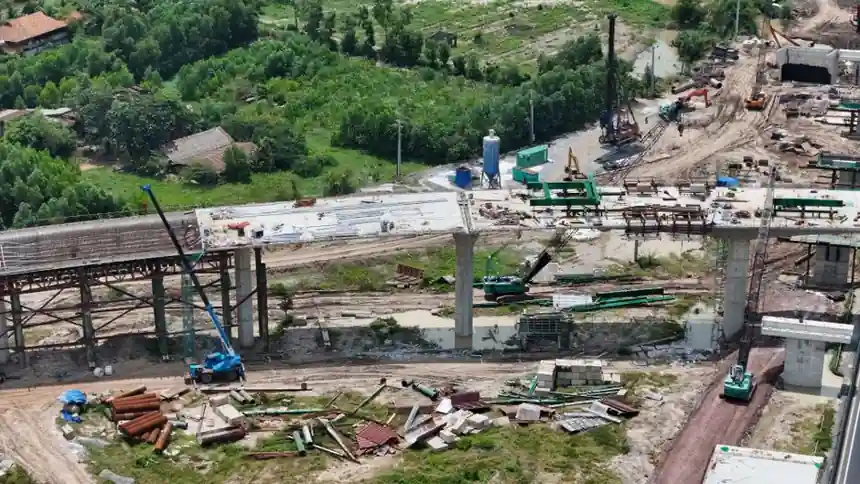
Mechanical rebar couplers are quoted at a higher unit price than the bare steel involved in a lap splice, but on a per-splice installed basis the equation flips once the lap's overlap length, freight, congestion labor, and code-driven extensions are priced in [S1][S2]. Published contractor data puts total installed savings at 20-50% versus lap splicing on typical production work [S2], and 125-150% greater tensile capacity at the splice itself [S4][S6].
The most important cost driver is the splice length the code requires you to buy, not the coupler's catalog price: building codes demand up to 50% longer lap laps for epoxy-coated or galvanized bars than for standard black rebar, which inflates the steel tonnage the lap method consumes [S2][S3]. On those bar types, the per-splice delta between a coupler and a code-compliant lap can swing the bid decisively toward mechanical splicing.
What Drives the Per-Splice Cost of a Mechanical Coupler
A standard mechanical splice consists of a steel sleeve slightly larger than the bar diameter, normally cold-pressed or threaded against the bar ends; embedment as low as 2 bar diameters (2db) per side is enough to transfer tensile load, so the sleeve itself adds only a few inches of length to the joint [S3]. That compact envelope is where the per-splice cost advantage starts: the splice zone consumes almost no additional rebar, while a Class B tension lap in #8 (25M) bar at 4,000 psi concrete is on the order of 30-40 bar diameters of overlap, often 30-40 in (760-1,015 mm) per side [S1].
Unit pricing on the coupler itself scales with bar diameter and grade, with parallel-threaded and taper-threaded couplers on larger bars carrying a meaningful premium over swaged or grouted-sleeve options [S3][S4]. ACI 318-19 clause 25.5.7.1 requires mechanical splices in tension to deliver higher performance than lap splices, typically 125% of specified yield, which is why Type 2 (full-strength) couplers cost more than compression-only or grout-filled sleeves [S3][S6]. Buyers who do not need seismic-grade performance can specify compression splices for column verticals and save substantially, but tension-zone and plastic-hinge regions must stay at the 125% capacity tier [S3].
Lap Splice Costs: What the Hidden Overhead Looks Like
Lap splicing's catalog line item is misleadingly cheap: two pieces of rebar overlapping in a beam-column joint. The actual installed cost includes the overlap steel, the freight on that extra tonnage, the extra transverse ties or spirals required by code at the lap zone, and the labor to tie denser cages [S1][S3]. Larger bar sizes amplify each of these because the lap length scales with bar diameter and the splice zone is where congestion is worst, often producing rock pockets and voids that force vibration rework and patching [S1].
On coated bars the math is the worst: codes require up to 50% longer laps on epoxy-coated or galvanized rebar to recover the bond loss from the coating, which means a 40db lap becomes a 60db lap and the steel in the splice zone roughly doubles versus the equivalent black-bar job [S2][S3]. For bridge decks, coastal piers, and parking structures where epoxy-coated rebar is standard, the lap method's cost advantage over couplers effectively disappears, and coupler projects regularly finish 20-50% under the lap-splice baseline on those bar types [S2].
Cost Driver Comparison: Coupler vs Lap Splice
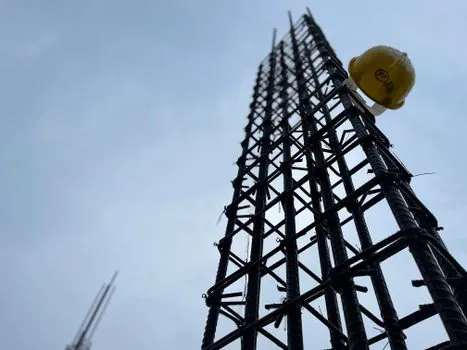
On a per-splice basis the four decision criteria that move the price most are: (1) bar diameter, (2) bar coating, (3) congestion at the joint, and (4) seismic/seismic-adjacent detailing. On small-diameter black bar in low-seismic interior slabs, the lap splice is still hard to beat on unit cost, because the lap length is short and congestion is not binding. On #8 (25M) and larger epoxy-coated bars in moment frames, pile caps, or bridge piers, the coupler wins on every criterion: less steel tonnage, less freight, less tie labor, less rework, and code-mandated performance the lap cannot match [S1][S2][S3][S4].
Quantitatively, published estimates put the per-splice savings band at 20-50% on production work when all hidden costs are loaded, with the upper end achievable on large-diameter coated bar in congested joints [S2]. The mechanical-splice capacity uplift over the lap it replaces is 125-150% of yield, verified by third-party test data on major product lines [S4][S6]. For procurement, the practical rule is: if the bar is #7 (22M) or smaller, uncoated, and in a non-seismic slab, run the lap; if it is #8 (25M) or larger, coated, or in a seismic frame, run the coupler.
Total Installed Cost: Steel, Freight, Labor, and Time
Specifiers comparing methods need to look past the coupler's catalog line and load four indirect costs: (a) the extra rebar tonnage the lap consumes, (b) freight on that tonnage from the mill to the yard to the site, (c) tie-in labor and any required transverse reinforcement at the lap zone, and (d) rework from congestion-driven voids [S1][S3]. Each of these tracks roughly linearly with lap length, so a 50% longer epoxy-coated lap pulls all four costs up together, which is the mechanism behind the 20-50% installed savings on coated-bar work [S2].
For related field economics on rebar buying units, see the unit-cost breakdown in Rebar Pricing: $/cwt vs $/ton vs $/piece Compared; the same $/cwt-versus-per-piece logic that affects rebar procurement also shifts the per-splice comparison when the coupler is sold per piece and the lap is sold per cwt. Schedule savings compound the cost case: prefabricated rebar cages (PRCs) connected with couplers reduce crane time and field labor versus field-tied lap cages, and segmental pours with form-saver couplers preserve reusable forms that lap splicing would puncture with protruding dowels [S1].
Selection Criteria: When a Lap Splice Still Wins

The lap splice is not obsolete, and the per-splice cost case for couplers collapses on small-diameter, uncoated, non-seismic bar in low-congestion locations. A short lap on #4 (13M) or #5 (16M) bar in a slab or footing has minimal material overhead, no coating penalty, and is faster for crews that already have a tying rhythm. On those locations the coupler's unit premium outweighs the steel and labor savings, and pushing the coupler through the bid will inflate the total [S1][S3].
A practical threshold from the field literature: couplers become cost-efficient at roughly #7 (22M) and above, become decisively cheaper at #8 (25M) and above, and are essentially mandatory at #11 (36M) and above where the lap length is unbuildable in a normal column [S1][S3]. Lap splicing also remains acceptable for compression-only column splices in low-seismic regions, where a compression coupler is not required and the lap transfers load through the concrete reliably [S3].
Coupler Type Selection by Joint Condition
Five coupler families cover the bulk of structural work, and the per-splice cost varies meaningfully across them [S3][S4]. Taper-threaded couplers are the most common for column verticals where free bar rotation is available, parallel-threaded (upset-end) couplers carry the highest tensile capacity and are used in seismic Type 2 splices, shear-bolt couplers need no bar-end prep and are fastest in the field, grouted sleeves suit precast connections and confined spaces, and weldable couplers bridge steel-to-concrete transitions [S4]. A shear-bolt or grouted-sleeve coupler on a #8 epoxy-coated bar in a bridge pier is materially cheaper installed than a parallel-threaded Type 2 coupler, but the latter is the only option when the splice sits inside a plastic-hinge region of a moment frame [S3][S4].
For cutting and prep on the bar ends that feed into these couplers, a rebar cutter matched to the bar size keeps the end square and undamaged, which is critical for threaded and swaged systems that depend on full cross-section engagement. Field crews pairing parallel-threaded couplers with a rebar bender for hooked-bar details at the splice zone can usually hold lap-zone congestion to one bar diameter of clear cover, which keeps the splice inside the column cage without forcing the column to grow.
Limitations and Failure Modes to Price In

Couplers fail in three predictable ways when they fail at all: bar-end prep damage (a deformed thread or bent bar end), under-torqued shear bolts on shear-bolt systems, and grout voids in grouted-sleeve splices. Each of these is a quality-control issue, not a design issue, and each is detectable with a calibrated torque wrench, end-prep visual inspection, or pre-grout mockup. On the lap side, the failure modes are different: bond loss from poor consolidation, corrosion-driven splice failure on coated bars with cracked concrete, and seismic pull-out in plastic-hinge regions where the lap cannot develop the bar's ultimate strength [S1][S2][S3]. Pricing the risk of these failure modes into the bid favors the coupler on seismic and coastal work because the lap's failure modes are load-path failures, not workmanship failures.
Standard compliance: ACI 318-19 clause 25.5.7.1 governs mechanical-splice performance in tension, requiring the splice to develop at least 125% of the specified yield of the bar, with Type 2 splices required in most seismic detailing [S3]. ICC-ES AC133 and the corresponding BS 8110 / ISO 15835 family cover testing and classification for the major product lines, and project specs in North America typically reference ACI 318 plus a specific AC133-listed product.
Trackable Signals Going Forward
Two data points to watch over the next two quarters: (1) ACI 318-25 commentary updates, if any, on lap-length multipliers for stainless and zinc-coated bars, which would shift the coated-bar cost case for couplers further; (2) mill surcharges on epoxy-coated rebar relative to black bar, since the spread between the two is the single largest driver of the 20-50% installed savings band. A widening spread lifts the coupler's case, a narrowing spread compresses it; bid numbers in 2026 should be re-checked against the current coated-to-black bar premium before locking the splice method on a bridge or coastal substructure. [S3]