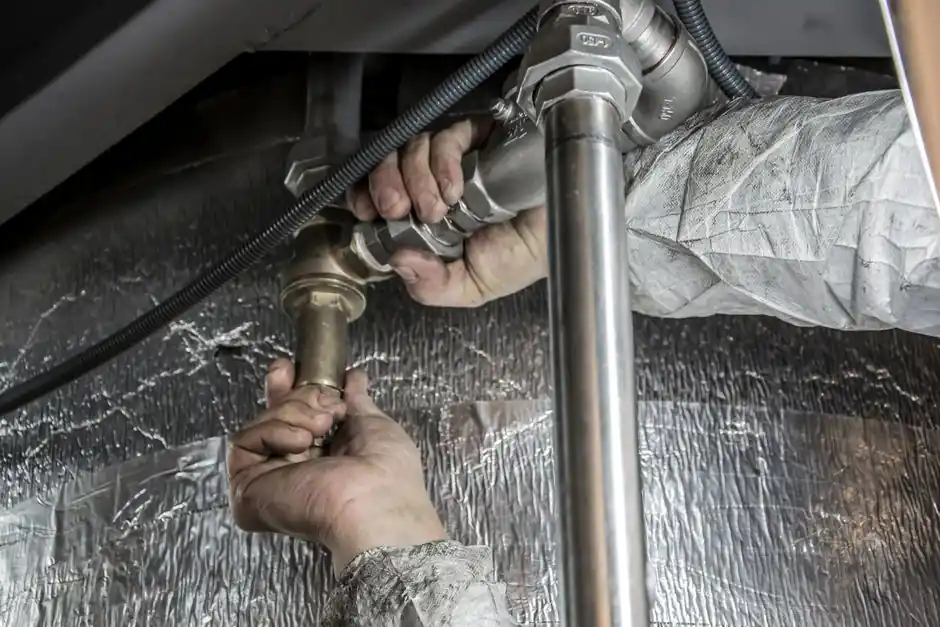
Plumbing infrastructure (pump stations, water and wastewater treatment basins, wet wells, valve chambers) relies on heavy rebar congestion at wall-to-slab intersections, where lap splices waste steel and length; mechanical rebar couplers in the 12-50 mm size range are the standard alternative on most 2026 commercial specifications [S1][S4].
Selection is governed by bar grade (typically HRB400/HRB500 in China, Grade 60/75 in North America), water-treatment exposure class, and the splice's tension zone location; coupler body material and thread/process type follow from those decisions [S3][S4]. For water and sewer plant work, contractors such as Whitacre Rebar list mechanical couplers as a core product line alongside bar supports and welded wire fabric [S2].
Three Coupler Types Compared for Plumbing Splices
Parallel-thread (rolled-end) couplers in 40Cr or 45# carbon steel are the most common for standard plumbing reinforcement, with manufacturers such as BARTECH supplying both standard and positional variants plus transition couplers for mixed-diameter bars [S4]. Upset-forged parallel-thread couplers are specified for high-grade HRB500 bars because the upset end enlarges the cross-section before threading, preserving tensile capacity at the splice. Cold-pressed (sleeve) couplers use 20# or 16Mn raw material and a hydraulic press, with one Chinese OEM explicitly targeting construction repair systems where threading equipment is not available on site [S4]. The three families differ on installation equipment, on-site skill, and minimum bar diameter, which is what drives the choice on a congested plumbing slab rather than headline strength.
Size Range, Bar Grades, and Acceptance Criteria
Ok Engineering Works in India lists rebar couplers at $0.50-5.90 per piece with MOQ not specified, covering the size band that dominates plumbing work [S1]. Shenzhen Gulis (Golisso brand) reports daily production capacity above 500,000 coupler pieces, supplying state-owned contractors on projects such as the Jakarta-Bandung High-Speed Railway; the company holds 3 ISO system certifications and 29 patents, and participates in Chinese industry-standard formulation for steel-bar mechanical connection [S3]. Plastic thread-protection covers are stocked as a separate consumable line because field threads corrode within days on open-site plumbing pours [S4].
Where Couplers Beat Lap Splices in Plumbing Work
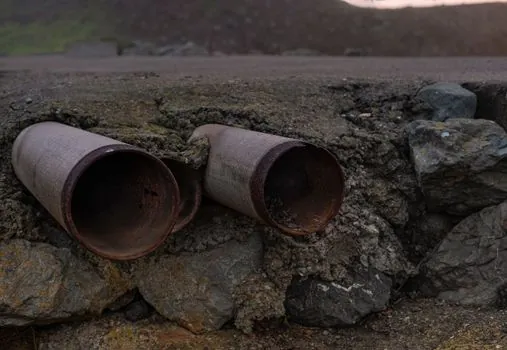
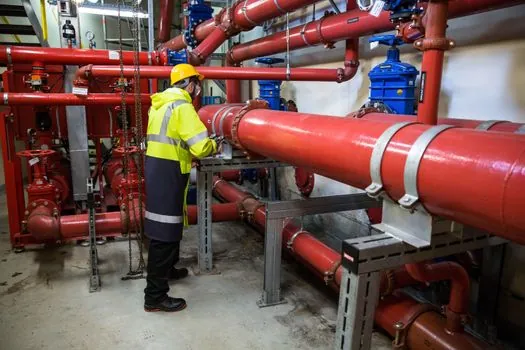
Whitacre Rebar's portfolio, which includes the Poughkeieepsie Water Treatment Facility serving 80,000 residents, is a representative case of a water-plant project where mechanical couplers are routine for column-to-wall and wall-to-slab continuity [S2]. Gulf Coast Rebar's L8 Pump Station in West Palm Beach is a comparable Florida utility project where rebar installation, including coupler work, was delivered on the placing side [S5]. In both cases, the couplers were chosen because lap splices would have created rebar clashes with embedded piping, conduits, and water-stop details.
Selection Criteria Checklist for a Plumbing Spec
First, fix the bar diameter and grade: HRB400 (Grade 60) up to 32 mm can use rolled-end parallel-thread couplers in 45# steel, while HRB500 (Grade 75) above 32 mm normally requires upset-forged ends. Second, check the corrosion environment: buried wet-well walls and chemical-room slabs favour cold-pressed sleeves with 16Mn bodies over threaded couplers, because there are no exposed threads to protect. Third, confirm the installation toolchain: a rebar thread rolling machine for parallel-thread work, an upsetting machine for the forged-end path, and a manual or powered pressing machine for the cold-pressed route; threading-rolling machines in the 100-300 mm thread-length class are the working envelope for most plumbing bar sizes [S4]. Fourth, verify the on-site QA: torque values on threaded couplers, press-force logs on cold-pressed sleeves, and a calibrated rebar bender plus straightener for the bent bars feeding the splice.
Failure Modes and When to Replace Rather Than Reuse
Thread damage from mishandling is the most common field failure; a coupler whose thread gauge fails, or whose body shows visible cracks after a press cycle, must be cut out, not re-used. Plastic thread covers must be left in place until the moment of final assembly on a plumbing pour, because rust in the thread race will prevent torque-to-spec seating and the joint will slip under tension. If the bar end is not square (over-cut on the rebar cutter side), the rolled thread depth will be short of engagement and the splice will fail a pull test even at correct torque; in that case, re-cut the bar end and re-thread rather than compensate with more torque. For couplers specified for chemical-room or chlorine-contact zones, confirm the body material and any coating match the exposure class; a standard 45# carbon-steel coupler is not a substitute for a stainless or epoxy-coated variant in those locations. [S4]
Standards, Documentation, and the Working Reference
Plumbing projects in North America typically call out ACI 318 Chapter 25 (splices) and the project's structural general notes; CRSI and post-tensioning industry documents are the most-cited association references in the contractor community [S5]. Chinese plumbing infrastructure follows JGJ 107 for mechanical splice classification and the relevant GB/T 1499 series for rebar grade definitions, with manufacturer references such as Gulis participating directly in industry-standard drafting [S3]. For the rebar coupler itself, request the manufacturer's type-test report (tensile, cyclic, and slip), traceability on body material (40Cr, 45#, 20#, 16Mn), and a rebar straightener calibration record for bars feeding the threading line on site. Cross-check the QA paperwork against the structural drawing's splice schedule before pour, and reject any coupler lot without batch traceability.
Trackable signals for the next purchasing cycle: (1) confirm whether the project's structural engineer has called out a specific mechanical-splice code class (Type 1 vs Type 2 in ACI 318 terms) on the latest revision; (2) verify the coupler supplier's type-test certificate is dated within 24 months and tied to the bar diameters actually being threaded; (3) keep a one-lot reserve of plastic thread covers on site for plumbing pours scheduled more than seven days after threading.
See also our earlier report, Industrial PC selection for water treatment: 2026 specs and field reality.