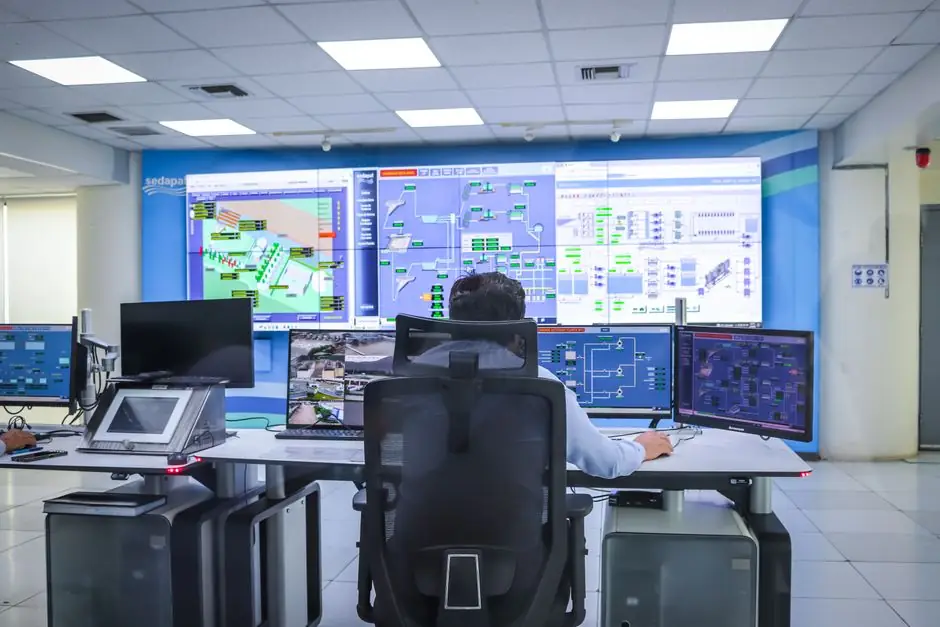
An industrial PC for water treatment is not a desktop in a panel, and selecting one as if it were will burn a maintenance budget inside two years. Plants in mining, food and beverage, and chemical processing routinely run 24/7 in ambient temperatures of 5-45 °C, with relative humidity above 90 % and airborne H2S, Cl2, or NaOCl vapour present [S1][S2].
Total dissolved solids (TDS) recovery loops now target 90 % reuse or higher, with distillation trains pushing 99 % recovery on the clean-water side [S2]. Holding that envelope steady requires a control platform that does not flake at the first condensate drip, surge, or pump VFD transient. WOG reports treating 1,200+ million litres of water annually and saving 800+ million litres of freshwater per year across its installed base, a scale at which any single IPC reboot is a measurable revenue event [S3].
Definition and operating envelope
An industrial PC is a sealed, fanless or controlled-airflow computer built around industrial temperature-grade components, typically rated 0-50 °C or -20 to 70 °C ambient with no moving parts except controlled cooling [S1][S2]. For water treatment, the realistic envelope narrows: cabinet interior near a RO skid routinely sees 40-50 °C in summer, plus 95 % RH condensing conditions on cold pipes, plus 5G of mechanical vibration from dosing pumps.
Three sub-categories dominate procurement: panel PCs with integrated HMI touchscreens (10-22 in), modular PLC-style IPCs (DIN-rail mount, slice I/O), and embedded box PCs (book-size, headless, paired with a separate SCADA HMI). Reverse-osmosis skids, MBR/UF trains, and chemical dosing skids almost always use panel PCs because the operator needs the screen local; large municipal SCADA rooms favour headless box PCs feeding a central control room [S1][S4].
Common ports on a current-generation water-treatment IPC: 2-4 × GbE (one for SCADA, one for plant LAN, one reserved for engineering access), 2-8 × isolated RS-485 for Modbus RTU devices (flowmeters, online water analyzers, VFDs), 1-2 × USB 3.0, and HDMI/DP for local HMI. Wireless is generally avoided; an external 4G/5G modem in a separate IP65 enclosure is the safer pattern.
Selection criteria: what actually fails in the field
The four failure modes that drive replacement, in roughly this order: corrosion of unprotected I/O ports, thermal shutdown in non-cooled cabinets, SDD or eMMC failure from write amplification on historian logs, and accidental mains cross-wiring on RS-485 during maintenance [S1][S4]. Specifying against all four beats chasing CPU benchmark scores.
Conformal coating on the PCB (IEC 60068-2-78 humidity, IEC 60068-2-52 salt mist for coastal sites) is non-negotiable where Cl2 or H2S is present. Look for the explicit coating code on the datasheet, not just "industrial grade" as a marketing line. Stainless or aluminium housings rated IP65 (dust-tight, jet-wash) survive weekly washdowns; an IP20 box behind a cabinet door will not.
Storage should be industrial-grade SLC or pSLC NAND, ideally a 2.5 in SATA SSD (not eMMC) sized 128-512 GB, with the OS on a separate read-mostly partition and historian on a mirrored pair. Plan for 20-30 % over-provisioning; 24/7 SCADA logging at 1 s scan rates will eat a consumer SSD inside 18 months. RAM in 8-32 GB DDR4 with ECC is the safe band for current Ignition, WinCC, or iFIX deployments.
Power input: 9-36 VDC is the field-friendly standard because control cabinets already run 24 VDC; an internal AC-DC supply invites surge paths. Where 230 VAC is unavoidable, insist on a replaceable, snap-in filter module with documented IEC 61000-4-5 surge and IEC 61000-4-4 burst ratings on the datasheet.
Main options compared on four decision criteria
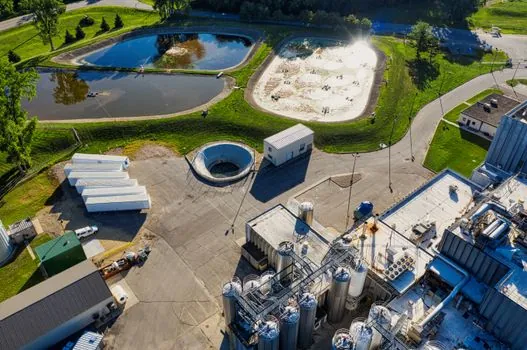
Three IPC form factors, lined up on the four criteria that matter most for water-treatment specifiers: environmental sealing, I/O density, HMI integration, and total cost of ownership over a 10-year life. Panel PCs lead on HMI integration and acceptable sealing, modular PLC-IPCs lead on I/O and serviceability, embedded box PCs lead on footprint and TCO when a central SCADA already exists [S1][S4].
Modular PLC-style IPCs, for example slice-CPU designs that mount on DIN rail next to standard I/O, score highest on field serviceability: a failed CPU module swaps in under five minutes without breaking the IP65 seal on the cabinet door. They score lowest on raw HMI, since the screen is a separate purchase. Embedded box PCs are the cheapest per unit and the smallest, typically 150-200 mm wide, but you pay for the separate industrial monitor and the engineering to mount it cleanly.
Panel PCs in the 10-15 in range are the dominant choice for RO, UF, and MBR skids because operators want one device on the door. The compromise is repair: a cracked touchscreen on a 12 in panel PC means the whole front bezel comes off, and a 10-year-old part may be obsolete. Specifying the panel PC with a separate, replaceable display module rather than a bonded unit cuts lifetime cost noticeably.
Who it is for, and who it is not
An industrial PC is the right control platform for any water-treatment skid that needs local HMI plus SCADA uplink, that runs unattended for stretches, and that lives outside an air-conditioned MCC room. Mining effluent treatment, food-and-beverage process water, pharmaceutical purified water loops, and semiconductor ultra-pure water all sit squarely in this envelope [S1][S4].
It is not the right platform for a small packaged booster pump skid with two analogue signals, where a hard-wired PLC with a 4-line HMI is cheaper and more reliable. It is also not a substitute for a properly engineered SCADA server in the control room, which should be a redundant pair of industrial servers, not a single panel PC. Trying to run plant-wide historian, alarm management, and 200-tag HMI on one panel PC is a known failure pattern; keep roles separated.
Standards, sourcing, and lifecycle signals
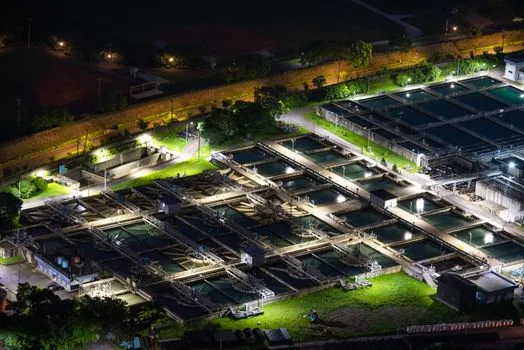
The standards that show up in a water-treatment IPC datasheet and that are worth verifying: IEC 61000-6-2 (industrial EMC immunity), IEC 61000-6-4 (industrial emissions), IEC 60068-2-6 (vibration), and for hazardous-area sites, ATEX 2014/34/EU or IECEx for Zone 2 mounting inside a cabinet. Do not accept "designed to meet" without a third-party test report; UL/CE markings on the nameplate are the minimum, and the CB scheme certificate is the cleanest cross-jurisdiction proof [S1].
For hazardous-area sites handling flammable solvents or methane from anaerobic digesters, the IPC itself typically sits outside the classified area, with intrinsically barriers on RTD and 4-20 mA signals bridging into Zone 1. Manufacturers publish ATEX/IECEx ratings only for specific enclosure configurations; check the certificate annex rather than the marketing page.
On sourcing, Chinese OEMs such as Chiwatec now ship RO, UF, MBR, and EDI skids with factory-integrated IPC control panels to more than 50 countries, and publicly reference ISO 9001 quality management plus CE marking on the controller assembly [S4]. Australian and European system integrators including Westwood Water and KMU LOFT Cleanwater typically integrate third-party IPCs (Siemens, Beckhoff, Advantech, Axiomtek) into their own engineered panels, with the IPC model and firmware version locked into their SOPs [S1][S2]. Specifying engineers should ask for the exact IPC part number, firmware baseline, and the lifecycle/EOL policy in writing.
Field use cases and limit checks
Reverse-osmosis skids in mining typically run 50-100 Hz VFDs on high-pressure pumps, with recovery ratios of 65-85 % and concentrate TDS three to five times feed TDS. The IPC's RS-485 bus carries VFD telemetry, conductivity, pH, ORP, and flow; a single bus fault can take the whole skid down. Adding a Modbus gateway with per-port isolation, or splitting the bus into two physical segments, is the most common upgrade on retrofit projects [S1].
Municipal wastewater SCADA rooms commonly run 500-5000 I/O points across the plant, with a pair of redundant IPCs feeding Ignition or Wonderware in the control room and 5-15 panel PCs at the local MCCs. The typical limit check on a single panel PC is around 200-400 HMI tags at 1 s update with graphics; beyond that, a dedicated SCADA server is required.
Food and beverage plants add washdown and chemical sanitisation cycles (CIP, caustic + nitric acid at 80 °C) to the usual mix. Here the IPC should sit in a sealed stainless enclosure with a separate heatsink path to the outside, or in a control room physically separated from the process floor. Inline instrumentation, including online water analyzers for pH, conductivity, and free chlorine, generally runs on isolated 4-20 mA or Modbus TCP back to the IPC, with calibration data logged through the historian.
Failure modes and what to specify against them
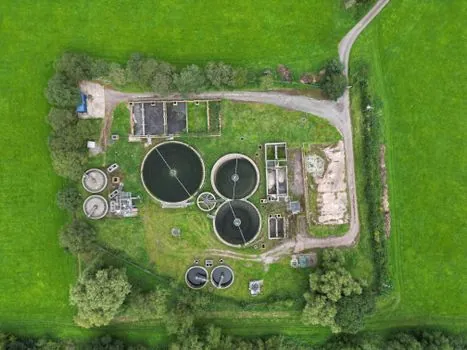
Five failure modes dominate IPC service tickets in water treatment: condensation shorting on unsealed I/O, thermal throttling above 45 °C, write-amplification killing eMMC inside 24 months, USB-borne malware from contractor laptops, and surge damage from nearby VFDs without proper filtering. Each is specifiable, and each has a known engineering fix. [S2]
Condensation: specify IP65 minimum on the enclosure and conformal coating on the PCB; route all cable glands from the bottom, not the top, to avoid water migration. Thermal: 0-50 °C operating, with a derating curve published; a -20 to 70 °C storage rating is a useful secondary check. Storage: insist on industrial SSD with documented TBW (terabytes written) and power-loss protection; mirror the historian volume. USB: disable front-panel USB in the BIOS, expose only inside the locked cabinet, or remove physical ports entirely on operator-facing units. Surge: 4 kV surge / 2 kV burst on the power input, documented to IEC 61000-4-5 and IEC 61000-4-4.
Lifecycle: water-treatment plants amortise assets over 10-15 years, so the IPC vendor's product-change notification (PCN) policy matters. Reputable vendors publish 5-7 year product lifecycles with 5 additional years of repair; anything shorter forces a mid-life migration that will not be budgeted.
On supplier selection for the broader control package, the OEM vs ODM split discussed in mining-equipment procurement guidance applies directly: a true OEM firmware baseline with signed updates is worth a 15-20 % premium over a generic ODM box for any skid that ships to a regulated site, because the audit trail is auditable.
Specification checklist before sign-off
A water-treatment IPC specification that survives a 10-year field life includes, at minimum: fanless operation, IP65 front bezel for panel PCs, aluminium or stainless housing, 0-50 °C operating range, conformal coating, 9-36 VDC input with surge rating to IEC 61000-4-5, 8-32 GB DDR4 with ECC, industrial 2.5 in SATA SSD 256 GB minimum, 2-4 isolated GbE, 2-8 isolated RS-485 with Modbus RTU/TCP, hardware watchdog timer, dual BIOS/UEFI for fail-safe boot, CE/UL/CB third-party certification, and a written 5+5 lifecycle commitment from the vendor. [S1]
Add to that the integration items: dedicated HMI software (Ignition, WinCC, iFIX, or FactoryTalk View), confirmed driver support for the field instruments on the I/O list, and a cybersecurity posture that maps to IEC 62443-3-3 SL2 as a realistic baseline. Anything less and the first summer heatwave will expose the gap.
Trackable signals for the next 12 months: vendor PCNs on 8th and 9th gen Intel platforms as Intel formalises the end-of-life on those silicon lines, and any tightening of cybersecurity clauses in municipal water-tender specifications across the EU and US, both of which will force IPC refresh cycles on plants that have been running 2018-vintage hardware.
For component-level specifications, see heat treatment furnace.