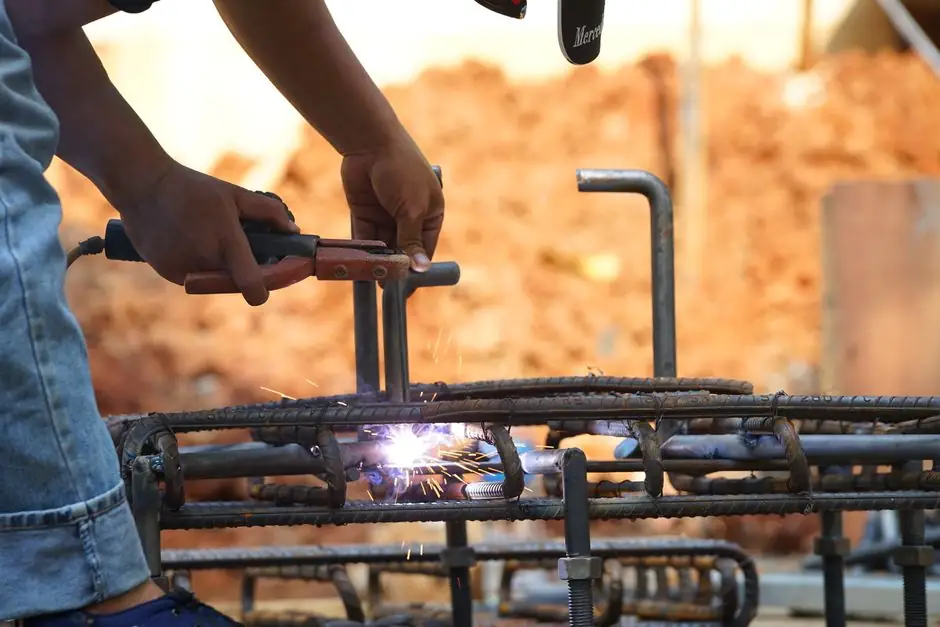
Standard parallel-thread couplers in #45 carbon steel, sized for 16-40 mm Grade II/III rebar, list at US$0.20-0.75 per piece with 1,000-piece MOQ across major Chinese mills, and the upset-forged sub-class targets 800 MPa tensile transfer on the parent bar [S1][S5][S8].
For steel-frame and composite-column work, the practical decision is not whether to use a mechanical splice, but which of the seven commercial variants fits the joint position, bar grade, and seismic demand on that specific member [S2].
Coupler Types and What Each One Actually Solves
The eight commercial variants listed by ADTO, namely Upsetting Forged, Parallel Threading, Cold Extrusion, Bar Lock, Grouting, Weldable, Hexagonal Nut, and One Touch, each solve a different site constraint rather than competing on the same axis [S2]. Parallel-thread is the workhorse: it sleeves two bars with matching upset ends, requires a torque-controlled thread-rolling pass, and achieves the rated 100% tensile and compressive transfer of the parent bar on Grade II/III stock from 16-40 mm [S1].
Cold-extrusion couplers deform the bar sleeve radially under 60 MPa working pressure and a 60 t extrusion force, sized for 16-32 mm bars on HLY-series presses, and are the right pick when threading the bar end is impossible due to congestion [S1]. Grouting couplers anchor into sleeve-grouted pockets and dominate beam-column splice zones where the bar cannot be rotated, while weldable couplers bridge rebar to structural steel sections where a fillet weld is faster than threading [S2]. Hexagonal rebar nuts and bar-lock couplers are the position-constrained options for cages and starter bars that cannot be turned.
Sizing Table: Bar Diameter, Thread Pitch, Weight, and Length
For a standard parallel-thread splice, the geometry is fixed and published: a 16 mm bar takes a 24.0 mm OD coupler at 43 mm length and 0.0936 kg, stepping up in 2-4 mm increments to a 40 mm bar at 59.0 mm OD, 90 mm length, and 1.15 kg, with thread pitch holding at 2.5 mm for 16-22 mm bars and shifting to 3.0 mm from 25-40 mm [S1]. The taper options sit at 75° or 60° thread angles depending on supplier convention.
That table governs the BOM. Order the bar size first, then size the sleeve to the published OD/length, then verify the thread-rolling machine can produce the matching pitch: 2.5 mm for 16-22 mm, 3.0 mm for 25-40 mm. For diameters outside this band, the Indian RE-BAR Couplers system extends coverage from 12 mm to 50 mm, with published TMT-bar continuity and full ductility class claims, useful when the project mixes small stirrup-class bars with main reinforcement [S7].
Material and Strength Class: #45 Carbon Steel and 800 MPa Transfer

The Ocepo rebar splicer, made of #45 high-quality carbon steel, is specified for splicing Grade II and III rebars with diameters of 16-40 mm, with a published splice strength that could exert 100% of the tensile and compressional strength of rebar [S1]. Kitairu-listed upset-forged couplers from Chinese forging shops target 800 MPa tensile transfer on the coupled joint, which is the ceiling for HRB 400/500 rebar in most Chinese building code applications [S8].
For seismic or high-cycle fatigue service, specify the upset-forged variant over the plain parallel-thread, because the forged end enlarges the bar end locally and restores the cross-section lost to thread cutting. Cold-extrusion couplers, which deform the sleeve rather than the bar, are the alternative for stainless or epoxy-coated rebar where upsetting would crack the coating. Project-side references for Kuwait University Town, Saudi Arabia infrastructure, and the Sri Lanka National Art Theatre are visible on ADTO's project list and confirm that forged couplers have shipped to Middle East and South Asia specifications [S2].
Selection Criteria: Bar Size, Grade, Joint Position, and Certification
Four criteria actually drive the pick. First, bar diameter: 16-40 mm is the stocked range, 12-50 mm requires a wider-mill supplier like RE-BAR Couplers India [S7]. Second, rebar grade: HRB 400 fits the 800 MPa coupler ceiling; HRB 500 needs verified mill test certificates because the coupler then operates at 100% of bar UTS, leaving zero margin for thread damage [S1][S8]. Third, joint position: a free-rotating bar suits standard parallel-thread, a fixed-fixed joint needs right/left threading or a bar-lock coupler, and a vertical column splice where the upper bar cannot be rotated needs a grouting coupler [S1][S2].
Fourth, certification. The auditable supplier base is concentrated in mills holding ISO 9001:2015, with the larger exporters also carrying ISO 45001:2018 and ISO 14001: ZRD Rebar Couplers, Liaocheng Jinyuyuan Metal Products, and Jingxian Heng Xiang all list these three on Made-in-China as of August 2026 [S5][S6][S9]. Beijing Jingweixin Construction Machinery holds ISO 9001 and lists rebar couplers alongside cutting, bending, and upsetting machines, a useful one-stop shop for contractors who want thread-rolling and splicing from the same vendor [S3].
Pricing and Lead Time: US$0.20-0.75 per Piece, 300,000 pcs/Month Capacity

Current 2026 wholesale pricing on Made-in-China sits at US$0.20-0.75 per piece at 1,000-piece MOQ for both cold-forged and precision-machined straight-thread couplers from Liaocheng City Jinyuyuan Metal Products, with tiered breaks down to US$1.00 per 100 pieces at 100,000+ MOQ on older listings [S4][S5]. Hengbang's 2015 listing at US$2.40-2.50 per piece at 3,000-9,999 MOQ is now superseded by the 2026 sub-US$1.00 tier, reflecting the maturation of the Chinese forging supply base over the past decade [S4].
Production capacity at the established mills runs at 300,000 pieces per month, with paper-box + wooden-pallet export packing and T/T, PayPal, or Western Union terms [S4]. For steel-construction procurement, lock pricing against the rebar grade mill certificate rather than the coupler piece-price: a 30% saving on the sleeve is irrelevant if the bar UTS drops below the splice rating. For a deeper dive on the concrete-side selection matrix, this spec map by bar size and joint type covers the diameter-vs-grade trade-off in more detail. Steel-frame and composite-build procurement also interacts with lifting decisions, and the 2026 site envelope guide for tower cranes covers the crane-side constraints that often force a coupler type change mid-project.
Equipment Pairing: Thread-Rolling, Upsetting, and Cutting Machines
Couplers are only half the system, the other half is the threading and upsetting equipment on site. ADTO's catalogue covers the full chain: the HDCJ-32SK automatic double-cylinder upsetting forged machine, BTCP-40F-100 and BTCP-50F-100 parallel-thread cutting machines, BTCP-40T-80 taper threading, the ADTO-JYJ-40 cold-extrusion press, and the HGS-50-AB rib-peeling and thread-rolling roller [S2]. Independent listings add the GD-150 full-automatic upsetter covering 16-40 mm bars at 320 MPa max pressure and 7 kW, plus the HLY-32 / HLY-40 cold-stamping presses at 3.0 kW and 60 MPa [S1].
For site work, the practical rule is one upsetting/threading line per 16-32 mm or 25-40 mm bar size band, since the thread pitch and roll dies do not interchange across the 2.5 mm / 3.0 mm pitch break. Rebar cutter and bender pairing matters because most threading lines need a clean, square cut end; a shear-cut or abrasive-cut end will mis-feed the thread roller. Beijing Jingweixin, Hengxiang, and Jingxian all bundle cutters and benders with the coupler line, which is why their Made-in-China listings read as one-stop shops rather than single-product factories [S3][S9].
Site Constraints and Failure Modes to Design Against

Three failure modes dominate field returns. First, thread under-rolling: if the upset length is short of the coupler engagement depth, the bar pulls out under tensile load rather than fracturing, a low-energy but unacceptable failure on a seismic frame. Specify a thread engagement length check on the first ten couplers of every shipment. Second, mismatch on the 2.5 mm vs 3.0 mm pitch boundary at 25 mm: a 22 mm bar threaded to 3.0 mm pitch will not engage a 25 mm-pitch sleeve. Lock the thread-rolling dies to the bar size, not the coupler marking. [S1]
Third, coating damage: epoxy-coated rebar must use a cold-extrusion or grouted coupler because the upsetting process locally heats and cracks the coating at the thread root. Field QA on coated-bar projects should include a holiday-detector pass across the coupled zone. For renovation work where the existing bar is half-embedded and cannot be rotated, the renovation spec map for embedded parts covers the splice-into-old-concrete transition, which is where grouting couplers outperform threaded ones. Schools and public-build projects carry their own load-class constraints covered in the embedded-part spec map by load class, and these constraints often propagate back into the coupler grade and pitch choice.
The trackable signal over the next quarter is whether ISO 9001:2015-certified mills continue to push the 800 MPa forged-coupler ceiling past the current 40 mm stocked diameter, and whether any major exporter adds ACI 318 Chapter 25 or BS 8110 mechanical-splice type-2 testing to the standard test report bundle, since most current Made-in-China listings show only generic factory tensile data rather than code-specific type-test certificates [S5][S6].
For the relevant spec sheets and selection criteria, see rebar coupler, and construction tools.