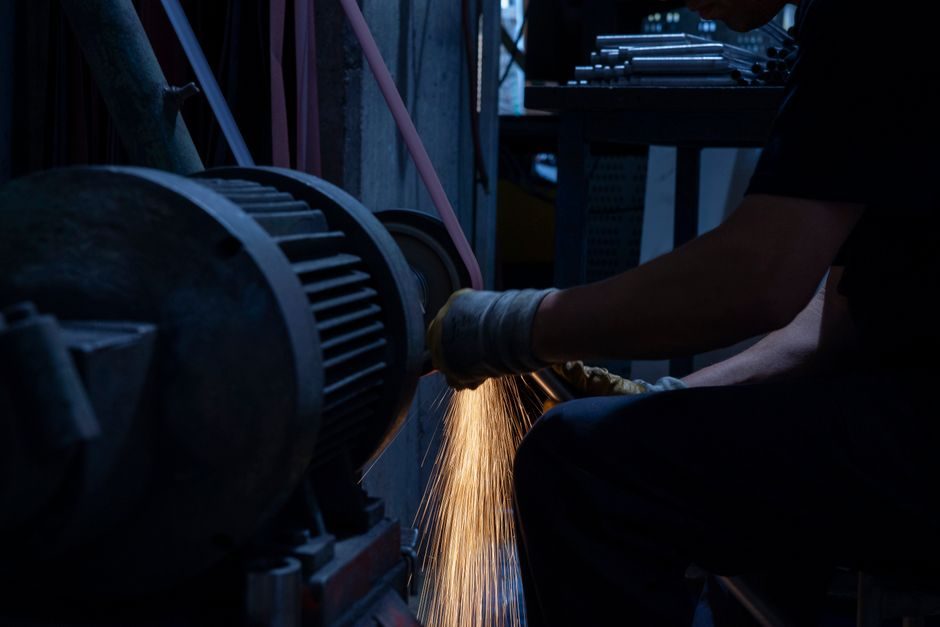
As of 7 July 2026, the rebar coupler supplier base remains concentrated in two Chinese industrial clusters — Cangzhou/Qing County in Hebei and Chiping in Shandong — where at least two audited Diamond Members (Hebei Lingke Metal Products, Chiping Dingli Steel Sleeve) are actively quoting on Made-in-China.com with entry pricing of US$0.10/pc (Hebei Lingke) and US$0.20–US$0.75/pc (Chiping Dingli) at 100–500 piece MOQs [S1][S6].
The product itself is a mechanical splice sleeve that joins two rebar ends without lap welding, typically rated for 500 MPa parent bar and produced under the ISO 15835 / ACI 318 type-2 equivalence that the Chinese OEM datasheets cite as "higher strength" performance versus lap splicing [S4]. For buyers sourcing globally, the decision is less "which brand" and more "which cluster + which connection type + which finishing line" — and on those three axes, the 2026 market is sharply stratified.
Two clusters, two specialisations
Cangzhou Bartech Construction Material Co., Ltd sits in Qing County, Cangzhou City, Hebei Province, and self-describes as both a manufacturer and a pressing-splice specialist; their product copy explicitly markets the rebar coupler as "easy operation and higher strength for 500MPa rebar" used in repair and new-build splicing [S2][S4]. The Hebei cluster also hosts the price-leader segment: Hebei Lingke Metal Products posts a 100-piece MOQ at US$0.10, with the same Diamond Member / Audited Supplier badge that Alibaba and Made-in-China use as their primary trust signal [S1].
The Shandong cluster, anchored by Chiping Dingli Steel Sleeve Co., Ltd (established 2013-11-28, 49 employees, Manufacturer/Factory & Trading Company), overlaps three product lines — rebar couplers, upsetting couplers, and rebar threading machines — which is significant because it indicates in-house thread-cutting capacity rather than reliance on subcontracted bar preparation [S3]. Chiping Dingli's "Factory Direct Sales High-Strength Steel/Iron Bolt Rebar Connectors, 16mm-40mm Threads" listing defines the working diameter band most Chinese OEM couplers target [S6].
Price bands and what they actually buy
The 2026 spot-price range across the Made-in-China catalogue spans roughly US$0.10/pc to US$3.90/pc, with the gap explained by three variables: thread type (parallel vs tapered), bar diameter (12 mm commodity vs 40 mm structural), and surface finish (black vs zinc-plated) [S1][S6]. A direct cross-listing illustrates the spread: the same Chiping Dingli seller posts both a 100-piece MOQ at US$0.15–US$1.35 for generic "mechanical splice connectors" and a 500-piece MOQ at US$0.20–US$0.75 for hexagonal couplers [S6].
Entry-level couplers in the US$0.10–US$0.20 band are almost always commodity 12–25 mm parallel-thread sleeves with no third-party test certificate attached; the US$0.75–US$1.35 band is where factory-direct hexagonal and upset-forged bodies start appearing [S1][S6]. The US$3.90/pc ceiling on the platform is held by Hunan ADTO Building Materials Group's "One Touch Rebar Coupler" — a quick-connect variant that competes on installation speed rather than raw material cost. BARTECH's "Handy Operation Rebar Pressing Connections" sits in a separate technology lane: it is a cold-press (swaged) sleeve, not a threaded one, and is explicitly positioned for repair work where threading the parent bar is impractical [S4].
Connection types and the matching logic

Three mechanical-splice families dominate the 2026 Chinese OEM catalogue: (1) parallel-threaded standard couplers, the volume default for 12–40 mm bar; (2) upset-forged couplers, where the bar end is enlarged by cold heading before threading to restore the full cross-section lost to the cut; (3) cold-pressed / swaged couplers, where a hydraulic press deforms a plain sleeve onto two square-cut bars — no thread cutting required [S3][S4]. Buyers specifying to ACI 318 type-1 vs type-2, or to ISO 15835, should map their code requirement to family (1) or (2); family (3) is the fastest on site but is generally restricted to non-seismic and repair applications [S4].
For a deep dive on the diameter-to-type mapping itself, the Rebar Coupler Sizing & Selection guide covers the parallel-thread vs upset-forge vs grout-sleeve decision tree at the bar-size level. Thread quality is upstream of the coupler choice: most Chinese suppliers buy the threading step in-house only above 25 mm, which is why rebar threading machine supply — not just sleeve supply — is the real capacity indicator for a manufacturer's 32–40 mm order book [S3].
MOQ, lead time and the audit badge that matters
MOQs on Made-in-China cluster between 100 and 1,000 pieces, with 100 pieces the floor for Diamond Members and 500–1,000 pieces typical for newer listings [S1][S6]. Okorder, the second-tier B2B platform, lists a rebar mechanical splicing coupler with a Tianjin loading port, TT/LC terms, and a published 500,000 kg/month supply capability — the kind of volume figure that signals an actual mill rather than a trading front.
The "Diamond Member / Audited Supplier" badge is the single most consistent trust signal across the 2026 listings — Hebei Lingke, Chiping Dingli, and Hunan ADTO all carry it, and Alibaba's "Professional & Reliable Solutions" rebar-coupler showroom aggregates the same population [S1]. What the badge does NOT guarantee is project-specific certification: a buyer specifying seismic Type-2, nuclear NQA-1, or AWS D1.4 weld-equivalent performance should request a mill test certificate (MTC) per heat and a sample destructive test before releasing volume, because the on-platform datasheets rarely carry these in the product photo [S3][S6].
Use cases and limitations
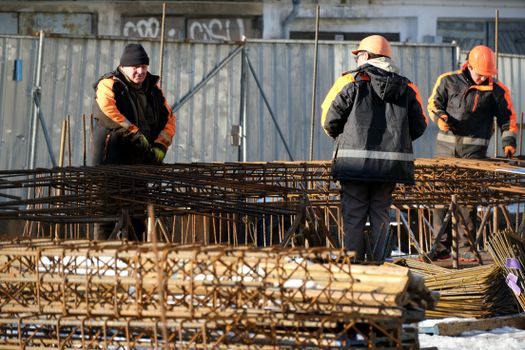
Mechanical couplers replace lap splices in three scenarios where lap splicing is uneconomic or structurally marginal: congested rebar cages (column-beam joints, pile caps), long splices beyond 40 bar diameters, and any location where welding is prohibited by the spec (e.g. seismic cruciforms where weld heat-affected zones are restricted) [S2][S4]. The repair application is a distinct sub-market — BARTECH explicitly targets the "repaired system at the construction project site" with a swaged product that needs no thread cutting on the existing bar [S4].
Two failure modes the catalogue data does not flag, but that any spec engineer should price in: (a) thread galling on hot-dip-galvanized bar, where the zinc thickness eats the tolerance budget of a standard parallel thread, and (b) bar-end squareness below 1° tolerance, which is the most common cause of slip failure in cold-pressed couplers and which suppliers downstream of a rebar cutter must control with a hydraulic saw rather than a guillotine shear [S3][S4]. Buyers running 32–40 mm seismic projects should also confirm whether the supplier's threading machine is roll-form or cut-form, because roll-form threads carry a fatigue debit that cut-form threads do not — a distinction the OEM datasheets typically omit.
Standards, codes and what to attach to the PO
The 2026 Chinese OEM datasheets reference the generic phrase "higher strength for 500MPa rebar" rather than naming a governing standard, which is the catalogue norm for this product class [S4]. For project buyers, the standards that govern mechanical splices in concrete are typically ACI 318 Chapter 25 (US), ISO 15835 (international), BS 8110 / Eurocode 2 Annex C (UK/EU), and JGJ 107 / GB 50204 (China) for the domestic market — but the specific performance class (Type-1 vs Type-2 under ACI 318; Class A/B/C under ISO 15835) must be named on the purchase order, because "mechanical splice" alone does not commit the supplier to seismic performance.
Trackable signals for the next 60–90 days: (1) any shift in the US$0.10–US$0.20 entry-price band, which is the most sensitive to Chinese carbon-steel scrap pricing; (2) the first rebar-coupler listings that carry an explicit third-party seismic test report on the platform, which would break the current datasheet norm; (3) any consolidation between the Hebei and Shandong clusters, both of which currently over-supply the 12–25 mm commodity segment. The stacker-crane and rebar-prep adjacency is the second cluster to watch, because rebar-coupler processing lines are increasingly co-located with rebar bender/cutter/straightener cells in the same fabrication yard.