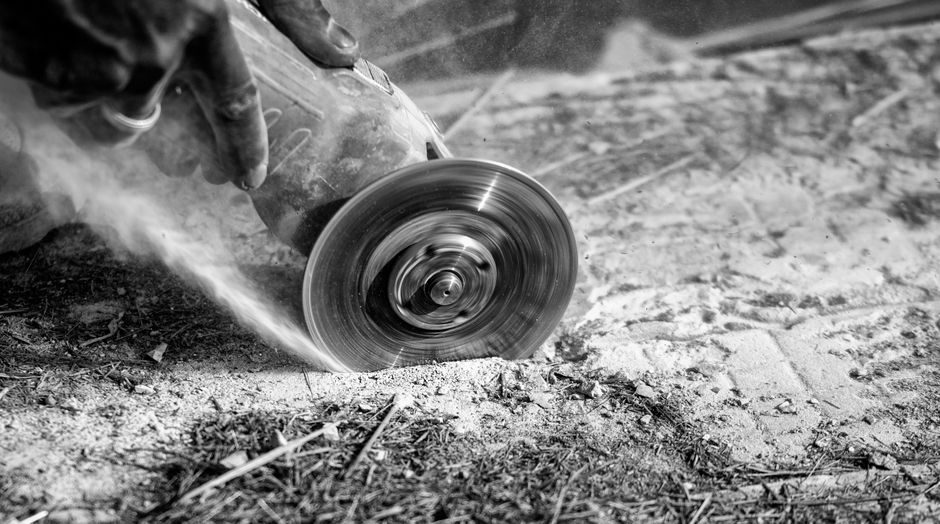
Portable hydraulic rebar cutters, in models such as the Fascut FC-800, routinely shear 1" (#8) grade 60 rebar from a standard 110 V outlet, with a 2" tall blade stack that lets the operator cut three ½" (#4) bars in a single stroke [S1].
Across the supply base, rebar cutters are classified by drive principle (manual, hydraulic-electric, rotary), by bar capacity (#3 through #11+), by portability (job-site portable vs. stationary shear line), and by combined function (cutter-only vs. cutter-bender combo), per current OEM catalogs from Fascut, Rodchomper and CNB Machinery [S1][S3][S4].
Hydraulic Portable Cutters: The Job-Site Default
Hydraulic-electric portable units are the most-specified class for rebar fabrication in the field, accepting 110 V shop power or generator input and delivering clean shear cuts on grade 60 stock [S1]. The Fascut FC-800 cuts up to 1" (#8) grade 60 with 2" high blades, while the combo FS-600 unit handles up to 3/4" (#6) grade 60 at a transport weight near 180 lb, two-person carry [S1]. For a working spec deep-dive on tool class, see the rebar cutter reference.
Blade geometry on this class is fixed dual-edge shear, with replaceable blade sets such as the B&C TYC-NHD25 (#8, 1" capacity) or the BN Products DC-32WH (#10, 1-1/4" capacity) sourced separately as consumables [S2]. Pricing for those blade sets sits between roughly $0.75 and $129.00 list, with mounting hardware typically included and replacement cycles governed by bar grade, cut count, and abrasive contamination rather than calendar time [S2].
Manual, Cordless and Hand-Held Cutters
Manual ratchet and bolt-cutter-style rebar shears cover the low end of the capacity curve, typically up to ½" (#4) rebar, and remain standard issue for utility and plumbing crews where power is unavailable. Cordless 18 V / 36 V hydraulic heads sit one tier up, trading cycle speed for portability on rebar up to about 5/8" (#5), and share the same 110 V hydraulic-electric replacement blades listed by RebarBlades [S2].
Manual cutting leaves a deformed, slightly burred end; hydraulic shearing produces a flatter, square-cut end that needs less secondary grinding before a mechanical coupler is fitted. When the cut piece becomes feedstock for a rebar tying run, the cleaner hydraulic end generally reduces splice-slip variability on the cage.
Rotary and Bender-Cutter Combos
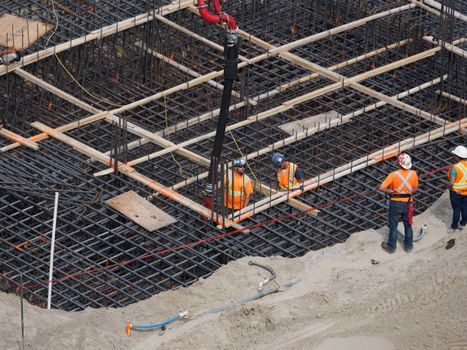
Rotary bender-cutters add a bending head to the hydraulic cutter, replacing a separate bending station. Fascut's FR-800-C bends and cuts up to 1" (#8) grade 60, while the FS-600 combo holds the same 3/4" (#6) ceiling in a lighter two-person-portable chassis [S1]. Rodchomper markets its own rotary bender line with matched gas and diesel engine options for sites without clean single-phase power, and offers push-style machines for high-cycle shop production [S3].
Combo units are typically chosen when bend count and cut count are roughly balanced, and when one operator runs both functions. A pure shear line outperforms a combo on cuts per minute, and a standalone rotary bender outperforms a combo on bend accuracy at high cycle rates, which is why spec sheets list different duty ratings for each configuration [S1][S3]. For matching downstream tooling selection, rebar bender installation lays out the site-power and first-bend calibration steps.
Industrial Shear Lines and Stationary Production Cutters
For rebar service centers and precast yards, stationary shear lines handle the upper end of the capacity curve, from #5 through #11+ (roughly 5/8" to 1-3/8"), at cycle rates of 8-20 cuts per minute depending on bar size, hydraulics, and feed geometry. Rodchomper lists dedicated shear-line equipment alongside its rotary benders and push-style machines, with optional attachments for circle/spiral coiling, roller feed, and dual-control stations that let one operator run two heads in parallel [S3].
On these lines, blade wear dominates operating cost, which is why aftermarket blade programs list individual edges, full sets, and mounting hardware as separate SKUs. RebarBlades catalogs more than a dozen manufacturer fits, including Edwards, EZE Bend, Eagle Systems and B&C/BNC, in the same #5-#10 size envelope used by the portable class [S2]. A wider equipment-class map covering marble cutter and plasma cutter platforms is useful when a rebar shop also cuts plate or stone.
Classification by Capacity and Power Source
Capacity banding is the cleanest classification axis: sub-½" (#4) handled by manual or cordless; 5/8" (#5) to 1" (#8) handled by 110 V portable hydraulic; 1-1/8" (#9) to 1-1/4" (#10) handled by heavy portable or stationary electric/hydraulic; above 1-1/4", the work moves to industrial shear lines with three-phase power or diesel drive [S1][S3].
Power-source choice is driven by site conditions more than capacity. Rodchomper's gas and diesel options are pitched specifically at sites where single-phase power is dirty or unavailable, and where generator sets would be over-spec'd for the rest of the tool inventory [S3]. The 220 V option on the Fascut 800-series is the alternative for European and Asia-Pacific fab shops running industrial single-phase [S1].
Selection Criteria, Comparison and Failure Modes
Four criteria separate the classes cleanly: max bar diameter at grade 60, cuts per minute under continuous duty, transport weight, and total blade cost per 10,000 cuts. On a #8 grade 60 cut cycle, a 110 V portable hydraulic (FC-800 class) typically delivers 4-6 cuts/min at about 100-200 lb transport mass; a stationary shear line on the same bar reaches 10-20 cuts/min but requires three-phase power and fixed siting [S1][S3].
Common failure modes across the classes are blade chipping from mis-aligned stock, hydraulic seal failure from contaminated fluid, and foot-pedal switch failure from jobsite impact. A 1-year factory warranty and lifetime technical support is now standard at Rodchomper, and aftermarket blade sets are widely interchangeable across the B&C, BNC, BN Products, Edwards and EZE Bend lines, which keeps spare-parts stocking simple for multi-brand fab shops [S2][S3]. For the long-run cost framing, the rebar bender TCO 2026 article covers the same five cost lines that drive cutter spend. Sourcing the bar stock itself, including grade and certification, is mapped in steel strand types and classifications.
Standards, Safety and Sourcing Signals
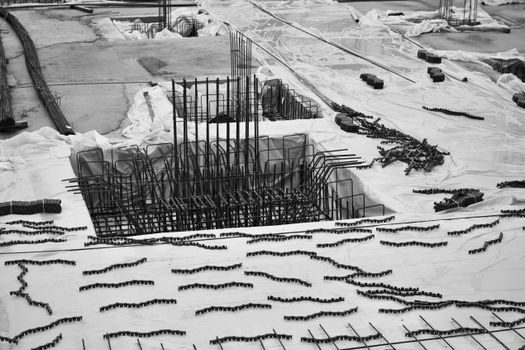
No single ISO or ASTM standard governs rebar cutter construction; instead, OEMs reference bar-capacity claims against grade 60 rebar (ASTM A615 / A706) yield and tensile properties, and CE marking governs EU market access for 220 V portable units [S1][S4]. Foot-pedal control, two-hand neutral, and blade-guard interlocks are the recurring safety features across the catalogs surveyed, and reference-fence options from Fascut give repeatable cut length on production runs [S1].
Trackable signals to watch: OEM expansion of cordless 36 V platforms into the #6 (3/4") envelope, growth of aftermarket blade SKUs covering Asian-built machines (where Chinese rebar cutter exports set the price floor), and the spread of dual-control hydraulic stations that let one operator run a shear head and a bender head from a single console [S1][S3][S4].