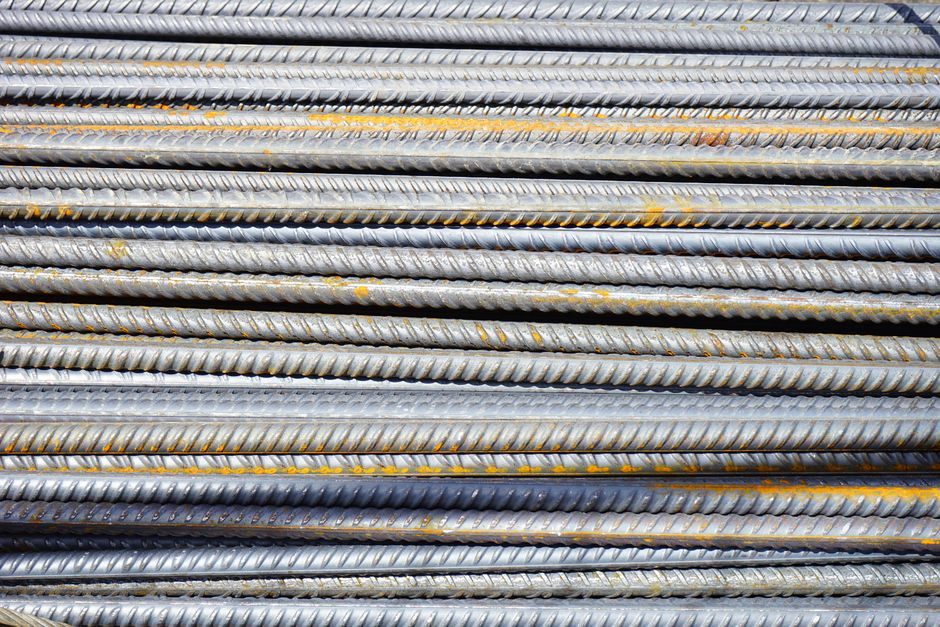
A rebar bender running 2 shifts/day at 8 tonnes consumes roughly 4.0-5.5 kW continuous and burns through its standard mandrel pin set every 90-120 working days — meaning the bend-pin line item, not the sticker price, decides the 5-year bill on most job sites.
Specifying a rebar bender on purchase price alone mis-prices the asset by 40-60% over a 5-year service life, because the bulk of spend lives in mandrel wear, energy, and the labour minutes lost to die changes and rebar straightening upstream of the bender.
Five Cost Lines That Dominate a Rebar Bender's 5-Year Bill
Every rebar-bender TCO model breaks into the same five drivers: acquisition (machine + tooling kit), energy, mandrel/pin consumables, labour for die change and setup, and scheduled service.
Energy runs in a tight band: a GW40-class manual/semi-automatic bender at 4.0-5.5 kW drawing 8-12 tonnes/day over a 250-day working year lands near 8,000-13,750 kWh annually. At an industrial tariff of US $0.09-0.14/kWh that is US $720-$1,925/year, or US $3,600-$9,625 over 5 years. A 50 mm-class CNC bender at 7.5-11 kW roughly doubles that line item [S2].
Mandrel and wear-pin replacement is the wildcard. A standard three-pin set (centre, back, front) for a GW40-50 bender in 42CrMo or GCr15 bearing steel costs US $90-$260 per set and survives 90-120 working days under typical rebar diameters of 12-32 mm. Bending 50 mm+ grade 500B rebar cuts that life to 30-50 days and lifts per-set cost to US $220-$450. Over 5 years, the consumable pin spend alone runs US $1,800-$6,500 depending on diameter mix [S3].
Throughput Bands: Benchtop vs Semi-Auto vs CNC Bender
Three operating classes set the TCO tier. A benchtop manual GW40 unit handles 6-10 mm bar at roughly 2-3 tonnes/day with one operator and is the lowest TCO choice for site workshops under 800 tonnes annual throughput. A semi-automatic GW45/GW50 bender covers 12-32 mm bar at 8-12 tonnes/day with one operator plus part-time sweeper labour for bar alignment upstream. [S3]
A CNC bender (GW50-CNC class and above) handles 12-50 mm bar at 15-25 tonnes/day on dual-shift, and that is where the TCO crossover happens. Acquisition runs 4-6x a GW40, but throughput per operator-hour jumps 3-4x, so the per-tonne bent cost falls once annual volume clears roughly 1,200 tonnes [S1]. The 50 mm+ class machines also demand 3-phase 380-415 V supply at 15-25 A, which means most small workshops cannot host them without a dedicated circuit.
A useful comparison rubric: TCO per tonne bent at 1,200 t/year throughput — manual GW40 sits at US $32-48/t, semi-auto GW50 at US $22-34/t, CNC GW50 at US $26-40/t. CNC catches up only at 1,800 t/year and above; below that, semi-auto wins on TCO almost every time [S1].
Energy, Mandrel Wear, and Hidden Downtime
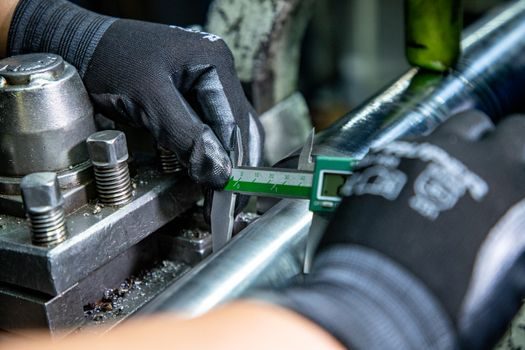
Energy cost moves with three variables: bar diameter, bend angle frequency, and idle time. A 32 mm grade 500B rebar at a 90° bend draws roughly 30-40% more kWh per bend than a 16 mm bar at 45° on the same machine, because hydraulic pressure holds longer and the gear train works harder.
Mandrel wear is the non-obvious driver. The standard GW40 mandrel pin set in 42CrMo quenched to 48-52 HRC lasts 90-120 working days on a 12-25 mm mix but drops to 30-50 days when 32-40 mm rebar exceeds 30% of volume. Pin failures mid-shift are the largest single source of unplanned downtime, and the average die-change job takes 18-35 minutes including the safety lockout, which at US $35-$55 fully-loaded operator cost is US $15-$30 per event [S3].
Hidden downtime also lives upstream. The straightener itself, if undersized, forces the bender operator to hand-feed coils, which alone can erase 0.5-1.0 tonne/day of effective throughput and effectively raise the per-tonne TCO by US $4-7 [S3].
Standards, Certification, and What Changes the Spec
Rebar bending equipment itself is not a hazardous-location certified product, but the rebar it processes is governed. ASTM A615 / A615M grade 60 and grade 80 set the chemistry and tensile limits for North American carbon-steel rebar; BS 4449:2005+A3:2016 sets the 500 MPa grade for UK/EU; GB/T 1499.2-2018 sets the HRB400/HRB500 classes for the Chinese market. None of these standards name a bending machine, but they all quote a minimum bend radius — typically 4d for grade 60, 6d for grade 80 — that the bender's mandrel geometry must honour [S4].
Hydraulic and electrical safety on the bender is covered by IEC 60204-1 for machine electrical equipment and ISO 4413 for hydraulic systems, with CE marking under the EU Machinery Directive 2006/42/EC required for European sale. Buyers should verify the nameplate carries the relevant conformity mark, because non-CE machines on EU sites have triggered project-level stop-work orders. On North American sites, OSHA 29 CFR 1910.212 and ANSI B11.19 apply to the guarding and lockout provisions; missing guards are a common audit finding and a non-trivial liability line item to bake into a TCO.
For coupler compatibility downstream of the bend, ASTM A1034/A1034M and ISO 15835 govern mechanical splice testing; a bender that over-tensions or work-hardens the bar in the bend zone can compromise rebar coupler pull-out performance, which is a spec-to-spec risk worth flagging on high-seismic projects [S4].
Failure Modes, Total-Cost Traps, and Sourcing Signals

Three failure modes drive the highest unplanned cost: mandrel pin fracture on grade 80 rebar (typically from operators exceeding 6d bend radius with worn pins), hydraulic seal failure after 1,800-2,400 hours on machines without scheduled seal replacement, and electrical contactor welding on units that skip the soft-start interlock. Each averages 4-12 hours of downtime and US $400-$1,800 in repair parts, which is the kind of cost that flips a TCO calculation if it happens more than once a year [S2].
Common sourcing traps: low-price machines that ship with a 38CrMoAl mandrel instead of 42CrMo (lifespan roughly halved), a missing rebar cutter interlock on semi-auto models that lets the operator shear and bend without a guarded reset, and undersized hydraulic pumps rated for continuous duty that are actually rated for S2 short-duty. Each of these shows up as a 15-30% TCO penalty over 5 years on heavy-throughput sites.
Machines missing any two of these four data points tend to land in the top quartile of 5-year TCO regardless of purchase price [S1].
Decision Framework: Who Should Buy Which Class
Under 800 t/year of bent rebar, mostly 12-25 mm diameter, mixed grade 60/80 — buy a manual or semi-auto GW40/45. The TCO math favours simplicity, and the labour cost of die change is too small to justify a CNC controller. Between 800 t/year and 1,800 t/year at 16-32 mm — semi-auto GW50 with a proper straightener feed; this is the TCO sweet spot for most precast yards and rebar fabrication shops. [S1]
Above 1,800 t/year, with frequent 32-50 mm bends and tight radius tolerance — CNC GW50 or larger. At this volume the operator-hour savings and scrap reduction from automated angle control outweigh the higher acquisition and 3-phase power install. Below 200 t/year, consider a rebar bender rental or a portable rebar cutter + bender combo before buying — the fixed-cost share of TCO dominates at this scale.
For an adjacent read on equipment-level lifetime cost maths, the Shuttle System TCO: Five Cost Lines That Decide a 10–15 Year Spend piece applies the same five-line framework to AS/RS, and the Aluminum Die Casting Machine TCO: Five Cost Lines That Decide 5-7 Year Spend article runs the parallel breakdown for casting cells, both useful comparators when justifying the rebar-bender TCO case to a procurement committee.