
A rebar straightener is a continuous-feed, coil-to-bar line rated around 3–6 kW with a cutting length window of 500–6,000 mm in the price band of roughly ₹1.50–3.50 lakh (≈US$1,800–4,200) per piece for Indian-supplied automatic units [S3]. A rebar threading machine is a stationary, piece-by-piece workstation that rolls a parallel thread onto the end of an already-straight, pre-cut bar, sized for diameters covered by the GHB22-class machines exported from Tianjin [S4].
The two machines sit on opposite sides of the rebar preparation sequence. One is upstream coil-conditioning; the other is a downstream coupling-prep step. Buyers who confuse the two typically end up with a line that straightens too fast for a single threading head, or with a threading head fed by hand from a stack of straight bars — neither layout is efficient at production scale.
Duty-Cycle Difference: Continuous Coil Feed vs Piece-by-Piece End Prep
Straightening-and-cutting lines such as the GT4-12 class run coiled wire rod through a set of pulling rollers and a flywheel shear, producing finished cut bars at line speeds tied to the input coil diameter and the chosen cut length, with tiered FOB Qingdao pricing of US$1,200 for 1–9 pieces down to US$1,000 at 100+ pieces [S5]. The output is a stack of straight, length-accurate bars ready for bending, cutting-to-shape, or threading.
Threading machines work on individual bars. The GHB22-class machine targets a specific bar diameter range, accepts one bar at a time, and produces a parallel thread at the bar end suitable for a rebar coupler splice [S4]. Cycle time is per bar, not per coil, and the bottleneck is usually bar handling and die changeover, not motor power. This is why a threading machine is sized to the operator count and splice quantity, not to the upstream straightener throughput.
What Each Machine Is — and Is Not — Designed For
A rebar straightener is the right tool when the input is coiled stock with residual curvature from the rolling mill, when cut-length tolerances of a few millimetres are acceptable, and when downstream operations can accept a continuous stream of identical bars. It is the wrong tool for retrofit threading of bent or partially set bars, for field repair of damaged threads, and for any application where the bar must remain at full mill length without a cut. [S1]
A rebar threading machine is the right tool when the design calls for mechanical splices (couplers) instead of lap splices, when bar diameters match the machine's rated range, and when the thread profile (typically parallel / ISO-type) matches the coupler standard on site [S2]. It is the wrong tool for processing coiled stock, for bars with heavy rust or concrete residue that would damage the rolling dies, and for high-volume diameter changes that would require constant die swaps.
Spec Comparison Across Decision Criteria
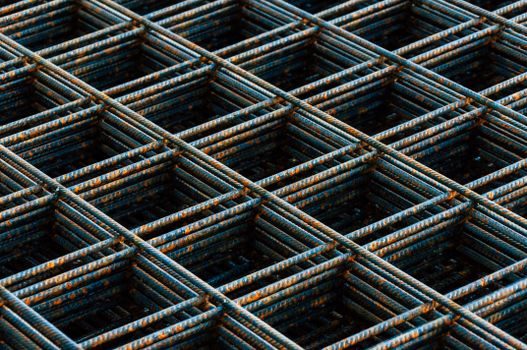
On four decision criteria that matter to a 2026 buyer, the two machines diverge sharply. Power class: straighteners sit in the 3–6 kW band for small automatic units, with industrial lines scaling higher; threading machines are typically sub-3 kW because the work is rotational forming, not pulling tonnes of coil [S3]. Throughput mode: straighteners run continuously and are quoted at production capacities such as 50 sets/month or higher per OEM [S6]; threading machines run on a per-bar cycle and are quoted in unit/month, e.g. 20 units/month supply capability for the GHB22 [S4].
Input form: straighteners accept coil; threading machines accept pre-cut, pre-straight bars. Output form: straighteners output cut-to-length bars; threading machines output a threaded-end bar ready for rebar coupler engagement. Price band and sourcing geography also differ — straightener-and-cutter combinations are widely listed from Indian and Chinese OEMs on platforms such as ExportersIndia and Made-in-China with FOB pricing from Qingdao and Tianjin [S3][S5], while threading machines cluster with Chinese rebar-processing-line vendors such as Henan Jianmao and Shuanglong Machinery [S1][S2].
Use Cases That Force One or the Other
Pre-cast yards producing large volumes of cut-and-bent rebar for high-speed rail, tunnel and bridge contracts are the classic straightener-and-cutter customer — the work flow is coil → straightener → rebar bender → bundle, and the threading machine rarely appears on the same line [S2]. Sites that need to lap-splice continuity in the field without overlap — for example, congested column-to-beam joints, seismic detailing, or bar-end preparation for mechanical couplers — are the threading machine's home turf, fed by a cut-and-straight bar from upstream [S1][S4].
For comparison, when a contractor is sizing a rebar cutter station to feed a threading machine, the cut length tolerance should be checked against the threading machine's clamping length, not against the bender downstream — a bar that is 5 mm short on the cutter will not engage the threading die correctly. This is the most common site error when the two machines are bought as a package from different vendors.
Limitations, Failure Modes and Sourcing Risk
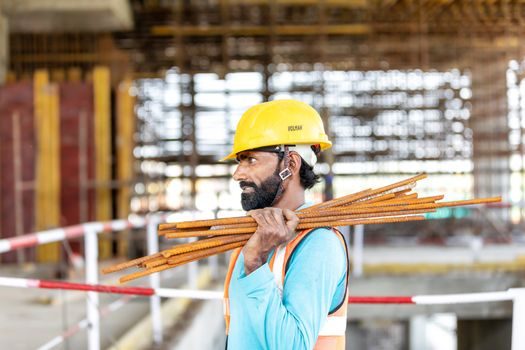
Straightener lines fail most often at the pulling rollers and the flywheel shear blade, and they are sensitive to coil diameter and steel grade — a coil that is too hard (e.g. quenched and tempered scrap) will chip the straightener dies within a shift. Indian-supplied automatic units in the 3–6 kW class quote cutting spaces of 500–6,000 mm and a 720-piece/month availability band, which sets a realistic upper bound on what a single small line can deliver [S3].
Threading machines fail most often at the rolling die and at the bar-clamp jaw — worn dies produce threads that will not seat in a coupler, and a clamp that does not hold the bar true will produce a thread whose axis is not concentric with the bar. Sourcing risk for both categories is concentrated in Chinese OEM hubs (Tianjin, Qingdao, Henan) with pricing tied to USD/RMB and to container freight, so a 2026 buyer should pin price, lead time and die-spares availability in the same PO [S1][S2][S4][S5]. For an end-to-end view of how a cutter station feeds a threading machine, the Rebar Cutter 2026 Buying Guide walks the diameter-drive-speed trade-off in the same spec frame.
Selection Rule of Thumb for a 2026 Buyer
If the input is coil and the output is a stack of cut-to-length straight bars, buy a straightener-and-cutter line and budget for the 3–6 kW power feed, 500–6,000 mm cut window, and a die-spares kit sized to the expected tonnage [S3][S5]. If the input is pre-cut straight bars and the output is a threaded end ready for a coupler splice, buy a GHB22-class threading machine from a Tianjin-port OEM, plan around a 20 unit/month supply capability, and verify the thread standard against the coupler on the project [S4].
For buyers who need both functions, the two machines belong on the same site but on separate work cells — a straightener-and-cutter cell feeding a bundling or bender station, and a separate threading cell fed by hand or by conveyor from the cutter station. Trying to combine them into one machine either reduces straightener throughput to the threading cycle time, or skips the straightener and forces the threading machine to work on mill-curved stock, which destroys the rolling die. Two trackable signals to watch: GHB22-class quotation revisions out of Tianjin [S4], and any ExportersIndia listing changes in the 3–6 kW straightener band that would shift the small-line price floor [S3].