
A rebar threading machine is the metal-cutting tool — typically a stationary or portable rolling/cutter head sized for bar diameters from 12 mm to 50 mm — that forms the thread profile, while a rebar coupler is the cold-swaged, taper-thread or parallel-thread sleeve that joins two prepared bar ends in the structural splice [S4][S5].
On the supply side, the category is split between integrated Chinese equipment makers that bundle machine + coupler (Changzhou JBCZ, founded 1987 in Jiangsu, and Henan Jianmao list rebar threading machines, couplers, cutters and benders on the same product page) [S1][S4] and Indian fabricators such as M/S Mash Engineering in Mumbai that sell couplers alongside hydraulic pump repair and seamless pipe work [S2]. Buying decisions therefore depend as much on coupler-system type as on machine throughput.
System Types: Parallel-Thread, Taper-Thread and Cold-Swage
Coupler systems are usually classified by how the bar end is prepared and how load is transferred: standard parallel-thread (the threaded bar screws into a matching internally threaded sleeve), taper-thread (the bar itself is cut to a 1:10 or similar taper so the coupler is self-aligning, used in some seismic splices), and cold-swaged/extruded couplers where the bar is gripped by radial pressure without cutting a thread at all [S4][S5].
For threaded options, the machine must produce a thread length typically 1.0–1.5× the bar diameter (e.g. 30–48 mm of thread for a 32 mm bar) and a pitch matched to the coupler maker's spec — Chinese standard parallel-thread systems usually run ISO metric coarse (M-coarse) pitches of 2.0, 2.5, 3.0 or 3.5 mm depending on bar size [S1][S5]. The thread length, pitch and root depth drive the torque the machine must deliver; underspec'd spindles stall on 32 mm and 40 mm grade 600 bars.
Machine Spec Gates: Bar Range, Spindle Speed, Torque and Cycle
Entry-level portable rebar threaders typically cover 12–32 mm bars at spindle speeds of 50–80 RPM with 2.2–4 kW motors; heavy units reach 50 mm bars at 25–40 RPM with 7.5–11 kW drives and torque outputs of 250–400 N·m to keep cut time per thread under 30 seconds on 32 mm grade 600 stock [S4][S6].
Four spec gates separate a working machine from a bottleneck: (1) minimum and maximum bar diameter, with a stated grade ceiling (e.g. HRB600/Grade 60 vs HRB400/Grade 40); (2) thread length adjustment range, because different coupler suppliers demand different thread lengths for the same nominal bar; (3) cycle time per thread at the hardest bar in the range, not at the softest; (4) cutter/roll die life in threads-per-set, since a die swap on a 50 mm taper thread eats 15–20 minutes of crane idle time [S4][S5].
For a project-by-project buy rather than a fleet purchase, this mirrors the gating logic in the Rebar Threading Machine 2026 Buying Guide: Spec, Sourcing and Cycle walkthrough — diameter range and cycle time decide the machine, thread standard and system approval decide the coupler.
Coupler Spec Gates: Bar Size, System Type, Code Marking and Traceability

Couplers are spec'd by nominal bar size (12, 16, 20, 25, 32, 40, 50 mm are the common steps), by system type (parallel standard, taper, cold-swage, grouted), and by code compliance — a coupler stamped with ACI 318 / ICC-ES AC133 type approval is a different procurement line from one stamped only to GB/T 1499.2 or to a project-specific mill cert [S1][S2].
Critical procurement checks: (a) the mill cert must name the bar grades the coupler is qualified for — a 32 mm sleeve qualified for HRB400 may not be qualified for HRB600 without a separate test report; (b) dimensions of the sleeve (outer diameter, length, internal thread depth) must match the threading machine's setting sheet exactly, because a 1 mm thread-length shortfall cuts fatigue life disproportionately; (c) traceability markings — batch code, heat number, supplier code — must be legible after the coupler is embedded in concrete [S1][S4].
The mechanical-splice decision also has to align with the bar-handling chain upstream: a rebar cutter sized for 32 mm grade 600, a rebar bender with the right mandrel radius, and a rebar threading machine whose die matches the coupler supplier's drawing. If any one of the three drifts in spec, the splice fails QC on tensile or slip tests.
Who It Is For — and Who Should Walk Away
The threading-machine + coupler system is engineered for projects where lap splicing is forbidden or uneconomical: high-rise cores with heavy column cages (32–50 mm bars in congested sections), bridge piers, metros, nuclear containments, and any seismic zone where the splice must develop the bar's full ultimate strength at the connection [S1][S4].
It is a poor fit for: small residential slabs where lap splicing at 40–50× bar diameter is cheaper than the tooling amortisation; sites with dirty, rusty or bent bar ends (the threading machine rejects stock that is out-of-round beyond ~0.5 mm); and projects without a controlled threading bay — rebar threading on open decking in rain ruins the die and the cut [S4]. For such jobs, a rebar coupler still works only if the bar end is prepared by cold-swage or by a dedicated workshop lathe off-site.
Buyers who only need to source the upstream stock can review the rebar grade and mill-cert map first, then come back to the splice equipment once bar grade, diameter list and code regime are fixed.
Comparison Table: Three Splice Systems on Four Decision Criteria
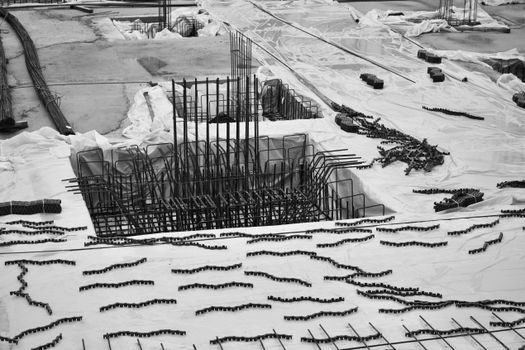
The three practical options — parallel-thread, taper-thread and cold-swage couplers — line up on four criteria as follows (values are typical mid-2026 ranges from supplier catalogues, not project-specific test results): [S1]
Parallel-thread: cost per splice low-to-medium (coupler ~US$1.5–4 for 16–32 mm ranges), thread prep time per end 20–40 s on a portable machine, alignment tolerance ±2–3°, code coverage widest (ACI 318, GB 50010, BS 8110 clauses all reference this type) [S1][S4]. Taper-thread: cost per splice medium (coupler ~US$3–6), thread prep time per end 30–60 s because taper cuts are heavier, alignment tolerance ±5–7° (self-aligning), preferred in seismic detailing [S5]. Cold-swage: cost per splice medium-high (coupler ~US$4–8, plus a dedicated ~30–50 t hydraulic press), thread prep time per end 10–20 s, alignment tolerance ±1–2° (rigid sleeve), preferred where thread-cutting on site is impractical [S4].
Sourcing Signals and Verification (June 2026)
Three signals cut through a crowded supplier list: (1) factory age and export history — JBCZ at 38 years (founded 1987) is a different risk class from a one-line trading outfit [S1]; (2) product-page disclosure of OEM partners, machining accuracy, and standards referenced (Alibaba listings that name the bar grade range, the thread standard and the QC report are usually backed by a real machine shop) [S6]; (3) on-site or remote FAT — request a video of the machine threading the largest bar in the range at the rated cycle time, with a torque reading shown on the dial [S4][S5].
Cross-check the thread standard written on the machine (e.g. "M-coarse 3.0, ISO 261") against the coupler maker's drawing — a 1 mm pitch mismatch between machine and coupler is the single most common cause of splice rejection on site. Also confirm the rebar straightener upstream of the threading bay can deliver bar straightness within ~1 mm/m; bars out of spec at the feed roll will produce out-of-spec threads even on a perfect machine [S4].
Limits, Failure Modes and What the Spec Sheet Will Not Tell You
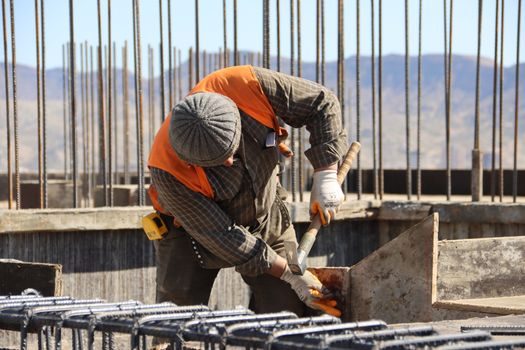
Field failure modes are consistent across suppliers: stripped threads from over-torquing on the machine, undersize thread length from worn dies, and couplers installed with debris or concrete paste inside the bore. Each of these shows up on the QC tensile pull as a slip at the bar-coupler interface well before the bar itself yields [S1][S4].
Spec sheets rarely publish: (a) die life in threads-per-set for HRB600 (expect 800–1500 threads for a 32 mm roll die, roughly half that for a cut die); (b) downtime for die change on a 50 mm taper (15–20 min including bar-end cleanup); (c) noise level (90–100 dB(A) on a portable threader — PPE and shift planning matter); (d) tolerance to bent bar ends (most machines reject stock with end-out-of-straight > 2°) [S4][S5].
Plan a 5–10% die-and-spare budget on top of machine price, and lock the coupler supplier to one party per project — mixing couplers from two sources on the same splice line is how the threading machine and the sleeve drift out of spec together.
For broader spec framing across the rebar processing line, the Rebar Threading Machine Selection: 5 Engineering Gates for 2026 Spec walkthrough pairs naturally with this coupler map, and the Rebar Cutter 2026 Price and Cost Guide: Drive, Diameter and Sourcing Levers covers the upstream machine that feeds the threading bay.