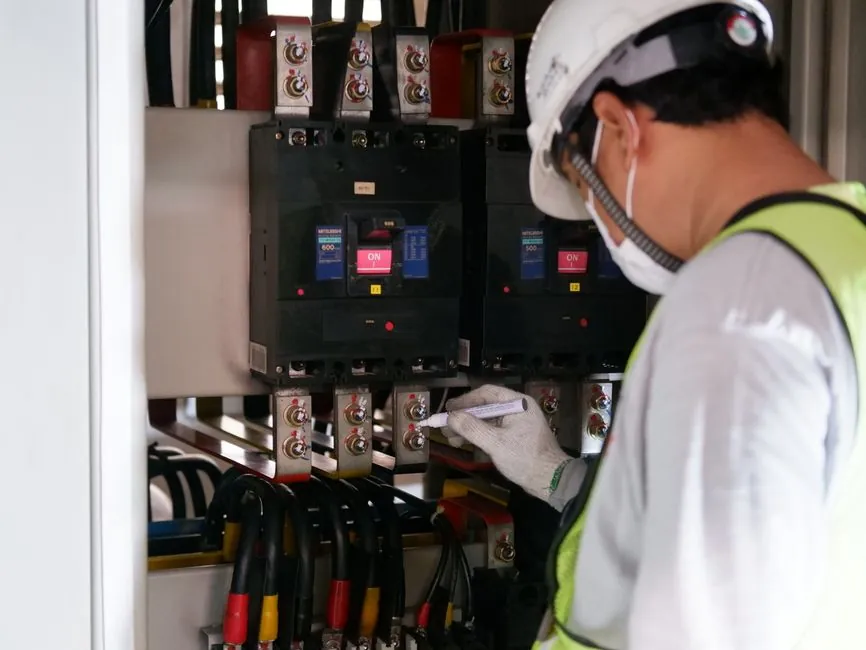
Standard power transformer lead times have stretched to ~128 weeks and generator step-up units to ~144 weeks, with some specialty orders reaching four years, while refurbished and reconditioned units ship in 1–4 weeks at 30–70% below new pricing [S1][S2][S5].
Domestic production now meets only about 20% of US demand, grain-oriented electrical steel has roughly doubled since 2020, copper is up more than 50%, and power-transformer prices have risen 77–95% since 2019, conditions that have pushed operators to treat remanufactured units as a primary procurement path, not a fallback [S1][S2].
Where the 4-Year Gap Actually Lives
The bottleneck is concentrated in large power, GSU, and many distribution-class units, with US grid interconnection backlog reaching 2,300 GW, roughly double the country's installed generation capacity, and renewable-driven GSU demand up ~274% since 2019 [S1]. Large power-transformer factories ran at ~70% utilization in 2025 with limited room for surge demand, and the IEA projects ~80% by 2030, so the queue does not clear quickly even after fresh capacity lands around 2028 [S1]. For a data-center or substation project, that translates into a transformer arriving later than the building it was meant to energize, which is why commercial real estate underwriting now treats speed-to-power as a primary site-selection filter [S1].
What "Refurbished" Actually Means in This Market
Three tiers are in circulation, and the price/life spread between them is wide: a properly refurbished, factory-overhauled unit carries an expected remaining life of 15–25 years with moderate maintenance, while a used as-is unit typically offers 5–15 years and high maintenance variability [S4]. Emerald Transformer ships refurbished units with a three-year warranty, and Current Midwest lists the same three-year coverage with 3–4 day ship times on stocked reconditioned stock [S3][S8]. The remanufacturing model has matured enough that Maddox Industrial CEO Camden Spiller calls it "a new way of thinking" for buyers who would otherwise sit on a 2–4 year factory queue [S2].
Cost and Lead-Time Comparison: New vs Reconditioned

On a like-for-like MVA rating, the savings stack fast: a 5 MVA 33/11 kV unit that runs $65,000–$90,000 new lists at $35,000–$50,000 refurbished (35–45% off), and a 60 MVA 132/33 kV drops from $450,000–$600,000 to $300,000–$400,000 (25–35% off) [S4]. Lead time is the bigger lever for most operators: new units sit at 80–210 weeks factory-direct, while used and reconditioned stock is documented at 1–4 weeks, with ELSCO quoting 45–50 weeks for custom padmount and ~20 weeks for dry-type builds as a middle path [S2]. One caution from 1898 & Co. principal Doug Houseman: there is a hard ceiling on how much demand the used and remanufactured pool can absorb, so the option narrows as more buyers converge on it [S2].
Service Life and Safety Envelope
A properly refurbished and certified used transformer can reliably serve 10–20 years, especially under moderate loading and good maintenance, which covers the realistic 3–5 year window most projects need to ride out until a new OEM unit arrives [S4]. New IEC 60076-built units are typically rated for 30–40 year service with low losses, so the trade is a known ~50% life haircut against an ~80% lead-time cut and a 30–60% capex cut [S4]. Refurbishment also reduces the civil-side scope: newer OEM units are physically larger and heavier, often forcing new pads, vaults, or pole upgrades that a refurbished like-for-like unit avoids [S3].
What Refurbished Cannot Cover
Refurbished stock cannot fill every slot. High-efficiency modern designs, low-loss amorphous-core builds, and units that must carry the latest IEEE or IEC compliance tagging for regulated utility interconnection are scarce on the secondary market, and the pool is finite, with 1898 & Co. flagging saturation risk as procurement teams pile in [S2][S4]. The 20 MVA and 60 MVA classes show the smallest discount band (25–40%) precisely because demand in those ratings is steepest, so the highest-kVA buyers see the least price relief even as they get the biggest delivery win [S4]. For applications where a pressure transmitter loop or flow meter skid depends on a guaranteed harmonic and efficiency profile, the small efficiency gap (1–2% on newer designs) can outweigh the capex savings over a full 30-year horizon [S2].
How Operators Are Actually Closing the Gap
The 2026 playbook is hybrid: pair a refurbished or remanufactured transformer for immediate energization with a parallel new-unit order for the long-term asset, and in parallel stage on-site generation plus battery storage to carry critical loads through the changeover [S1][S5]. Resa Power markets remanufactured lead times as outpacing factory queues "by weeks or months," while Current Midwest lists 3–4 day ship times on stocked reconditioned units with a 3-year warranty, both of which let a project energize a partial load long before a new unit clears the OEM backlog [S8][S9]. For data-center developers watching AI rack densities climb from 10 kW five years ago to ~600 kW on next-generation platforms, that 4-year bridge is the difference between a project that finances and one that does not, and the safer route is treating the refurbished unit as a 10–20 year asset in its own right, not as disposable interim hardware [S1][S4].
Track these next signals: any IEA or Wood Mackenzie update on large-power-transformer factory utilization beyond the 2025 ~70% baseline, and any movement in the ~2,300 GW US interconnection backlog that would re-price the 4-year queue [S1].
For the relevant spec sheets and selection criteria, see overhead bridge crane.