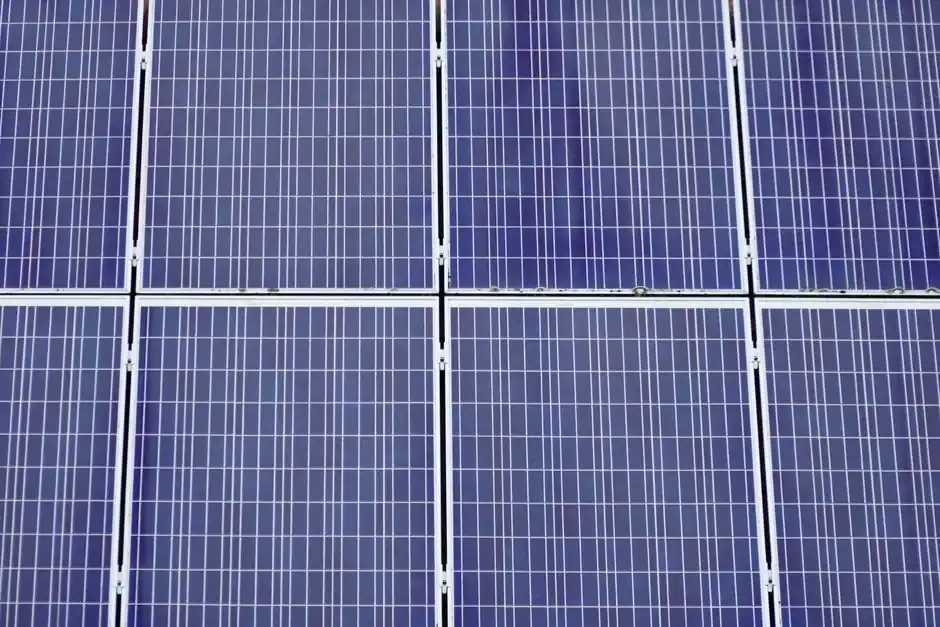
International silver prices briefly exceeded USD 70/oz by the end of 2025, with cumulative annual gains surpassing 130%, and silver spot reached roughly USD 84/oz in late December, a level more than double the prior year [S1][S3].
Because the metal is consumed in the front- and rear-side metallisation of crystalline silicon cells, every dollar added at the silver desk flows almost directly into cell and module bill-of-materials, forcing tier-1 producers to raise wafer, cell, and module quotes while smaller players absorb the gap [S1][S3].
Where Silver Sits in the Module Bill-of-Materials
Silver paste accounted for around 15% of total PV module cost at the end of 2025, surpassing polysilicon as the single largest input and effectively rewriting the module cost stack within twelve months [S1]. The same input is reported at 17% of total module cost in early January 2026, up from 12% at the end of 2024, confirming a 5-percentage-point swing in less than 24 months [S3]. In a stricter frame that counts only cell production cost, not the full module, OPIS puts silver paste at up to 30% of cell cost, with silver used in the silver-paste metallisation step during cell fab, which is why cell makers report more acute margin compression than module assemblers [S2]. The 2024 solar sector consumed 6,147 tons of silver, equivalent to 29% of global industrial silver demand, a concentration that explains why the PV chain is treated by bullion desks as a price-setting rather than price-taking end market [S3].
How Much of the Increase Is Reaching Module ASPs
Pass-through is partial and uneven. LONGi Green Energy raised module quotes by CNY 0.03-0.06/W, followed by JA Solar and Trina Solar, with Trina noting it had secured some lower-cost silver inventory earlier, so its realised price lag differs from spot-exposed peers [S3]. Average module prices in China are now approaching the CNY 0.80/W threshold, and some high-efficiency transactions are already clearing above CNY 0.70/W, a level that would have been uncompetitive only two quarters ago [S3].
OPIS editorial director Hanwei Wu was direct: "It is challenging, if not impossible, to pass on the entire cost increase to end users," a quote that frames the ceiling on any single quarter's price hike [S2]. InfoLink's 21 January 2026 weekly confirmed the same ceiling from the demand side: polysilicon spot slipped to RMB 49-50/kg with leading producers holding at RMB 63-65/kg, and wafer transactions priced at RMB 1.30-1.70/piece across 183N, 210RN, and 210N formats, with cell makers showing "limited willingness to ramp up production" and acceptance of upstream quotes "low" [S5]. Wafer, cell, and module makers can each absorb only a slice of the silver delta before downstream demand refuses to clear the new cost stack.
Why the Pass-Through Is Structurally Incomplete

Module demand is contractually fixed to project IRRs, not spot metal. Utility-scale EPCs bid pipelines months in advance at target returns of 7-9% in most markets, so a CNY 0.05/W module hike without matching module efficiency or BoS savings simply cancels projects, which is the binding constraint Wu described [S2]. The InfoLink note reinforces the same mechanism: "downstream acceptance has weakened" and "the pass-through of price increases still hinges on downstream affordability," a phrasing that places affordability, not producer willingness, as the gate [S5].
Inventory optics make the lag worse. The PV chain entered 2026 with 6,147 tons of 2024 silver already consumed, but cell and module inventory carry-over from 2025 was priced at pre-surge metal, so the gap between book cost and replacement cost widens reported gross margin even where selling prices rise, a distortion that audit committees and credit desks will not ignore [S3]. Project-level resistance is reinforced by competing module chemistries: HJT and TOPCon use different silver loadings per cell, so a uniform CNY 0.05/W hike shifts relative competitiveness between technologies within the same project, a fact that further caps any one producer's pricing power.
Silver-Reduction Pathways Already in Production
With full pass-through ruled out, the engineering response is to remove silver from the cell. Three pathways are in active use: low-silver paste, silver-coated copper paste, and pure copper paste, with the latter offering the potential to reduce silver consumption in rear-side grid lines by over 40% at theoretical paste cost below CNY 1,000/kg, far below prevailing silver-paste pricing [S3]. Specific firm moves are already public: LONGi announced plans to adopt non-precious metal alternatives in its BC cell production, with mass production expected to begin in Q2 2026 [S3]. Jinko Solar is pursuing both hedging strategies and silver-coated copper paste development. Trina has reduced silver usage per wafer by 15% year-on-year and is validating alternative solutions [S3].
Paste suppliers are moving in parallel. DKEM's low-silver paste has entered volume production, silver-coated copper pastes with 20-40% silver content are becoming standard in HJT cell production, and Suzhou Good-ark's subsidiary Jingyin has launched a low-temperature silver-coated copper paste with only 10% silver content that matches high-silver product performance [S3]. Similar material-substitution pressure is visible elsewhere in the metals stack, where the same 2025 supply environment is forcing a rethink of permanent-magnet sourcing, a parallel discussed in magnet recycling versus mined rare earths.
Comparison of Pass-Through Options for Module Makers
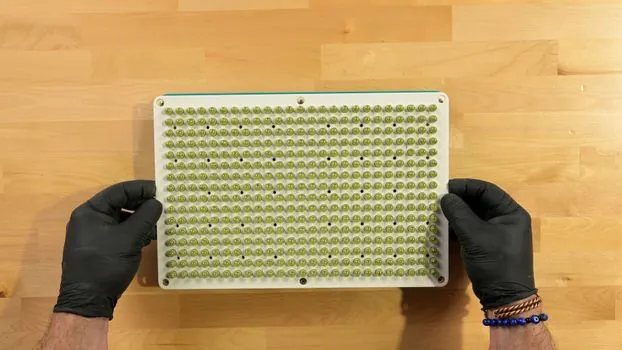
Three levers are available to bridge the silver gap, and they differ sharply on cost, lead time, and operational risk. Raising module ASPs (current state) is fastest, but capped by downstream affordability and is contractually limited in utility-scale pipelines, with typical realised increases of CNY 0.03-0.06/W so far [S2][S3]. Hedging silver on the LME or via forward contracts smooths margin but adds working capital and basis risk, and only a handful of tier-1 firms have the credit lines to do it at meaningful scale [S3]. Metallisation substitution is the only structural fix, but takes 6-18 months from pilot to mass production: silver-coated copper at 20-40% silver content is already standard in HJT, while pure copper paste at under 10% silver content is moving toward commercial volumes in BC lines, with Q2 2026 as the earliest mass-production node [S3].
The decision matrix is therefore: short term, accept partial margin compression and pass through 30-60% of the silver delta via list price; medium term, hedge the residual exposure; long term, commit capex to copper-paste lines and BC/TBC architectures that eliminate silver from the rear side. The same logic of substitution under cost pressure shows up in adjacent process choices, including open-path versus point gas detectors, where coverage cost is being re-engineered rather than simply repriced.
Non-PV Analogies: When Cost Pressure Forces a Design Change
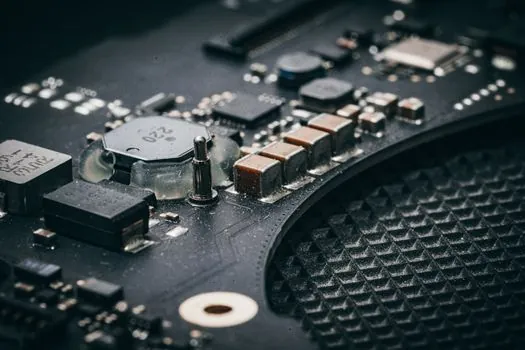
Noise Engineering, a US modular-synth maker, disclosed a parallel response in late 2025: PCB prices rose from roughly USD 3 to USD 17 on a single reorder, gold content in the laminate doubled since 2014, and the firm announced the end-of-life of its silver-panel product line and the streamlining of older modules [S4]. The mechanism is identical to PV: a precious-metal input embedded in a mature product, a tariff and supply chain layer on top, and a manufacturer forced to choose between absorbing the cost, redesigning the product, or killing the SKU. Module, in this industrial sense, is the same word used in very different industries for the same pluggable unit, and the load cell module and remote I/O module reference pages cover industrial variants where similar precious-metal exposure can surface in connector plating and resistor networks.
What to Track Through 2026
Two signals will tell you whether pass-through is improving. First, the CNY/W module ASP versus the USD/oz silver print: a sustained re-coupling would confirm demand has absorbed the new floor, while continued divergence would force more tier-2 and tier-3 cell capacity offline, exactly the path InfoLink flagged in its 1Q26 seasonal-low warning [S5]. Second, the silver-paste order book at DKEM, Suzhou Good-ark, and peers: a step-up in low-silver and silver-coated copper paste volumes into HJT and BC lines, with LONGi Q2 2026 mass production as the next data point, will mark the structural pivot from price-hike management to metallisation redesign [S3].
The underlying component specifications are covered under linear module.