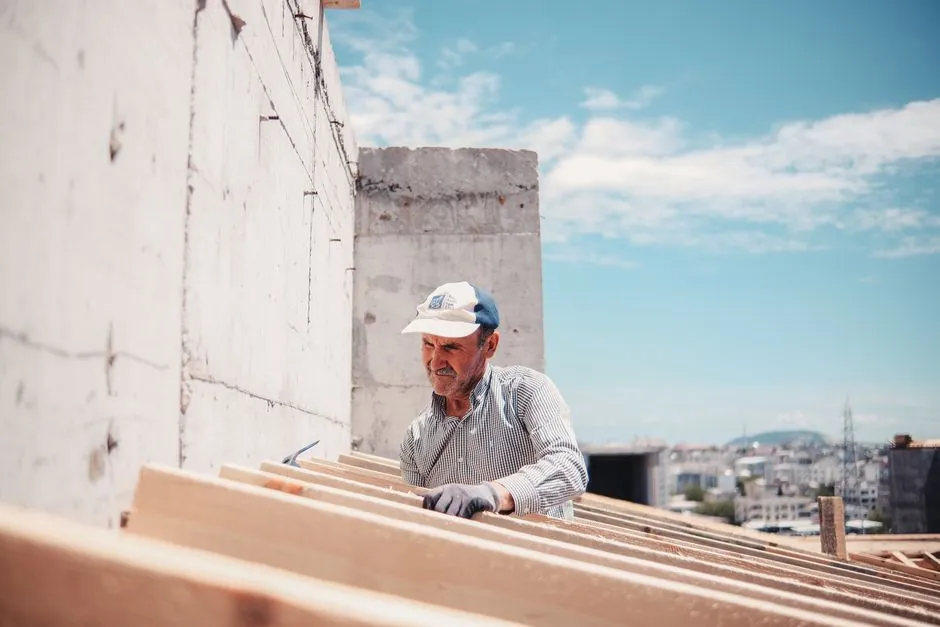
For renovation work published across April-July 2026 contractor guidance, the practical rule is: match the membrane category to the substrate condition and exposure path first, then to a specific product [S1][S2][S3]. Industry data referenced in 2026 contractor guides put average water-damage repair cost at $5,000-$10,000 per incident, so the category decision at design phase is where retrofit risk is bought or sold [S3].
Renovation work differs from new build because substrates are existing, often damp, and frequently out of tolerance. Most failed retrofit systems in 2026 contractor post-mortems are blamed on choosing the wrong category, such as specifying a rigid cementitious coating on a settling wall, rather than a defect inside a correctly chosen system [S3][S5].
Five Membrane Categories Seen in 2026 Renovation Specs
Contractor guidance published 9 April 2026 groups commercial and residential membranes by application path: overburden, pedestrian traffic, vehicular traffic, and below-grade [S1]. Foundation-focused guides published 24 February and 20 May 2026 further break the below-grade set into liquid-applied, peel-and-stick sheet, cementitious, bentonite, and dimpled HDPE [S3][S5].
Liquid-applied membranes (rubberized asphalt, polyurethane, elastomeric polymer) are spray- or roller-applied and cure to a seamless film; polyurethane formulations in current product sheets quote up to 900% elongation to accommodate substrate movement, with a 24-48 hour cure window before backfill and a freeze-temperature exclusion [S3]. Peel-and-stick self-adhering sheet membranes use a factory-applied rubberized asphalt or modified bitumen adhesive and deliver uniform thickness on flat, smooth, primed substrates; modified-bitumen roll goods are the dominant compatible chemistry for this format and are widely stocked for residential retrofit [S2][S3].
Wet-Room and Bathroom Retrofit: Sheet vs. Liquid Decision
Polyethylene sheet membranes with non-woven polypropylene fleece on both faces, embedded in thin-set mortar, are the most widely used format beneath tile in showers, bathrooms and steam rooms, and they double as a vapor retarder in moisture-sensitive assemblies [S2]. Common 2026 stock products in this format include Schluter Kerdi, Mapei Mapeguard WP 200, Laticrete HYDRO BAN Sheet, Ardex TLT 717, PROVA-MAT and Kobau Flex SD60 [S2].
Where the substrate is irregular, has many penetrations, or is a retrofit over existing tile, cold-applied single-component polyurethane liquid membranes such as Sikalastic HLM 5000 GC and Tremco TREMproof 250 GC give seamless coverage at corners and transitions that sheet cannot match without extra detailing [S9]. Both products are cold-applied and single-component in 2026 datasheets, removing the plural-component pot-life risk in occupied renovation [S9]. For a wider treatment of membrane chemistry and the waterproof membrane family, the category reference page lays out the same sheet-versus-liquid split used in current renovation guides.
Below-Grade Retrofit: Drainage Path Beats Coating Alone
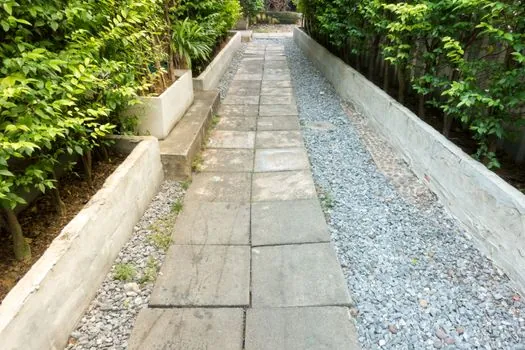
For basement and foundation retrofit, the 2026 contractor consensus is that a drainage path matters as much as the coating. HDPE dimpled membranes such as Delta MS, Delta Drain, Platon and DELTA-TERRAXX create an air gap that routes water to the footing drain and eliminates hydrostatic pressure at the wall face, which is why they are now the professional default for new subgrade work and a frequent pick on deep commercial retrofits [S3].
Bentonite clay panels hydrate and swell to seal cracks under constant hydrostatic pressure, a useful property in blindside and tunnel applications, but they are sensitive to saltwater and chemically contaminated soils and carry higher material cost [S3]. Cementitious coatings bond to concrete and masonry and are common on interior positive-side block walls, but the 2026 guidance is explicit that they are rigid and will crack when the foundation settles, ruling them out where differential movement is expected [S3][S5]. A broader view of substrate-tolerant systems is in the modified bitumen membrane reference, which covers APP and SBS roll goods used where the substrate is stable and a thicker built-up sheet is acceptable.
Plaza, Parking and Pedestrian Deck Retrofit
Deck and plaza membranes in 2026 commercial guides must handle abrasion, UV, slip resistance and, on traffic decks, exposure to oils, greases and de-icing salts [S1]. Bituminous roll goods (APP, SBS modified bitumen) and single-ply sheets (TPO, EPDM) are the dominant selections on horizontal traffic decks, with liquid-applied polyurethane and polyurea systems used where the deck geometry is irregular or where a fast-cure, seamless layer is needed [S6].
For overburden and vegetative roof retrofits, the membrane is buried beneath soil and stormwater layers and must tolerate continuous wet conditions and root pressure; the 2026 specification guidance is that roofing membranes alone are not a substitute because they are designed to shed water, not to hold it under soil and hydrostatic load [S1]. Polyurea and polyurethane liquids are typically chosen for these buried conditions because they tolerate ponding and complex detailing at upstands. For a thermal-and-moisture envelope view, the thermal waterproofing page covers combined heat-and-water barriers used on occupied plaza decks.
Selection Criteria: A Side-by-Side for 2026 Renovation
Lining the main options against the criteria a renovation spec writer actually weighs, the comparison reads as follows. Liquid-applied polyurethane and polyurea win on seamless coverage of irregular substrate and detail geometry, but lose on cure time (24-48 h) and cold-weather application limits [S3][S9]. Peel-and-stick modified-bitumen sheet wins on consistent thickness, speed on primed flat substrates, and crack-bridging, but requires a clean dry substrate and a primer step [S2][S3]. HDPE dimpled sheet wins on draining hydrostatic head and forgiving substrate tolerance, but adds stand-off that eats floor space on interior retrofit [S3].
Bentonite panels win under continuous hydrostatic pressure in blindside conditions, but lose to saltwater and chemical soil exposure and carry premium cost [S3]. Cementitious coatings win on bond to masonry and interior positive-side application, but fail under any differential movement [S3][S5]. The 2026 takeaway: liquid polyurethane for irregular interior wet rooms, peel-and-stick or HDPE dimpled for basement walls, and APP/SBS modified bitumen or TPO for plaza and parking decks, with polyurea reserved for buried overburden and fast-cure detailing.
Code, Drainage and Substrate Prep: The Non-Negotiables
Contractor guidance from February and May 2026 reiterates that the waterproofing assembly, not the membrane alone, keeps the basement dry: drainage, exterior waterproofing and hydrostatic pressure management are routinely required alongside the membrane choice [S2]. For green-roof and amenity-deck overburden, continuous drainage is treated as good practice even when the membrane is rated for constant wet conditions, because it extends service life and reduces head on seams [S1].
Surface preparation is the other consistent variable. Peel-and-stick membranes are sensitive to surface contamination and require a primer; liquid polyurethanes cannot be applied below freezing; bentonite needs careful installation sequencing and chemistry control; cementitious needs a sound, clean, damp substrate [S3]. Sika's 2025 Roofing and Waterproofing Projects of the Year awards, announced 6 April 2026, recognized low-slope new, re-roof, steep-slope, waterproofing and sustainability categories, with winning projects used as case studies for substrate prep and detailing discipline in 2026 contractor training [S8]. The 2026 award slate and the broader category reference on waterproof membrane selection both treat drainage, detailing at terminations, and substrate prep as the three failure-mode controls that decide whether a retrofit leaks in year one or year fifteen.
Two trackable signals to watch through the rest of 2026: revised product datasheets from Sika and Tremco for their cold-applied single-component polyurethanes used in wet-room and plaza retrofit, and any 2026 code-cycle updates to below-grade waterproofing assemblies in the IBC family referenced by foundation authority guidance [S5][S9]. A directly related reference for off-site and modular builds is the prefabricated construction membrane spec map, which applies the same category logic to factory-applied assemblies.