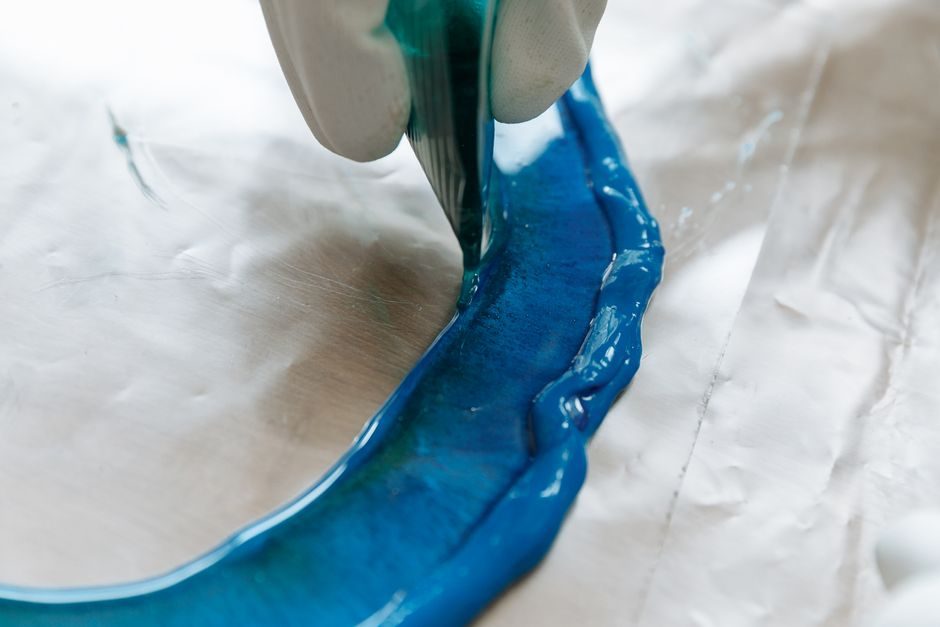
A resin sand molding line installation typically sequences across 6-12 weeks: site survey week 1, foundation cure weeks 2-4, mechanical set weeks 5-6, utility and controls hookup weeks 7-8, cold cycle weeks 9-10, hot commissioning and first pour weeks 11-12 [S2].
The line bundles a continuous or batch resin sand mixer, a flask-less or tight-flask molding line, sand reclamation, and a cure/hardening station driven by an acid-catalysed furan or phenolic binder. A 2025 export audit from a Qingdao-based supplier cites ISO 9001 quality-system compliance and CE marking for the synthetic resin mixing and metering sub-assemblies as the baseline specification most buyers receive [S2].
Foundation and Civil Works: Load, Level, Isolation
Foundation mass for a resin sand molding line should target 1.5-2.0x the total dry weight of the line to damp vibration and resist the cyclic jolt loads from squeeze-ram stations, with a minimum 28-day concrete cure of C30/37 (≈30 MPa) before equipment set [S2].
Anchor bolts are M24-M36 grade 8.8, set in pre-cast pockets or chemical anchors, torqued to OEM values after final grout pour. Floors inside the molding bay should be 150-200 mm thick, trowelled to a 3 mm/m flatness tolerance to keep flask-conveyor rails in plane. A typical 4 station horizontal flask line occupies 18-25 m length x 6-9 m width, with overhead clearance of at least 6 m for sand-bin feed and exhaust ducting. Resin-sand mixers impose point loads of 30-80 kN at the base; pour a localised pad 300 mm thick directly under the mixer foot print to spread the load.
Utility Hookup: Power, Compressed Air, Dust Extraction
Compressed-air consumption on a medium-throughput line runs 2-5 m³/min at 0.6-0.8 MPa for clamping, sand-fluidisation, and shot-blast valves, with a dryer set to pressure dew point -20 °C or lower to keep moisture-sensitive furan and phenolic binders from premature skin-cure inside the mixer [S2].
Power feeds depend on the mixer's drive: a 15-30 kW continuous ribbon or paddle mixer plus 5-15 kW per molding station gives 80-150 kW total installed load, balanced across a 3-phase 380-415 V / 50 Hz or 480 V / 60 Hz bus. Resin and hardener metering pumps are 0.37-1.5 kW each, fed from a clean 24 VDC control PSU on a UPS rated at least 30 min to ride out short blackouts during catalyst pump restarts. A dedicated dust-extraction duct of 0.5-1.0 m diameter at 1500-2500 m³/h connects to the mixer lid, sand cooler, and reclamation screens, terminating at a baghouse or wet scrubber; this is the single most common source of start-up failure when undersized, so spec duct velocity at 18-22 m/s. Hardener dosing lines should be stainless 316 or PP-lined to resist acid-catalyst corrosion.
Mechanical Alignment: Mixer, Conveyor, Flask Travel
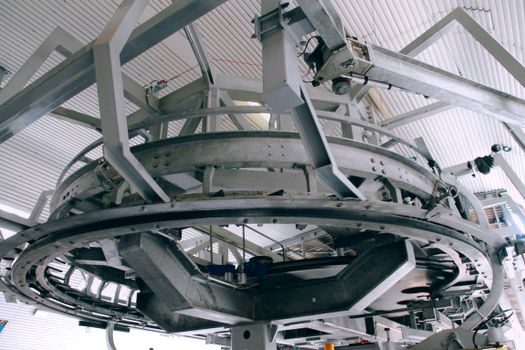
Plumb and level each station to within 0.1 mm/m vertical and 0.2 mm/m longitudinal using a precision level, then laser-track the flask conveyor rails to hold total cumulative drift under 0.5 mm across the line length [S2].
On an automatic molding line, the squeeze head and rollover rig carry a linear guide or crossed-roller guide carriage that must be square to the conveyor within 0.05 mm/m; any skew shows up as flash on the parting line and premature flask wear. Set the rollover arm's centre of rotation 200-300 mm above the parting plane, then shim the arm bearing housings until the flask face runs within 0.1 mm of the pattern plate. Resin-sand mixers, by contrast, are tolerant of minor misalignment but must be anchored against torsional reaction when the rotor starts under a full sand charge; hold-down bolts on a SINT 1100-class resin sand mixer should be re-torqued after the first 50 hours of operation and again at 200 hours.
Cold Cycle and Hot Commissioning: Acceptance Numbers
Acceptance criteria for first pour: bench-cured cube strength of 1.0-1.5 MPa at 1 h and 2.5-4.0 MPa at 24 h on a furan system, or 0.5-1.0 MPa at 1 h on a phenolic-urethane no-bake; surface hardness on the cured mold should hit 80-95 Shore A within 30 min of strip. Cycle time target for a horizontal flask line is 30-60 s/mold, with a reject rate below 3% on the first 50 pours. If bench strength misses the lower bound, drop hardener pump stroke 5-10% before adjusting resin; if it overshoots, raise sand temperature set point from ambient up to 30-35 °C to slow the cure. Compare alongside related equipment such as a shell molding machine installation when deciding on a hardened-sand versus resin-sand production mix, since shell lines have tighter exhaust and cure-window specs.
Common Failure Modes and When to Escalate
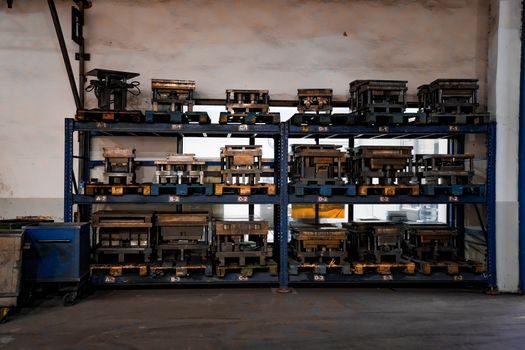
Three recurring start-up defects on a resin sand molding line, and their remedies: (1) soft spots in the mold, usually caused by binder temperature drift above 25 °C or a fouled hardener pump check valve, fix by recalibrating pump stroke and re-chilling the resin tank; (2) excessive peel-back at the parting line, trace to flask clamp pressure below 0.4 MPa or worn seal strips, replace seals and re-set clamp regulator; (3) sand lumps larger than 5 mm exiting the mixer, indicating worn paddle tips or an over-damp sand charge, replace tips and verify sand moisture at 0.2-0.5% [S2].
When not to repair: any mixer shaft with more than 0.5 mm runout, any PLC safety relay that fails its weekly self-test twice in a row, or any exhaust duct that cannot pull below 50 mg/m³ particulate on a baseline test should be replaced or escalated to the OEM rather than patched in the field. For a 10-year cost view of an adjacent casting technology, the lost foam line TCO model is a useful cross-check, since resin-sand reclamation and binder cost lines up against lost-foam pattern material cost on the same P&L.
If yield slips under 88% for two consecutive shifts, schedule a classifier and dust-duct audit before the next planned maintenance window. Keep the binder supplier's lot certificate on file for at least one year per batch, since furan and phenolic-urethane systems drift with seasonal humidity and a 5% strength slip is normal from winter to summer set-ups.