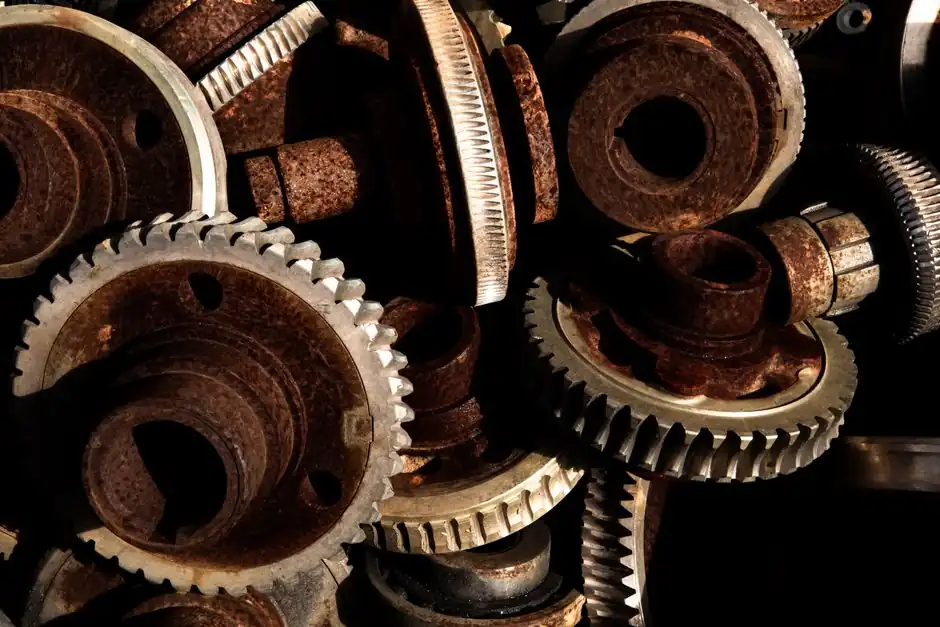
Reverse engineering a worn, broken or unsupported OEM component to make a replacement is legal in most major jurisdictions, provided the part was lawfully obtained, the resulting geometry and drawings are independently recreated, and no active patent, registered design or copyrighted source code is copied [S1][S2].
Engineers at Plan D Design and similar job shops routinely rebuild engineering data from physical parts using optical 3D scanning, precision measurement and CT inspection, then issue fresh CAD and drawings as one-off or small-batch replacements, a service explicitly aimed at machines the OEM no longer supports [S1].
What the law actually permits when the OEM has walked away
The act of reverse engineering itself is not illegal; rebuilding an OEM part such as a starter or a gearbox component from the physical article appears permissible in most common-law jurisdictions when no protected drawing or code is reproduced [S2].
The legal dividing line is the source of the information: measuring, scanning and independently drafting a replacement is treated differently from copying protected drawings, proprietary CAD files or firmware. Hobby and professional machinists regularly reproduce obsolete components for their own use under this same principle [S2]. A practical rule for the plant engineer is that a lawfully purchased part may be measured, disassembled and analysed; it may not be used as a vector to copy a copyrighted drawing or to clone a still-in-force patented feature.
Engineering workflow when no drawings exist
Plan D Design's published process is a useful template: assess the component and its function, capture geometry with optical 3D scanning plus precision measurement, reconstruct an intelligent CAD model, then issue fresh manufacturing drawings and a small-batch or one-off part [S1].
Critical interfaces, fits, mounting points and functional surfaces are measured and assessed separately from cosmetic surfaces so wear and manufacturing variation do not leak into the new drawing. CT scanning is added where internal geometry or cast features must be verified, and a worn or damaged area is re-interpreted back to its design intent rather than copied as-is [S1]. This is the same logic a pressure transmitter repair shop applies when an OEM has stopped supporting a legacy unit: scan the housing and the process connection, re-establish the original interface geometry, then re-manufacture.
Which signals tell you reverse engineering is the right answer
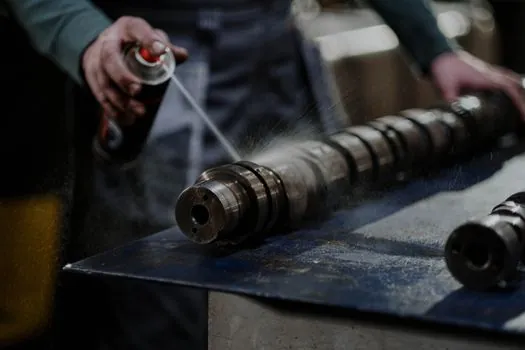
Reverse engineering is a fit when the OEM no longer exists, the part has been discontinued, the only available replacement is an expensive complete assembly, no original CAD or drawings exist, or the surviving exemplar is worn or damaged [S1].
It is not a fit when the part is still in production and is on a reasonable lead time, when the OEM holds an active patent on a distinctive functional feature, or when the part contains firmware or copyrighted software that cannot be cleanly re-implemented. A common mistake is to scan a flow meter body and assume the calibration coefficients and HART device descriptors can be copied: those live in protected device descriptions, and a like-for-like replacement must be re-engineered or sourced from a licensed supplier.
Comparison: scan-and-rebuild vs repair vs OEM-equivalent vs full machine replacement
Four options face the maintenance engineer with a dead obsolete part; the right choice depends on the data you can legally use, the lead time, and the criticality of the asset. [S1]
Scan-and-rebuild wins when the part is geometrically simple, no drawings survive, and you accept that the replacement is a functional equivalent, not a certified OEM item, with typical lead times of 2 to 6 weeks for a one-off. OEM-equivalent supply from a third-party vendor is faster, often off-the-shelf, but only available for widely supported platforms and may not carry the original type approval. In-house repair is the cheapest option but only viable when the failure mode is a wear surface or a bearing, not a cracked body. Full machine replacement is justified only when multiple critical components are obsolete and the line cannot be held on ad-hoc parts, which mirrors the supply-chain pressure described in Refurbished Transformers vs 4-Year Lead Times: when the OEM lead time stretches into years, a one-off reverse-engineered bridge is often the only realistic answer.
Risk register for a reverse-engineered replacement
The three risks that get projects killed are warranty and liability, regulatory acceptance, and intellectual-property exposure; each is manageable but must be acknowledged in writing before the first scan is taken.
Warranty and liability shift to the specifier and the job shop once the part is non-OEM, so critical parts on pressure-containing or safety-instrumented service should be dimensionally inspected, material-verified and, where the application requires it, pressure-tested before installation. Regulatory acceptance varies by jurisdiction: an industrial valve body on a hydrocarbon line may need PED or ASME B31.3 documentation that an independent scan-and-rebuild shop cannot always supply, so for code-stamped work the practical answer is often to contract a CE-marked equivalent rather than a one-off. Intellectual-property exposure is the legal ceiling: a hobbyist rebuilding a discontinued bracket for personal use is in a different position from a contract manufacturer selling 500 units a year, and the second case triggers fresh scrutiny on patents, registered designs and trade dress [S2].
Signals worth tracking over the next two quarters
Watch how many of the major OEMs publish formal obsolescence notices with a 24-to-36 month tail, since longer tails reduce the reverse-engineering pressure; second, track whether 3D scanning bureaux and contract manufacturers begin offering fixed-price "obsolete part" services as a catalogue line rather than a bespoke quote, which would compress typical 2-to-6 week lead times toward one to two weeks; third, monitor any test cases that tighten or relax the boundary between lawful independent redesign and unlawful copying of protected drawings in the EU, UK and US. [S1]