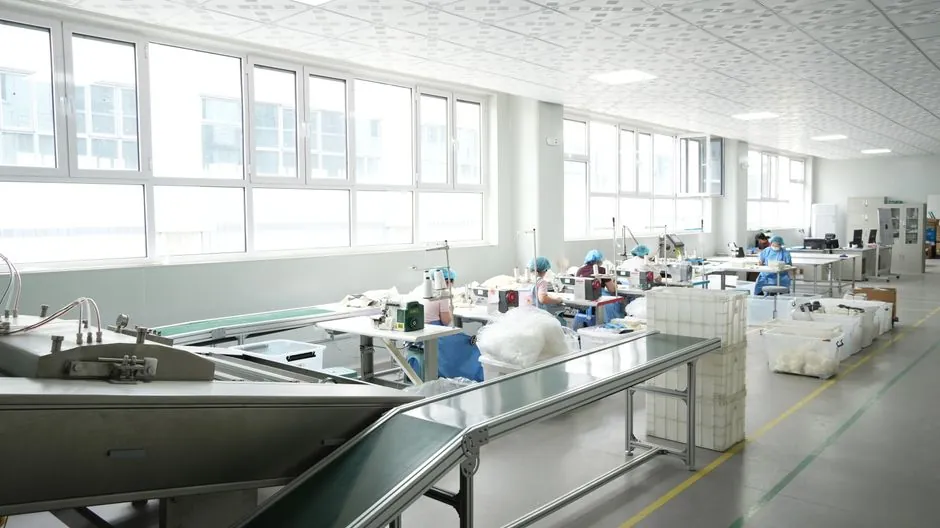
The reverse osmosis membrane market reached USD 5.66 billion in 2026 and is forecast to grow to USD 8.38 billion by 2031 at an 8.18% CAGR, with thin-film composite (TFC) elements capturing 81.90% of 2025 revenue [S1]. A separate 2026 sizing puts the market at USD 7.87 billion growing to USD 11.06 billion by 2030 at 8.9% CAGR [S2], while a third tracking source reports USD 4.76 billion in 202E expanding to USD 10.07 billion by 2035 at 8.68% CAGR [S5].
DuPont, Toray Industries, LG Chem, Hydranautics, and Veolia anchor the global competitive set, with Toray expanding Chinese manufacturing capacity and DuPont operating across roughly 70 countries through its water and protection segment [S3]. The supply side is best understood as a chemistry race between polyamide TFC and cellulose-based chemistries, packaged as spiral-wound, hollow-fiber, tubular, or plate-and-frame modules, with reverse osmosis itself holding 61.73% of the broader membrane filtration market in 2026 [S8].
Membrane Type and Configuration Split
Thin-film composite elements held 81.90% revenue share of the RO membrane market in 2025, while cellulose-based membranes post the highest projected CAGR at 8.62% through 2031 [S1]. Within configuration, spiral-wound modules controlled 69.60% of 2025 market share by value, with hollow-fiber modules expanding at 8.55% CAGR to 2031 [S1]. The type taxonomy used by major analysts tracks the same two chemistry buckets: thin-film composite membranes and cellulose-based membranes, differentiated mainly by rejection performance, chlorine tolerance, and feed-pressure envelope.
Spiral-wound remains the default for brackish water, seawater, and industrial process streams where standard 8-inch or 4-inch element geometries fit existing pressure vessels. Hollow-fiber gains share in fouling-prone feeds, high-solids wastewater, and offshore platforms where packing density and clean-in-place tolerance matter. Tubular and plate-and-frame geometries retain niche use in aggressive chemical feeds, mining leachate, and high-viscosity process streams where spiral-wound feed spacers would plug.
End-Use and Application Distribution
Municipal and desalination utilities captured 37.85% of reverse osmosis membrane market size in 2025, with healthcare and pharmaceuticals advancing at 8.92% CAGR through 2031 [S1]. Desalination systems held 48.7% of the RO membrane market in 2024 by application [S6], reflecting how seawater and brackish desalination dominate unit volume even when municipal reuse is gaining share.
Application segments are consistently split across four buckets: desalination, utility water treatment, wastewater treatment and refuse, and process water [S2]. The process water slice is where semiconductor fabs, pharmaceutical plants, and combined-cycle power generation drive incremental demand for ultra-pure and trace-contaminant rejection, with closed-loop recycling accelerating replacement-element pull-through. Reverse osmosis technology as a whole accounts for 38% of the broader membrane technology market in 2026 [S9], confirming its position as the workhorse chemistry across municipal, industrial, and residential point-of-use (POU) and point-of-entry (POE) installations.
Regional Market Share and Growth Pockets
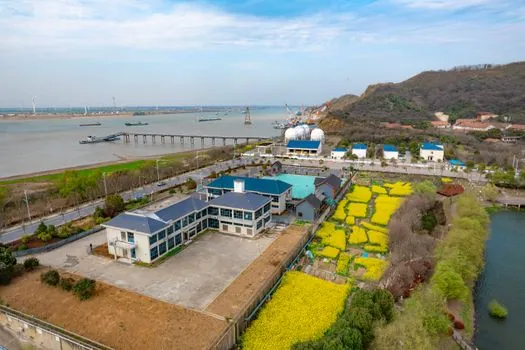
Asia-Pacific led the reverse osmosis membrane market with 45.60% revenue share in 2025, while the Middle East and Africa region is forecast to expand at 8.78% CAGR out to 2031 [S1]. The regional split matters for sourcing because the Asia-Pacific advantage is partly a manufacturing advantage: Toray has expanded its China-based RO membrane production specifically to serve rising water-treatment demand across Asia and Europe [S3].
North America was the largest region in 2025 by one alternate tracker [S2], while another 2026 dataset also names North America as the largest region with Asia-Pacific as the fastest growing [S5]. The dissonance between trackers on which region is largest is typical of RO membrane market sizing: Asia-Pacific leads by volume of installed capacity and replacement-element demand, while North America leads by value per element in pharmaceutical and semiconductor use cases. The Middle East, North Africa, India, and Australia are the next wave of large-scale seawater desalination build-out, generating sustained replacement membrane element demand as existing systems hit scheduled replacement intervals [S5].
Leading Manufacturers and Competitive Positioning
DuPont (US), Toray Industries (Japan), LG Chem (South Korea), Hydranautics (US), and Veolia (France) are the top five players, followed by Toyobo, Kovalus Separation Solutions, Alfa Laval, Mann+Hummel Water and Fluid Solutions, Membranium, Pentair, Thermo Fisher Scientific, Lanxess, Merck KGaA, Pall Corporation, and Best Water Technology Group [S3]. DuPont runs the business through electronics and industrial plus water and protection segments, with manufacturing footprints in North America, Europe, and Asia, and a research and development focus on advanced clean water solutions across municipal and industrial applications [S3].
Toray operates across six business segments, with RO membrane products shipped under environment and engineering, and the company carries a reputation for regulatory compliance and high-performance elements [S3]. LG Chem holds extensive global production across Asia, the Americas, and Europe, and has made multiple recent investments to expand RO membrane capacity [S3]. The competitive lever across all three leaders is chemistry and element architecture: aquaporin protein channels, graphene oxide nanomaterials, and plasma-enhanced surface modification are the current differentiation vectors, with the energy-efficient, high-flux TFC class reducing kilowatt-hour per cubic meter of permeate and cutting clean-in-place frequency. Ceramic RO membranes are a parallel development track for high-temperature, caustic, and abrasive feeds that degrade conventional polyamide sheets [S5].
Selection Criteria: When to Specify Each Type
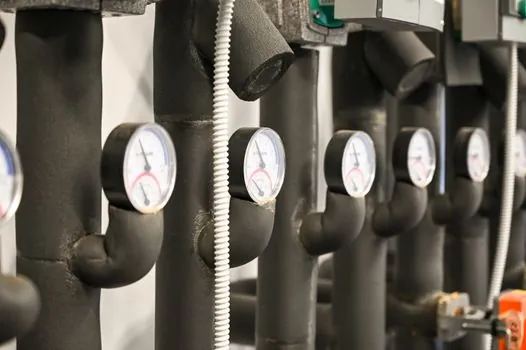
Specifying a reverse osmosis membrane starts with feed water characterization: total dissolved solids, temperature, free chlorine, pH, and the target contaminant rejection profile. For seawater desalination with feed total dissolved solids above 35,000 mg/L, seawater RO elements with operating pressures of 55-85 bar are the standard, and polyamide TFC spiral-wound is the dominant choice. For brackish water at 1,000-10,000 mg/L total dissolved solids, low-pressure brackish RO elements in the 10-25 bar envelope deliver the best specific energy, often below 0.5 kWh per cubic meter of permeate. For trace pharmaceutical and PFAS rejection in municipal reuse, TFC elements designed for high rejection of low-molecular-weight organics are mandatory, and the U.S. EPA PFAS National Primary Drinking Water Rule is driving widespread municipal investment in compliant RO systems [S5].
Cellulose-based membranes remain relevant where free chlorine is present in the feed, because cellulose acetate tolerates continuous low-level chlorination that destroys polyamide. Trade-offs are real: cellulose acetate runs at lower rejection (typically 95-98% versus 99.5-99.8% for seawater-grade TFC) and lower temperature tolerance, so the spec engineer must weigh chemical tolerance against permeate quality. For industrial wastewater, food and dairy, and mining applications, ceramic or tubular elements are specified when pH swings, abrasion, or high total suspended solids would shorten spiral-wound element life. Hollow-fiber UF pretreatment ahead of RO is now common for seawater and high-fouling surface water, and digital monitoring with predictive clean-in-place scheduling is extending element life and lowering total cost of ownership across semiconductor, pharmaceutical, and power generation facilities [S5]. For integration with smart water networks, the industrial valve and flow meter selection on the high-pressure side of the RO train directly affects differential pressure and element life, while the pressure transmitter on the reject stream feeds the data layer that predictive maintenance depends on.
Limitations, Failure Modes, and Sourcing Constraints
RO membranes fail in predictable ways: biofouling, scaling, oxidative damage from chlorine breakthrough, and mechanical compaction under over-pressure events. Biofouling is the dominant operating cost driver in surface water and wastewater reuse, and plasma-enhanced surface modification plus aquaporin-mimetic channels are the current fouling-mitigation play [S1]. Scaling is controlled by antiscalant dosing and recovery ratio limits, with calcium carbonate, barium sulfate, and silica the most common scale species. Chlorine damage is irreversible on polyamide TFC, so feed-side dechlorination via sodium metabisulfite or activated carbon is standard. Compaction is permanent and reduces flux over time, so operating pressure must stay inside the element-specific envelope, typically below 1,200 psi for standard brackish elements and 1,200-1,500 psi for seawater elements.
Sourcing constraints in 2026 are not material but are logistics-driven: lead times on replacement elements for large desalination plants run 8-16 weeks for standard 8-inch elements, and longer for the largest 16-inch and 18-inch diameters. The Asia-Pacific manufacturing base, anchored by Toray's Chinese plants and LG Chem's regional production, gives buyers shorter lead times into Middle East and Indian Ocean projects but exposes them to shipping risk on trans-Pacific moves. The competitive intensity in the supplier base, with at least 15 named global players [S3], keeps pricing rational but also keeps standard seawater element ASPs in a tight band, with differentiation driven by rejection rates, flux, and warranty terms rather than headline price. Closed-loop water recycling in semiconductor fabs, pharmaceutical plants, and power generation is a structural demand driver, with the pressure sensor and industrial valve on the permeate side of the RO train increasingly specified with IIoT-ready protocols for plant-wide digital water management.
Standards, Drivers, and 2026 Market Signals

Demand drivers stack as: increasing demand for pure and potable water at +2.1% impact on CAGR, expansion of seawater desalination capacity at +1.8%, stricter industrial-effluent discharge norms at +1.2%, growth in residential POU and POE filtration units at +0.9%, and low-pressure RO membranes enabling off-grid usage at +0.6%, per a 2026 driver-impact matrix [S1]. Climate change intensifies water stress for 40% of the global population, amplifying the appeal of membrane purification that can process brackish or contaminated supplies at scale, and operating costs have fallen 25% since 2020 thanks to higher-flux TFC sheets [S1].
Regulatory pressure in the European Union, China, and the United States now caps priority contaminants such as PFAS and specific pharmaceutical actives at parts-per-trillion levels, driving rapid upgrades of legacy treatment lines to thin-film modules [S1]. The U.S. EPA's PFAS National Primary Drinking Water Rule sets enforceable limits for PFAS in public water systems, and RO is one of the few treatment technologies that can consistently meet those limits, which is the single largest U.S. municipal driver through 2030 [S5]. Major product trends tracked in 2026 include sustainable membrane manufacturing, smart industrial filtration platforms, digital water treatment systems, IIoT-enabled monitoring solutions, and AI-based predictive water purification models [S2]. state-level PFAS MCLs beyond the federal rule, and any 8-inch element lead-time stretch above 20 weeks as a tightening-supply indicator. Related coverage of competing process industries is in Specialty Chemicals 2026: Market Sizing, Regional Power, and Competitive Levers and Industrial Fasteners Market 2026: Manufacturer Share, Material Split, and Sourcing Map.