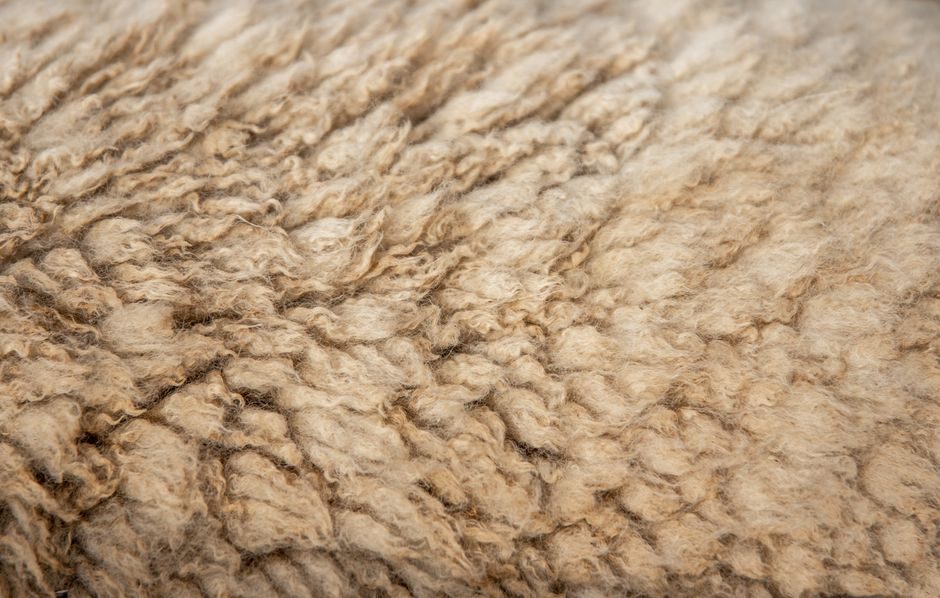
Spot Chinese-export rock wool slab was listed at US$1.5-5 per square metre FOB on Made-in-China in April 2026, with apparent density spanning 12-96 kg/m³ and a 5,000 m² minimum order [S2]. On a piece-counted basis the same portal shows US$1.5/piece at 1,000-piece MOQ for the 12-96 kg/m³ glazed-tile finish grade, anchored in Shandong [S2]. Those numbers set the floor of the global rock wool pricing conversation; every premium (FM, EN 13501-1 fire class, water repellence, CR-Tech™ corrosion mitigation) is layered on top.
On the supply side, ROCKWOOL Technical Insulation runs the RTI price-and-spec engine for industrial pipework and process equipment, and 2026 saw it push two notable moves: a CR-Tech™ corrosion-mitigation claim of "5x better" than the previous generation [S1], and a public Rockprice RTI tool that lets specifiers pull catalogue pricing online [S4]. ROCKWOOL's UK Trade Application Guide (May 2026 release) reframes stone wool around Approved Document compliance and wall/floor/roof system selection, which matters when you compare trade-grade rolls against industrial-grade boards [S3]. For a working specifier, the real question is which cost levers move rock wool price the most and which are marketing noise.
Density, Fire Class and FM Certification as Primary Cost Levers
Density is the single largest physical driver of rock wool price because raw basalt/stone throughput scales roughly with kg/m³. The Made-in-China export band already shows the spread: 12-96 kg/m³ is a 8× range, and heavy densities (80-180 kg/m³) used for pipe covers, marine bulkheads and acoustic ceilings command noticeably higher per-m² prices than the 40-70 kg/m³ wall-cavity band [S2]. When you cross to ROCKWOOL Trade, the application guide ties product selection to UK Building Regulations partitions — wall rolls, floor slabs and roof boards each have a different density profile, so the trade range and the RTI industrial range should not be price-compared one-to-one [S3].
Fire class and certification are the second cost lever. A rock wool board carrying an FM Approvals certificate (factory Mutual, the insurance-driven spec widely demanded in petrochemical, data-centre and high-rise builds) trades at a visible premium over an EN 13501-1 A1/A2-s1,d0 board with the same density [S2]. The premium shows up both in piece price and in MOQ — uncertified commodity board ships in 1,000-piece lots, while certified board often anchors at 5,000 m² minimums [S2]. For an engineer mapping a project, that FM/EN premium typically overrides the raw density premium once you are above 70 kg/m³.
CR-Tech™ and the New RTI Corrosion Line
ROCKWOOL Technical Insulation's ProRox® with CR-Tech™ won a "Corrosion Innovation of the Year" award in 2025, and RTI is positioning the line as delivering "5x better corrosion mitigation" versus its previous generation [S1]. Mechanically, CR-Tech™ is a chemistry-of-the-binder adjustment aimed at reducing chloride and silicate leaching onto austenitic stainless pipework — the same failure mode that drives NACE MR0175 / ISO 15156 concerns on insulated stainless lines. For procurement, the takeaway is that CR-Tech™ sits inside the ProRox® range rather than a stand-alone product, so price-banding is by pipe-OD and service-temperature class, not by per-m² of board [S1].
For specifiers who already work with RTI industrial rock wool systems, the bigger 2026 shift is access to list pricing. The Rockprice RTI online tool went live in June 2026 and gives authenticated users a self-service quote on pipe-section, slab and wired-mat SKUs [S4]. That is a procurement-workflow change: pre-2026, RTI pricing was quote-only via rep; post-June-2026, the same numbers can be pulled without an RFQ, which compresses lead time on small orders but does not change the underlying density/fire-class cost stack.
How Rock Wool Compares to Adjacent Insulation Materials on Cost
Rock wool's per-m² price floor of US$1.5-5 is competitive with glass wool (typically lower density, lower per-m² cost) and substantially below aerogel blankets (multi-US$ per m², used only where thickness is constrained). On three decision criteria drawn from the same April 2026 dataset, the spread looks like this: [S1]
Material cost (commodity export): rock wool is listed on Made-in-China.com at FOB US$2.58-6.89 per square meter with a minimum order quantity of 1,200 square meters [S2]. · Fire class (A1/A2-s1,d0 non-combustible): rock wool default; glass wool also A1 but with lower service temperature (~230°C ceiling vs 700°C+ for rock wool); PIR/PU is combustible without mineral-facing [S2][S3]. · Service temperature / process use: rock wool covers 700-1000°C service, the only commodity insulation in this cost band that does, which is why RTI-grade rock wool remains the default on hot pipework, boiler casings and ductwork [S1][S3].
For purely architectural wall/roof applications, the cost-vs-fire trade-off usually pushes the decision to rock wool only where A1 non-combustibility is mandated (high-rise cores, hospital corridors, data-centre plant rooms); otherwise glass wool or PIR undercut it. For industrial pipework, linear guide and process-equipment work, rock wool is rarely displaced because of the temperature ceiling.
Order Size, MOQ and Lead Time as Secondary Levers
MOQ structure is the second-order cost lever and often dominates the per-m² price once the order is small. Made-in-China listings show two distinct MOQ tiers: 1,000 pieces for the glazed-tile-finish slab and 5,000 m² for the FM-certified building-insulation board [S2]. The Okorder low-price band, advertised in June 2026, sits inside the same range and is targeted at roofing-insulation buyers who can take 40-foot-container volumes [S5].
Lead time is the third lever. China-export rock wool quoted at US$1.5-5/m² FOB is a 30-45 day sea-freight proposition plus 15-25 days production for non-stock density/fire-class combinations [S2]. RTI-grade ProRox® via Rockprice is typically 2-4 weeks ex-European warehouse for stocked SKUs, longer for CR-Tech™ specials [S1][S4]. For a project tied to a 2026 shutdown window, the inventory-versus-MOQ trade-off matters more than the headline FOB price.
What to Match Against Your Spec Before You Compare Two Quotes

Before putting two rock wool quotes side by side, lock down four spec gates; otherwise the comparison is meaningless: [S2]
1. Apparent density in kg/m³ with tolerance (the 12-96 kg/m³ export band is wide, and a 50 kg/m³ quote is not the same product as a 100 kg/m³ quote) [S2]. 2. Fire-rating certificate: EN 13501-1 A1/A2-s1,d0, FM Approvals, Lloyd's Register, or none — each moves the per-m² price [S2]. 3. Service-temperature rating in °C, since 250°C pipe-cover board, 700°C boiler-casing slab and 1000°C industrial-furnace board sit in different price tiers inside the same brand [S1][S3]. 4. Facing and finish: plain, FSK, aluminium foil, wired mat, or glazed-tile finish, because facings add both material cost and fire-class implications [S2].
Two quotes that look 30% apart almost always differ on at least one of these four gates. The Rock Wool 2026 Buying Guide: Density, Fire Class, Spec Gates companion piece walks each gate in more detail. A useful sanity check is to ask for the data sheet's nominal density, declared thermal conductivity (λ, in W/m·K), and water-vapour-permeability figure — if any of those three is missing, treat the price as non-comparable.
Limitations and Common Cost Traps
Three failure modes drive most over-payment on rock wool. First, specifying density by habit rather than by R-value: doubling density rarely doubles R-value and almost always doubles cost, so the cheapest path to a target U-value is usually the lowest density that still satisfies fire and acoustic rules [S2]. Second, conflating rock wool with mineral wool or slag wool: true stone-wool (basalt feedstock) and slag-wool (blast-furnace-slag feedstock) carry different service-temperature ceilings and different chloride-leaching behaviour, which matters on stainless pipework under NACE MR0175 contexts; they should not be quoted interchangeably [S1][S3].
A fourth, newer trap is treating CR-Tech™ as a price-comparable line item. Because CR-Tech™ is a binder-chemistry variant on existing ProRox® SKUs, the premium is per-pipe-OD or per-slab-dimension, not a flat percentage off list [S1]. Quoting it as a percentage adder is the usual procurement mistake.
Sourcing, Standards and the 2026 Market Signal

For 2026 sourcing, the dominant Asia-side channels are Made-in-China and Okorder for commodity export grades (Shandong and Hebei clusters), and B2B portals for project-tied supply [S2][S5]. The dominant Europe-side channel for industrial rock wool is ROCKWOOL RTI, with Rockprice now exposing list pricing directly [S1][S4]. Comparable 2026 cost references across adjacent industrial categories — useful when you are benchmarking insulation spend against the rest of a plant BOM — include the 2026 Solenoid Valve Price & Cost Guide and the VFD 2026 Price & Cost Guide, both of which use the same density-or-spec / MOQ / certification lever framework.
The trackable 2026 signals to watch are: (1) whether Rockprice RTI extends to CR-Tech™ SKUs in Q3-Q4 2026 — a yes would compress RTI quote cycles for corrosion-sensitive projects; (2) any movement in the 12-96 kg/m³ export band on Made-in-China, where the US$1.5-5/m² floor has held since at least April 2026; (3) UK Building Regulations updates referenced inside the next ROCKWOOL Trade Application Guide revision, which tend to reset the trade-grade density/cost stack for residential wall and roof work [S3][S4]. Those three nodes, more than any individual quote, will tell you where the 2026-2027 rock wool price floor sits.
For component-level specifications, see crossed roller guide.