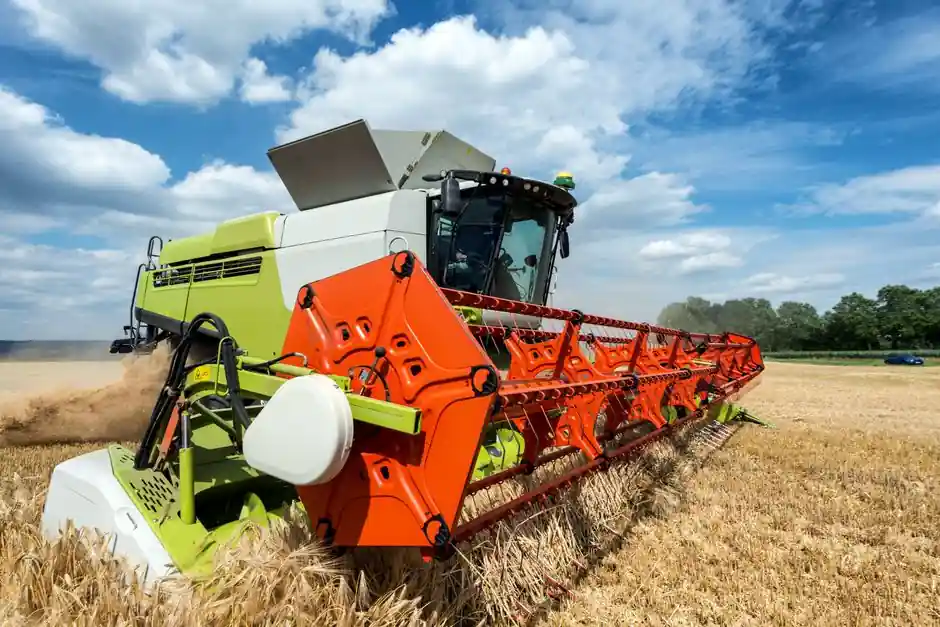
Roller chain selection on farm equipment is driven by five hard inputs: drive horsepower, small-sprocket RPM, service factor, shock class, and the environment the chain runs in, with ANSI/ASME chain sizes #40 through #100 covering most field applications [S1][S2][S5].
Selecting the right chain protects combines, balers, manure spreaders, and grain conveyors from in-season failures, where downtime during planting or harvest typically costs far more than the price difference between a value chain and a premium one [S2]. The logic of sizing a precision roller chain on the farm mirrors the pitch-and-service-factor workflow used in any enclosed industrial drive, and the underlying roller chain construction is the same across markets.
Roller Chain vs Steel Detachable Chain: Where Each Fits
Roller chains use cylindrical rollers, inner bushings, and hardened steel pins captured between side plates, and they deliver high efficiency on precision drives running at high speed and heavy load [S4]. Steel detachable chains use open interlocking links that hook directly into each other without separate pins or bushings, which lets mud, chaff, and crop debris pass through without jamming, making them the default for low-speed, open-air, dirty work such as manure spreaders, simple conveyors, and older implement drives [S4]. A practical boundary: keep detachable chains under 400 ft/min to avoid breakage, and lubricate precision roller chains daily to block dust and reduce wear [S4].
For dustier, low-rpm drives, a sealed agricultural chain that can handle debris, including variants carrying attachments for sorting and sizing fruit and vegetables, is offered in the agriculture market alongside standard precision roller chain [S1]. The same selection logic that frames a precision drive in construction machinery and equipment applies when matching pitch, strand count, and sprocket size to the driven load.
Sizing Inputs: HP, RPM, Service Factor, and Pitch
The standard engineering workflow for a farm roller chain drive uses seven inputs: input power type (electric motor, hydraulic, internal combustion with mechanical drive), driven equipment, transmitted horsepower, full-load RPM of the faster shaft, desired slow-shaft speed, shaft diameters, and center distance, plus any space, alignment, or environmental limits [S5]. With those in hand, the design horsepower equals rated horsepower times a service factor, and Renold Jeffrey's published table maps an electric motor on a uniform load to 1.0, a moderate load to 1.2-1.3, and a heavy-shock load to 1.4-1.5, while an internal combustion engine with mechanical drive on a heavy-shock load lands at 1.7 [S5].
Practical chain sizes stocked for agricultural roller chain duty are typically #50, #60, #80, and #100 in standard series, with heavy-series counterparts #60H, #80H, and #100H for higher shock drives such as baler plunger mechanisms and large round balers [S2][S8]. For a 50-series double-strand and standard 50 roller chain, the same chain also fits many conveyor and agricultural machinery drives that the aftermarket keeps in stock [S7]. When the load profile is dominated by start-stop shock or a reversing drive, the heavy-series "H" suffix and a second strand are the two cheapest upgrades before stepping up a pitch.
Selection Criteria by Machine Type
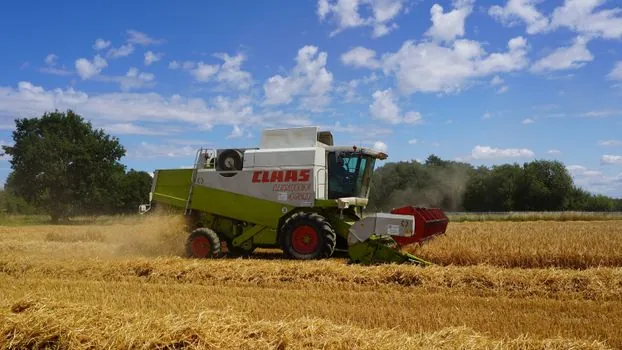
Combines run roller chains under high load in dusty threshing and separating conditions, so the chain must combine high tensile strength, wear and corrosion resistance, and a lubrication regime that survives chaff [S3]. Hay balers operate in debris-filled, high-torque environments, which pushes selection toward heavy-duty roller chains with debris-tolerant sealing and easy field lubrication [S3]. Manure spreaders handle corrosive organic material, so the chain must be corrosion-resistant, easy to clean, and strong enough for heavy organic loads [S3]. Grain elevators run continuously at moderate speed, favoring wear-resistant, low-maintenance chain because stoppages cascade through the whole handling system [S3].
A condensed matrix a buyer can use on the shop floor: precision roller chain for high-speed, heavy-load precision drives on tractors, combines, and balers; steel detachable chain for low-speed, open-air, high-debris work under 400 ft/min; double-pitch conveyor chain for long-center grain handling where light load and steady speed dominate; corrosion-resistant or coated chain where fertilizer, manure, or stored-grain chemicals attack standard carbon steel [S1][S3][S4][S8]. The decision criteria line up as four columns: operating speed (low vs high), environment (clean vs dirty/corrosive), shock profile (uniform vs heavy shock), and service accessibility (easy daily lube vs hard-to-replace).
Premium vs Engineered-Value vs Economy Chains
Distributors serving agriculture typically stock three tiers, with Timken Diamond® as the premium offering (held to a tighter range of performance and meeting or exceeding ASME/ANSI chain requirements for strength and wear life), Timken Drives® as the engineered-value tier, and AgSmart® as the economy option for everyday replacement where annual hours are low [S1][S2]. The premium tier is typically specified for combine drive systems, feederhouse drives, baler drive systems, grain cart drives, high-hour operations, commercial farming operations, and hard-to-service locations where in-season replacement is the dominant failure cost [S2].
The value tier fits a dependable mid-range replacement on a moderate-hour farm where the operator is willing to follow a steady lubrication schedule but does not need the longest possible wear life, while the economy tier fits low-hour auger and secondary drives that run only a few weeks per year [S2]. Across all three tiers, fitment to the same ANSI chain number and sprocket is preserved, so switching tiers does not require re-machining shafts or hubs.
Lubrication, Environment, and Field Failure Modes
Daily lubrication is the cheapest reliability upgrade on a precision roller chain in dust, and self-lubricating or sealed agricultural chain variants exist for hard-to-reach locations where daily greasing is not realistic [S3][S4]. In corrosive service, coated chain or stainless chain is the right choice because the wear mechanism shifts from abrasive to chemical once fertilizer or manure residue sits on the steel [S3]. Shaft alignment is non-negotiable on precision drives because even a slight twist on a high-speed roller chain drive causes fast component failure, while steel detachable designs tolerate slight angular misalignment on long, flexing implement frames [S4].
Common field failure modes that drive the next chain choice are elongation (pin and bushing wear) which accelerates sprocket tooth wear, side-plate failure from misalignment, and corrosion pitting that initiates fatigue cracks, so logging the failure mode from the removed chain is the fastest way to step up to a heavy-series or coated chain on the next replacement [S2][S4].
Standards, Sourcing, and Cross-References
Two standard families govern the bulk of agricultural roller chain procurement: ANSI/ASME B29.1 for the #40-#240 sizes common in North American farm equipment, and ISO 606 for the equivalent 05B-24B metric sizes used on European and increasingly global machinery, and a chain marked to one standard must be paired with sprockets cut to the same standard [S2][S3]. When a quote or datasheet does not state the standard, treat the chain as non-interchangeable and verify the pitch, roller diameter, and inner width against the driven sprocket before installation.
A sister reference on roller chain for material handling covers the same load-class, service-factor, and pitch workflow for conveyors, and a complementary marine-drive guide addresses corrosion-resistant material selection and higher service factors for washdown duty: Roller chain selection for material handling: load class, service factor, pitch and Roller Chain Selection for Marine Drives: Pitch, Material, Service Factor. Trackable signals over the next season: distributor stocking moves toward heavier "H" series in the #60-#100 range for baler applications, and a wider mix of coated and stainless agricultural chain as fertilizer and manure-handling service lives extend.
Spec-level background on the components involved: road roller.