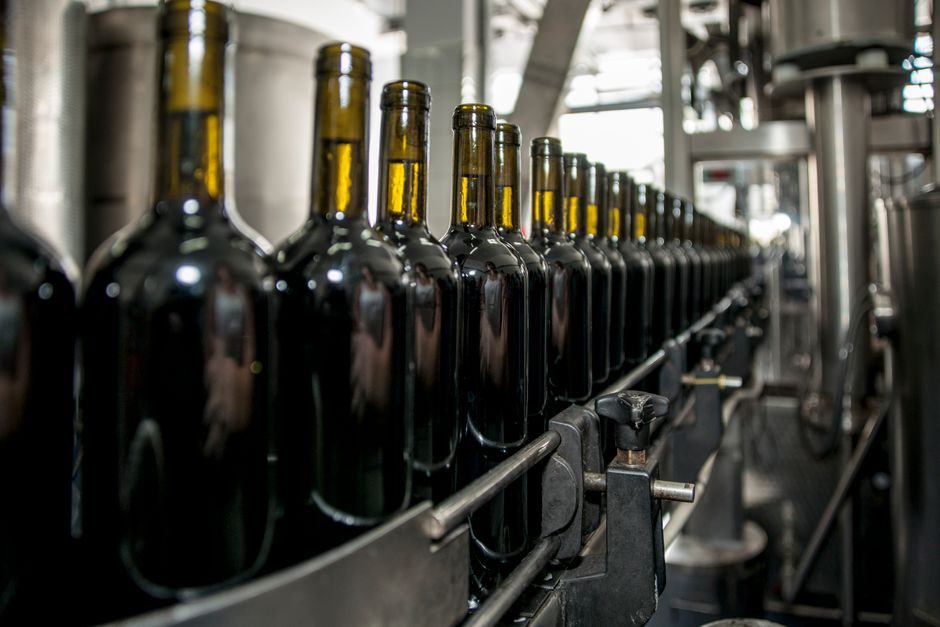
Roller conveyors and belt conveyors are the two workhorses of unit-handling and bulk-handling lines, but the engineering trade-off is sharper than most catalogues admit. Driven roller modules sized Ø50-60 mm at 100-2,500 mm length routinely deliver 1.0-1.3 kN dynamic load per roller (Interroll 1200 / 3560 series data, [S1]), while belt conveyors on DTII idler geometry scale to diameters of 89-194 mm and lengths of 315-1,200 mm per idler set, supporting aggregate throughput that roller lines cannot match [S5].
Selection hinges on load geometry, accumulation behaviour, incline angle, sanitation class and noise budget. Drum-motor and motorized-roller (MDR) variants now ship from Chinese suppliers at 50 sets/day capacity with FOB pricing from 56-259 USD per galvanized roller frame set [S2], tightening the cost case for motorized roller accumulation lines in distribution centres.
Load Form Factor and Unit vs Bulk Handling
Roller conveyors require a flat, rigid underside on every conveyed item — corrugated cartons, plastic totes, steel drums and tyres qualify; loose sand, powders and bagged chemicals do not. The Interroll 1200 slip-on roller, with diameter 30-80 mm and length 100-1,600 mm at 72-1,200 N capacity, is engineered specifically for cardboard trays and drums in unit-handling lanes [S1]. Belt conveyors carry irregular footprints, granular media and packaged goods without bottom support, which is why quarry and crusher-duty idlers ship with 89-194 mm diameters and rubber-lagged shells for stone-crusher feed [S4][S5].
Bulk applications — stone, sand, foundry sand, fertilizer — overwhelmingly default to belt lines carrying DTII-type idler sets at 315-1,200 mm lengths, with V-shaped rake rollers for self-cleaning return runs [S5]. For unit loads under 50 kg/carton, the roller conveyor path wins on energy per carton because zero-pressure accumulation zones only run motors when a zone is occupied.
Motorization, Drive Topology and Power Budget
Driven roller lines split into three architectures: belt-driven (round polyurethane belt coupling rollers), chain/sprocket-driven (RT2 K1 single-sprocket rollers, BETA3 1R-1RF with 50/63 mm Ø and 200 mm length for low-noise straight runs), and motorized drum rollers (24 V DC brushless MDRs, poly-V and DC sprocket variants) [S1][S3]. Drum-motor integration drops the external gearbox and tail pulley, which simplifies sanitation in food-grade lines and is why AC oil-cooled MDR DM165 is specified for belt conveyor head sections [S3].
Belt conveyors take a single drive pulley (typically 1.5-2.2 kW for 600 mm-wide lines, scaling upward on bulk applications) and run continuously whether the belt is loaded or empty — the energy penalty compounds at low utilization. Roller lines, by contrast, run zone-by-zone: a typical 24 V DC MDR consumes 30-80 W per zone, so an empty zone idles at near-zero wattage. On a 40-zone accumulation conveyor, peak demand stays under 3.2 kW even when all zones fire simultaneously.
Incline Angle, Speed and Throughput
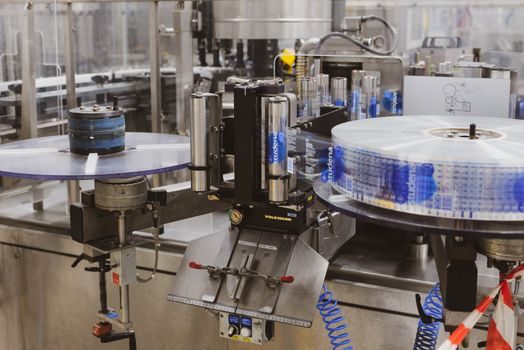
Roller conveyors start losing unit-load control above 4-7 degrees on gravity models; motorized rollers extend usable incline to 15 degrees with cleated sleeves or rubber-lagged shells. Belt conveyors handle 18-30 degree inclines on standard chevron profiles, and cleated belts push that to 45-60 degrees for vertical-lift applications, which is why stone-crusher and cement lines stay with belt regardless of cost [S4].
Linear speed envelopes also diverge. Belt conveyors run 0.5-3.0 m/s for aggregate and 1.0-2.5 m/s for parcel sortation, while MDR roller lines cap at 0.3-1.5 m/s because tire wear, noise and carton stability degrade above that band. Throughput on belt lines scales with belt width (500-1,200 mm common, 1,600 mm on heavy quarry duty) and runs 200-600 t/h on crusher feed [S4].
Sanitation, Noise and Maintenance Access
Food, pharmaceutical and cold-chain specifications favour motorized drum rollers because the motor lives inside the tube — no external chain, no sprocket cavity, no exposed cabling. WINROLLER ships DC sprocket MDR (DGBL76) and lifting-cam MDR variants specifically for food processing, medical production and airport baggage handling, with ROHS and CE certification on the motor housing [S3]. The same MDR line, when specified with stainless shafts and IP66 sealing, survives high-pressure washdown that would corrode chain-driven rollers in weeks.
Noise is a hidden roller advantage: PVC-tube BETA3 CI rollers with thermoplastic bushes and pinion sprockets target 55-65 dB(A) at 1 m, compared to 70-78 dB(A) for chain-driven roller lines and 72-82 dB(A) for rubber-belt conveyors at typical operating speeds [S1]. Maintenance access inverts the picture: a single failed MDR is a 5-minute cartridge swap, while a belt splice or idler bearing replacement on a belt conveyor pulls the line for 30-90 minutes and demands trained rigging.
Decision Matrix: Roller vs Belt Across Four Criteria
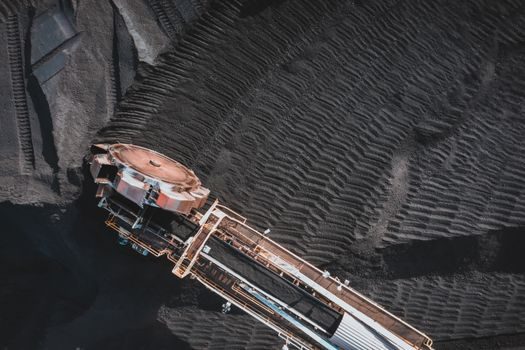
The four criteria that drive 80% of roller-vs-belt calls in 2026 are load geometry, accumulation behaviour, incline and sanitation. Roller lines win load geometry for flat-rigid unit items, accumulation for zero-pressure zones, incline only on motorized variants up to 15 degrees, and sanitation for sealed MDR drum motors in food and pharma. Belt lines win load geometry for irregular and bulk media, accumulation (they don't accumulate — single-stream throughput replaces it), incline above 18 degrees, and sanitation where the medium itself is the food (baking, confectionery) so belt washdown is unavoidable anyway. [S3]
Cost per metre tracks the architecture. Galvanized belt conveyor roller frames from Shandong Mingyang ship at 56-259 USD per set on a 10-set MOQ with 50 set/day capacity [S2]. Drum-motor MDRs land at 80-220 USD per roller in volume. A full 24 V DC MDR zone (roller + card + PSU share) typically runs 280-450 USD, against 120-260 USD per metre for a light-duty belt conveyor frame without drive. Over a 50 m accumulation line, the motorized roller path costs roughly 1.6-2.0x the equivalent belt path but recovers the premium in 18-30 months through zone-on-demand energy savings on parcel sortation.
Vendor Map and Sourcing Signals (2026-07)
China remains the dominant manufacturing base for both categories. Shandong Mingyang Conveyor Equipment lists conveyor roller, idler set, conveyor frame, belt conveyor system, conveyor pulley and belt scraper as main products at 50 set/day capacity on 10-set MOQs [S2]. WINROLLER runs 30,000+ m² of factory floor, 350+ employees, 15+ years operating, 500,000+ units annual production capacity, IP rights numbering 40+, and ISO 9001 / SGS / CE / ROHS / UL certification across the drum-motor and conveyor-module range [S3]. Suzhou Junling Intelligent Equipment holds ISO 9001 and ships chain conveyors, roller conveyors and belt conveyors from Jiangsu [S6]. On the crusher-belt idler side, Tianjin-origin stone-crusher belt conveyor rollers pass CE and ship at 5.5-40 USD per piece on 200-piece MOQ [S4].
India's mid-tier is anchored by Advance Equipment Co. (Thane, est. 1992), a specialist manufacturer of powered and gravity roller conveyors, belt conveyors, screw conveyors, bucket elevators and slat conveyors [S8]. European mill-roll lines from Interroll, KRAUS and roll-ven keep leading on precision MDR cartridges and spiral-roller configurations, with the 1200 series covering extreme-temperature duty from deep-freeze to high-heat environments [S1]. Specifying engineers should anchor on the belt conveyor reference when validating idler diameters and DTII frame geometry, and on the mesh-belt conveyor page when washdown or hot-oil fryer lines are in scope.
Limits, Failure Modes and Common Spec Traps

Roller lines fail in three predictable ways: belt slippage on round-belt-driven rollers above 0.3 kN load, which is the documented interlocking-force ceiling for the 3560 series [S1]; MDR controller card failures driven by 24 V DC ripple; and bearing seizure on neglected greasing intervals (typically 6-12 months on light-duty, 3-6 months on heavy aggregate duty). Belt lines fail by splice separation, mistracking on misaligned idlers, and cover wear at transfer points — every transfer point needs a 20-45 degree idler transition or chute, not a 90 degree drop.
Spec traps to avoid: do not size a belt conveyor on its nameplate t/h without confirming belt width, trough angle and idler spacing — undersized idlers deflect and pinch the belt cover, halving belt life. Do not specify gravity roller on a decline above 4 degrees without brake rollers or end-stops. Do not run a motorized drum roller outside its IP rating on washdown duty; IP54 is the typical default and IP66 is the food/pharma minimum. For adjacent applications like linear guide TCO math where component-level cost stack logic applies, the same zone-by-zone build-up method transfers cleanly to MDR conveyor budgeting. Where powered-vs-passive equipment splits apply in adjacent categories, the explosion-proof motor vs motor grader spec map carries a similar comparison logic for hazardous-area motorization.
Closing signal: track Interroll 1200-series stocking at regional distributors as the cleanest lead-time proxy for European-spec MDR supply into North America, and watch WINROLLER's 500,000+ unit annual output as the volume gauge for Chinese MDR pricing into parcel-sortation integrators through 2026-Q4.