
Installation-class rotary hammers split into two distinct tool families that share almost nothing in spec: 0.401" round-shank pneumatic air hammers (AIMCO AHM 150 at 1.4 kg / 5,000 BPM; SOARTEC ST-2260/R at 2.4 kg / 90 PSI) and SDS-Plus corded rotary hammers rated 13 mm steel / 32 mm wood / 26 mm concrete at 1,500 W and 730 rpm [S1][S6].
DirectIndustry lists 7 manufacturers and 9 installation-tagged rotary hammer models, of which 8 are pneumatic and 1 is electric [S1]. The pneumatic share is driven by body-shop, panel-beating and rivet-busting work where compressed-air rigs already exist; electric SDS-Plus drives the masonry and concrete-anchor trade where 230 V mains and generator power dominate.
Pneumatic Installation Hammers: 0.401" Round Shank, 90 PSI Class
AIMCO's AHM 150 ships at 1.4 kg, 3/4" bore, 1-5/8" (41 mm) stroke, 1/4" NPT air inlet, 3/8" hose, 90 PSI (6.2 bar) working pressure, and 4 CFM (113 L/min) air consumption [S1]. The Ingersoll Rand 119MAX sits at 2.1 kg and is built on the 118MAX platform with reduced noise and weight, and is explicitly tagged "for installation" [S2]. SOARTEC's ST-2260/R Pittsburgh seam closer at 2.4 kg uses a 0.401" round shank, 3/4" (19 mm) bore, and 2.8" (70 mm) piston stroke to close Pittsburgh lock seams down to 16 gauge [S1].
Spec selection for pneumatic installation tools is driven by three numbers: working pressure in PSI, BPM at that pressure, and air consumption in CFM. AIMCO Ergo-Arms and Acra-Feed screwfeeders accept the same hammer body for fixtured or semi-automatic use, which is why the RH-100Z "one-shot" hammer is marketed as a component of a larger system rather than a standalone gun [S1]. MAC33 and MAC22 at 1.4 kg and 0.9 kg show that light riveting work (3,500-5,000 BPM on a 10 mm cylindrical shank) does not need 90 PSI shop air — 1/4" GAS inlet and 6 mm minimum hose is the entry class [S1].
Electric SDS-Plus Rotary Hammers: 1,500 W, 26 mm Concrete Class
Fixtec's catalogue lists rotary and demolition hammers in a single category, with concrete-rated cordless combos (20 V brushless, 150 N·m impact drill) sitting alongside the corded 1,500 W class [S3][S5]. The 1,500 W reference unit runs 730 rpm, drills 13 mm in steel, 32 mm in wood, and 26 mm in concrete, and uses an SDS-Plus chuck for tool-free bit changes [S6]. A 3-function selector (rotate-only / hammer-only / rotary hammer) and a carbon-brush quick-change cover are the two features buyers should verify before purchase, because both shorten downtime on repetitive anchor work [S6].
For installation crews, the 26 mm concrete rating is the gating number: a 1,500 W SDS-Plus at 730 rpm covers M12-M16 mechanical anchors in C20/25 concrete without over-spec'ing the tool. Packing data — colour-box inner pack, 2 pcs/carton at 43 × 22 × 37 cm, 12 kg N.W. / 14 kg G.W., 1,600 pcs/20' FCL — matters for buyers sourcing factory-direct from East-Asian OEMs on FOB terms [S6]. Fixtec's combination hammer at US$75.00-77.00 per piece (500-piece MOQ) and the cordless 20 V kit at US$103 per set define the mid-2026 factory-direct price band for installation-class rotary hammers [S5]. For production boring above 26 mm, a rotary drilling rig is the correct equipment class.
Chuck and Shank Standards: SDS-Plus vs 0.401" Round vs Keyed
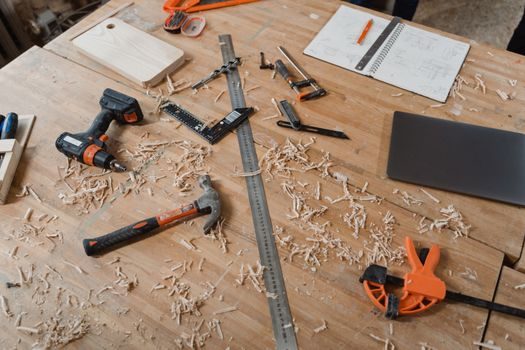
SDS-Plus is the de-facto chuck for corded 1,500 W rotary hammers because it transmits hammer energy to the bit through a sliding piston rather than a rigid collet grip; this is what lets a 26 mm-concrete-rated tool also drill 13 mm steel with a standard straight-shank bit in a separate keyless chuck [S6]. The 0.401" round shank on pneumatic installation hammers (Ingersoll Rand 119MAX, AIMCO AHM 150, SOARTEC ST-2260/R) is an American automotive-industry convention — it is not interchangeable with SDS-Plus, and pneumatic rivet-busting chisels must be ordered to match the shank [S1][S2].
Selection between chuck systems is dictated by the substrate and the bit pool, not by the hammer brand. SDS-Plus buys you cross-compatibility with carbide-tipped masonry bits from Bosch, Hilti, Makita and Fixtec [S4]. 0.401" round buys you cross-compatibility with the rivet buster, panel cutter, and seam-closer tooling pool used in OEM body shops [S1]. Choosing the wrong shank means the tool physically cannot accept the bit, regardless of BPM or wattage.
Use-Case Map: Concrete Anchoring vs Panel Work vs Demolition
Concrete anchoring, M8-M16 chemical or mechanical anchors in C20/25-C40/50: SDS-Plus 1,500 W corded rotary hammer, 26 mm concrete rating, 3-function selector [S6]. M16-M20 close-to-edge anchors in C20/25, or repetitive vertical drilling overhead: a brushless 20 V cordless SDS-Plus is the safer pick, because the lower mass and absence of a cord reduce operator fatigue across a shift [S5].
Panel beating, Pittsburgh lock-seam closing, exhaust removal, and rivet popping: 0.401" round-shank pneumatic at 90 PSI, 2-2.5 kg body weight, 4 CFM consumption — the Ingersoll Rand 119MAX or AIMCO AHM 150 [S1][S2]. Heavy demolition of brick, render, or chase-cutting: jump up to a demolition hammer, not a rotary hammer — a 1,500 W rotary hammer is built for cyclic drilling, not continuous chiselling, and a 1,500 W demolition hammer is rated for the same wattage but with a different gear train [S3][S4]. Procurement should treat rotary and demolition hammers as separate SKUs even when wattage matches.
Limits, Failure Modes and Sourcing Constraints
The single most common rotary-hammer failure on installation work is chuck wear from mixed-bit use: an SDS-Plus chuck that sees regular straight-shank drilling in a non-keyless adapter will lose its retaining-groove tolerance within a few hundred cycles. Buyers should specify a quick-change chuck system only where the operator actually changes bits between SDS-Plus and straight-shank in the same shift [S6]. Carbon-brush quick-change covers the second-most-common failure (brush seizure from dust ingress), and is a feature on the 1,500 W reference SKU [S6].
Pneumatic installation hammers fail most often at the air inlet — 1/4" NPT threads on the AHM 150, 1/4" GAS on the MAC-series — and the fix is always an in-line lubricator, not a higher-PSI supply. Running 90 PSI (6.2 bar) into a tool rated for it at higher pressure does not produce more BPM; it produces premature seal failure [S1]. Factory-direct sourcing from China (Made-in-China, Mfrbee) at US$39-103 per piece is viable for 500-piece MOQs and above, but EU and North-American OEM channels (Bosch Professional, Ingersoll Rand) are the only practical route when end-customer warranty terms require branded spares [S4][S5][S6].
Selection Criteria: Matching Spec to Job
Four numbers decide an installation-class rotary hammer purchase, in this order: (1) chuck or shank type matched to the existing bit pool, (2) concrete drilling capacity in mm for SDS-Plus, or BPM × stroke for pneumatic, (3) weight under 2.5 kg for one-handed overhead work and 2.5-3.5 kg for two-handed horizontal drilling, (4) air consumption in CFM (pneumatic) or input wattage (electric) matched to the on-site supply — 4 CFM at 90 PSI for a typical pneumatic rivet buster, 1,500 W from a 16 A 230 V circuit for a corded SDS-Plus [S1][S2][S6].
For facility buyers specifying a mixed fleet, the cross-reference is simple: pneumatic 0.401" round-shank for body-shop and rivet work, SDS-Plus corded for general masonry anchoring, SDS-Plus brushless 20 V cordless for overhead and remote-site anchor installation, and a dedicated demolition hammer — not a rotary hammer — for render and chase removal [S3][S4][S5]. Specifying a single SKU across all four use cases is a common buyer mistake that drives warranty claims within the first 12 months.
Two signals to track in the next buying cycle: (a) the 20 V brushless cordless SDS-Plus price floor, which is currently US$39-47 per piece factory-direct at 500-piece MOQ and is likely to drop further as cell cost falls [S5]; (b) Bosch Professional's 2026 rotary- and demolition-hammer catalogue, which gates the dealer channel in EU and MENA regions and is updated quarterly [S4]. For the broader drill-driver and impact-driver selection context, see the work bench and power-tool layout spec map and the arc-welding machine selection guide. For background on chuck and shank conventions shared with the broader rotary-hammer family, see the rotary hammer encyclopedia entry and the related demolition hammer reference.