
The core split between a rotary hammer and a marble cutter is the working principle: rotary hammers combine rotation with a percussive electro-pneumatic or mechanical hammer blow sized for chipping concrete and chasing masonry, whereas marble cutters are specialised angle-grinder bodies that spin a continuous-rim or segmented diamond blade sized for cutting stone, tile and cured-concrete slabs [S1][S2].
Both product lines sit on the same Chinese OEM catalogue pages — Jiangsu Suolide Electric Appliance Co. lists "Electric Drill, Rotary Hammer, Marble Cutter, Angle Grinder, Demolition Hammer" as a single main-product group [S4], and Yongkang Bohua Tools Factory pairs "Electric Drill, Circular Saw, Angle Grinder, Rotary Hammer, Marble Cutter, Electric Breaker, Electric Sander" in one export range [S2]. That catalogue proximity is exactly why buyers confuse the two on RFQs; the machines are not interchangeable on the job.
Working Principle: Percussive Hammer Action vs Diamond Abrasive Cutting
A rotary hammer's defining feature is its hammer mechanism — modern units use an electro-pneumatic piston that drives a striker against a floating air-cushioned ram, generating percussive blows along the bit axis while the gearbox simultaneously rotates the bit. Tungsten-carbide-tipped masonry bits slot into SDS-Plus (10 mm shank) or SDS-Max (18 mm shank) chucks, and the system is engineered to chip concrete, brick and natural stone in drilling and light chisel modes. Pneumatic scaling hammers such as Novatek's "3SH" extend the same percussive logic to surface scaling on steel and concrete, with a listed operating weight of 59–64 kg (130.07–141.10 lb) for the triple-head configuration [S1].
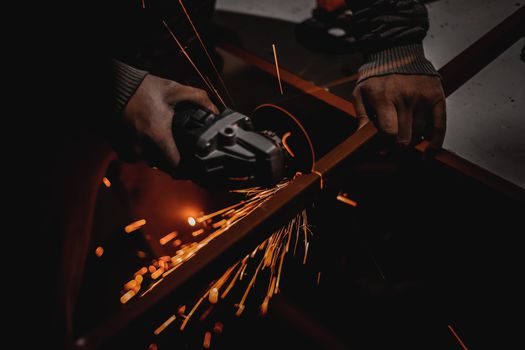
A marble cutter is mechanically a heavy-duty angle grinder with a diamond blade in place of a grinding or cutting disc. The blade diameter on handheld units commonly runs 105–180 mm for portable tile/stone work; larger table- or rail-fed units accept 230–350 mm blades for slab cutting. Output is purely rotational — the diamond segment abrades the stone — and there is no reciprocating hammer blow, no chisel mode, and no SDS chuck. Jiangsu Suolide's catalogue groups "Marble Cutter" with "Angle Grinder" for a reason: the housings, gear sets, and even the spindle threads overlap [S4].
Chuck, Bit, and Blade Interface
Rotary hammers accept SDS-Plus (two open slots + two closed slots, 10 mm shank) or SDS-Max (five open slots, 18 mm shank) — both quick-change systems that allow the bit to slide axially a few centimetres so the hammer blow can transfer without losing rotational grip. Standard three-jaw chucks are rare on genuine rotary hammers because they cannot survive the percussive load; most consumer-grade "hammer drills" (impact drills) still use a geared three-jaw chuck and deliver impact through two ribbed discs, which is mechanically weaker than the SDS system. [S1]
Marble cutters use a standard M14 or 5/8"-11 spindle nut to clamp a diamond blade, exactly like an angle grinder. The blade — not the machine — does the material work. A 105 mm segmented diamond blade on a 1100–1400 W marble cutter is a common contractor SKU; the same blade mounted on a rotary hammer would shatter on first impact because the rotary hammer has no continuous-rotation-only mode that protects the abrasive rim.
Power, Speed, and Impact-Energy Numbers
Rotary hammers are typically rated by single-stroke impact energy (Joules) and blow frequency (blows per minute), not by blade speed. SDS-Plus corded rotary hammers in the 2–4 Joule class are sold for anchor and through-hole work up to ~20 mm in concrete; SDS-Max corded units in the 8–20 Joule class handle 30–50 mm rotary drilling and chiselling in reinforced concrete. Motor input on consumer SDS-Plus models clusters around 800–1100 W; prosumer SDS-Max models run 1300–1700 W. The machine's no-load speed is a secondary figure because chipping mode (rotation off, hammer on) is the loading case that defines the duty cycle. [S2]
Marble cutters are rated by blade diameter, motor wattage, and no-load rpm. A 1100 W, 11000 rpm handheld marble cutter with a 125 mm blade is a common export SKU from Yongkang, Zhejiang factories [S2]. Larger 1800–2200 W rail cutters spin 230–350 mm diamond blades at 3000–4500 rpm to keep the peripheral blade speed inside the 60–100 m/s window that diamond segments want. There is no published impact-energy figure because the cutting action is continuous abrasive, not percussive.
Job Fit: When to Use Which, and When Neither Fits
Use a rotary hammer when the task is drilling anchor holes in cured concrete, chasing a channel for conduit in masonry, or light chiselling of render and tile adhesive. Using a marble cutter for anchor drilling will burn out the gearbox within minutes — diamond blades are not designed to survive the lateral impact of a starting bit; using a rotary hammer to slice a porcelain tile will either jam the SDS bit or chip the workpiece. The two product lines share display rack space on Chinese B2B catalogues but are not substitutes on site [S2][S4].
For the edge cases — small-diameter drilling in stone, or shaping a granite countertop — the right tool is usually a dedicated stone drill (with a cylindrical shank that fits a three-jaw chuck or an SDS adaptor) or a wet tile saw, not a hybrid. A related shop-tool comparison for buyers assembling a multi-tool kit is covered in Stud Welder vs Circular Saw: Two Shop Tools, Two Different Jobs, where the same "catalogues overlap, jobs don't" pattern applies.
Safety, Standards, and Known Recall Risk

Both tool classes fall under IEC 60745 for hand-held motor-operated electric tools, with Part 2-1 (drills) and Part 2-3 (grinders/polishers/disk-type sanders) the two applicable sub-parts for the hammer and cutter respectively. ATEX 2014/34/EU is irrelevant for these mains-powered or cordless hand tools in normal industrial use. Eye and respiratory PPE is non-negotiable on both: rotary hammers throw silica dust and broken-concrete chips; marble cutters throw abrasive slurry and diamond-segment fragments if the blade snags. [S3]
Counterfeit or sub-spec rotary hammers are a documented recall risk. The 2017-10-20 EU RAPEX withdrawal of the Biltema ROTARY HAMMER (article 17-384, origin Sweden) cited a clutch/safety defect: the torque-limiting mechanism did not engage correctly, so a stalled bit could cause the body to rotate and strike the user [S5]. The same risk profile applies to no-name Chinese OEM rotary hammers shipped under unverified brands — buyers should require the IEC 60745-2-1 test report and a clutch-function test certificate before procurement, and should not accept a marble-cutter chassis with a hammer-drill label.
2026 Procurement Snapshot: Catalogues, MOQ, and Lead Profile
Made-in-China and ECVV directories list marble cutters, rotary hammers, and angle grinders as a single sourcing category for the Zhejiang/Jiangsu export cluster, with typical MOQ bands of 200–500 pieces per SKU and unit pricing that sits in the US$ 20–60 FOB-Ningbo range for handheld 1100 W class units [S2][S4][S6]. Buyers running a single RFQ that mixes hammer drills, marble cutters, angle grinders, demolition hammers, and electric breakers can usually consolidate to one factory; buyers who need branded SDS-Plus chucks, genuine Bosch/DeWalt/Makita replacement parts, or ATEX/IECEx certification for hazardous-area use have to split the RFQ.
Two trackable signals for the rest of 2026: first, several Zhejiang factories have started offering brushless cordless rotary hammers on the same 18 V/20 V Max platform as their cordless marble cutters, which means procurement teams should standardise on one battery platform if they are buying both tool classes; second, the eibmarkt.com EU distributor listings for "Rotary/demol. hammer" [S2] remain the cleanest signal of small-batch European demand for entry-level hammer drills and should be monitored for price drift.