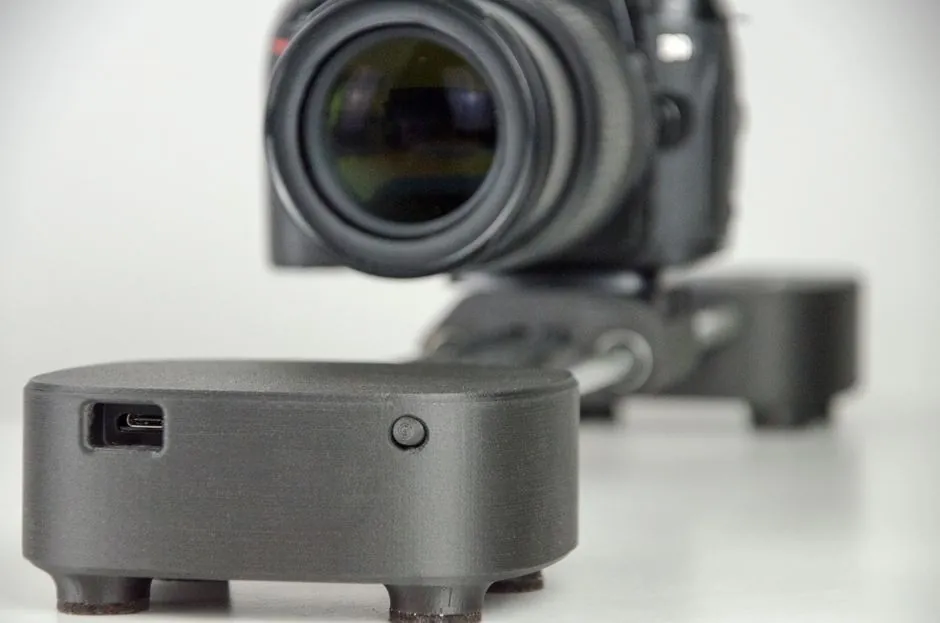
A rotary laser kit is a matched three-component crew, not a single instrument: a self-leveling laser head on a 5/8-11 threaded tripod, paired with a detector (receiver) and a grade rod for reading elevation off the beam [S1][S5].
Outside, the receiver does the work, not the eye: daylight washes out any visible beam, so the rod-mounted detector is what reads elevation across thousands of feet [S3][S4].
System Definition: What Ships in a Rotary Laser Kit
OEM "exterior rotary laser" kits bundle five physical items in a hard-shelled case: laser head, receiver, receiver clamp, tripod, and grade rod, so one technician can transport and set up the full elevation crew in a single carry [S1][S2]. Spectra Precision's LL300N-3 and LL1505C-27 packages are representative of this format, and the M18 Red Exterior Rotary Laser Level Kit (3701-21T) follows the same template with an aluminum rotary tripod and grade rod added to the receiver [S2][S3][S6][S7].
Cross-line kits are a different category. The M12 Green 360° 3-Plane Laser (3632-21) is sold as a finished-lay tool, intended for interior framing, tile, and cabinet work, not for long-range exterior elevation, which is why it is not bundled with a tripod and grade rod in the same way [S3].
Tripod Thread and Geometry: Why 5/8-11 Matters
Surveying-style tripods use a 5/8-11 UNC threaded stud as the industry standard for rotary laser mounting; the M18 Red Exterior (3701-21) and M18 Dual Slope (3704-21) both carry this 5/8-11 insert so they swap onto heavy-duty elevating or flat-top aluminum survey tripods [S3][S5]. The cross-line bracket tripod (Milwaukee 48-35-1411) extends 28 in to 72 in to suit interior ceiling work, and accepts a 360° bracket for overhead or floor reference [S3].
Two practical geometries ship: flat-top and domed-top. Flat-top is the right pick for self-leveling rotary heads, because the auto-level mechanism handles the rest, while domed-top is the correct choice for optical or manual dumpy levels where a rough coarse level is set on the dome before the foot screws are touched [S5]. Camera-style 1/4-20 thread tripods exist but are not the match for rotating exterior lasers, which is why OEM kits default to 5/11 [S5].
Receiver Role and Beam-Read Limits Outdoors

The receiver, often called a detector, is the elevation-reading transducer. For the M18 Red Exterior (3701-21), working range reaches 2000 ft (610 m) in diameter when paired with the matched receiver, accuracy is 3/32 in at 100 ft, the head spins at 600 RPM, and the unit runs roughly 70 hours on a charged pack [S3].
The M18 Dual Slope (3704-21) extends the same architecture: 4000 ft (1219 m) working diameter, 1/16 in horizontal and 1/8 in vertical accuracy at 100 ft, three spin speeds (600/900/1200 RPM), IP66 ingress, and a remote that duplicates the laser display so the operator can dial grade from the rod [S3]. On that model, automatic grade match is performed at the receiver, which is what makes it a grading tool rather than a leveling tool [S3].
Daylight kills the eye-read option regardless of color. Whether the diode is red or green, a rotating exterior beam is not visible to the eye at long range in sun, which is why the receiver/rod pair is mandatory on every exterior layout [S3]. For a deeper dive on outdoor receiver selection by range and band, see this outdoor rotary laser receiver range and selection reference.
Grade Rod: Reading Elevation, Not Just Standing a Stick
The grade rod (or "staff") is the readable scale attached to a receiver clamp so the operator walks the rod across the site and reads beam position at the receiver window. Spectra Precision kits include an IN-grade or metric rod sized to the receiver clamp pattern, and the rod is what turns the rotating beam into a height reading, not the laser itself [S1][S7].
For single-axis grade work, a manual rod and a single-slope laser head are sufficient; the rod is held plumb and read at the detector window by the operator. The two-axis requirement is where the kit changes shape: see how a dual-slope vs single-slope grade laser decision flows downstream into the rod-and-receiver workflow, because grade match and axis count are the variables that determine whether one rod and one operator are enough.
System Comparison: Which Kit Matches the Job
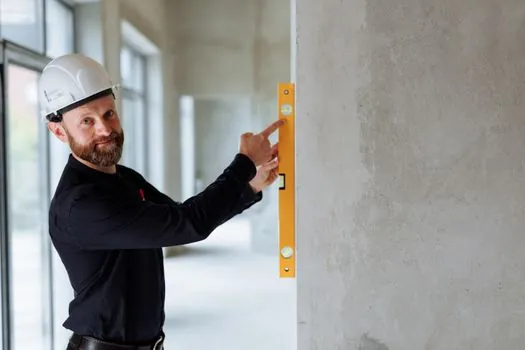
Three reference kits, three use cases. The cross-line M12 Green 360° 3-Plane (3632-21) is for interior finish, runs on M12 batteries, and is not specified for receiver-read range because the beam itself is read at the surface [S3]. The M18 Red Exterior (3701-21) is a single-slope exterior laser with 2000 ft receiver range and 3/32 in accuracy at 100 ft, IP66 housing, rated to 1.5 m drop and 2 m tripod-tip survival [S3]. The M18 Dual Slope (3704-21) adds a second axis of grade, doubles the working diameter to 4000 ft, tightens horizontal accuracy to 1/16 in at 100 ft, and adds 600/900/1200 RPM spin options for visibility at longer distance [S3].
Selection rule: interior work, cross-line green; one-axis exterior leveling, single-slope rotary with receiver; two-axis grading or long-range drainage/road work, dual-slope rotary with grade match and remote [S3]. The tripod, receiver clamp, and rod pattern are common across the rotary pair, so a crew that owns one receiver and rod can swap heads on site.
Durability, Thread, and Receiver Compatibility in the Field
Rotary exterior units (3701-21, 3704-21) are rated IP66, survive 1.5 m drops, and withstand a 2 m tripod tip; the receivers include strobe-light protection to cut false triggers under jobsite LED or arc-flash lighting, and the standard rotary adds manual masking shutters so the operator can blank the beam in any direction to avoid stepping on a co-located crew's laser [S3].
Receiver interchange is the practical constraint. A receiver matched to a given laser brand and model line gives full grade-match and digital readout functionality; cross-brand detectors typically drop to a basic on-grade indicator. OEM kit buyers (Spectra LL1505C-27, LL300N-3, HV1305C, Milwaukee 3701-21T) pair the receiver model in the case with the same-brand laser for this reason [S1][S6][S7][S8].
Selection and Sourcing Signals
Two trackable signals for spec-in work: the 5/8-11 thread pattern is a hard prerequisite when matching a head to an existing survey-style tripod fleet, and the receiver-brand lock-in is the variable that determines whether grade match and digital readout are available versus a simple on-grade LED. A buyer walking in should confirm the rod scale units (feet/10ths vs inches vs metric), the receiver clamp pattern, and the spin-speed/RPM options before the kit is dispatched to site [S1][S3][S5][S7].
Detailed specification references: laser level, wire rod, and construction machinery and equipment.