A safety barrier is a signal-path protection device; a paperless recorder is an archiving display device — selecting them on the same RFQ without separating those roles is the single most common spec error in hazardous-area panel builds [S1][S3].
Both are routinely sourced from the same Chinese automation vendors (pressure transmitter + barrier + paperless recorder in one product family), which conflates their functions in purchasing [S1][S2]. This map separates them by function, certification scope, and signal-chain position.
Functional Scope and Where Each Device Sits in the Loop
A safety barrier — typically a zener-diode or galvanic-isolation type — installs between a transmitter in the hazardous area and the safe-area controller or recorder, limiting voltage and current so the loop cannot ignite a surrounding explosive atmosphere [S1]. Anthone Electronics lists barrier output variants covering 1-channel digital input, 1-channel digital output, and combined isolator/power-supply functions in 1-input/1-output or 1-input/2-output configurations at MOQ 1 set [S1].
A paperless recorder sits at the end of that signal chain and accepts up to 48 analog inputs on higher-end models (e.g. Honeywell Multitrend), 16 inputs on mid-range units, with reference accuracy of 0.1% typical for thermocouples and data storage on SD card or USB memory key [S3]. Its job is measurement, display, alarming and long-term data retention — not energy limiting. A safety barrier cannot be skipped when the field side is classified Ex i, even if the recorder itself has no hazardous-area rating.
Certification Logic: IEC 60079-11 vs No-Ex Recorder
Safety barriers are specified against the intrinsic-safety standard (IEC 60079-11 family), with Ex i markings on the device label and entity parameters (Vmax, Imax, Ci, Li) that must reconcile with the connected transmitter certificate [S1]. A recorder that simply receives a 4-20 mA signal on its rear terminals generally carries no Ex marking of its own; it is treated as the safe-area apparatus.
Where the recorder must be physically mounted inside the hazardous area, the recorder — not the barrier — must carry the appropriate Ex d or Ex e certification, and the barrier approach is replaced by flameproof or increased-safety enclosure design. Confusing these two protection concepts is the failure mode that produces non-compliant panels, so a single RFQ line item covering "barrier + recorder + Ex enclosure" warrants an explicit method-of-protection statement before purchase order release [S1].
Input Count and Channel Density: Recorder-Centric, Barrier-Per-Channel
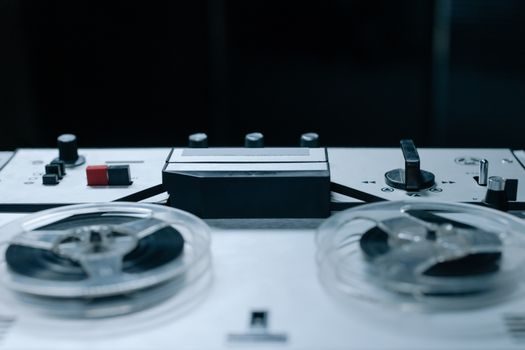
Paperless recorders are channel-rich: Honeywell eZtrend handles up to 12 analog inputs + 8 DI / 8 DO on a 5.7 in QVGA display, Minitrend goes to 16 AI + 16 DI / 16 DO on the same 5.7 in footprint with 20 ms sample rate on linear inputs, and Multitrend reaches 48 AI + 48 DI / 48 DO on a 12.1 in XGA panel [S3]. A temperature recorder variant on the same platform reads T/C and RTD at 0.1% reference accuracy across the same channel counts.
Barriers, by contrast, are quoted per channel: 1-channel digital-input and 1-channel digital-output barrier modules appear as separate SKUs (MOQ 1 set each) alongside 1-input/1-output and 1-input/2-output isolator/power-supply modules [S1]. A 48-channel recorder therefore needs a 48-position barrier array or a marshalled multi-barrier sub-panel; budgeting one barrier per channel plus spares is a safe rule of thumb for Ex i loops. Selecting a higher-density recorder (Multitrend) only pays off when the barrier array and cabinet space are factored in at the same time.
Display, Storage and Compliance Workflow Differences
Circular chart recorders persist data on preprinted or self-printing thermal paper at 0.10%–0.35% reference accuracy, with 2–4 analog inputs and a 10 in or 12 in chart; they require ongoing pen and chart-paper inventory [S3]. Paperless recorders replace that consumable stream with SD card and USB memory key storage, plus Ethernet or RS-485 networking for remote viewing and TrendManager / Trendview Manager Pro software [S3].
The compliance consequence is that paperless records are searchable, time-stamped and tamper-evident (digital signatures, audit trail in regulated loads), whereas chart records are physical artefacts that must be filed, scanned or photographed for electronic retention. For FDA 21 CFR Part 11, GxP or similar audit-driven environments, the paperless path is the default; for low-channel, visual-trend applications (oven profiling, simple tank logging), a circular chart unit at lower upfront cost is still defensible [S3]. A temperature humidity recorder on the same paperless platform is the natural pick when both parameters must be archived for the same audit window.
Decision Matrix: When to Buy Each, When to Buy Both
Buy a safety barrier alone when a 4-20 mA loop runs into a PLC/DCS that already has its own historian and no on-panel display is needed [S1]. Buy a paperless recorder alone when the field area is non-classified and the only requirement is local trending, alarming and electronic archiving at 0.1% accuracy on up to 48 inputs [S3]. Buy both — barrier array + paperless recorder — when an Ex i loop must terminate at a paperless display in the safe-area control room, with one barrier per channel and shared entity-parameter documentation [S1][S3].
A spec-first RFQ for that combined case should list: barrier type (zener or galvanic), Ex marking (e.g. [Ex ia Ga] IIC), entity parameters, channel count, recorder display size (5.7 in / 12.1 in), input mix (AI/DI/RTD/T/C), sample rate (20 ms vs 100/200/500 ms), storage media, network interface (Ethernet / RS-485 / Modbus RTU), and reference accuracy [S1][S3]. Omitting any one of these forces the vendor to assume, and assumption is what turns a clean Ex i loop into a re-worked panel.
Cost and Lifecycle Signals From the 2025–2026 Market
Prosense's 2025-12-24 industrial paperless-recorder brief lists high-accuracy measurement and universal input handling as the top two decision drivers for buyers, ahead of display size and remote access [S6]. The Fact.MR 2026–2036 paperless recorder outlook frames competition around data-acquisition capability, display clarity and DCS integration — with Yokogawa, Honeywell, Siemens and ABB named as the four integrators most cited in modern process plant retrofits [S4].
From the same 2026 sourcing channels, recorder-side MOQs sit at 1 piece/piece-set on Chinese supplier listings, while isolator/power-supply modules ship at MOQ 1 set and 8-ch digital input isolated modules at MOQ 1 piece [S1][S2]. Trackable signals for the next procurement cycle: vendor disclosures of [Ex ia Ga] IIC vs [Ex ib] entity parameters on barrier datasheets, and recorder-side roadmaps for OPC UA Pub/Sub over Ethernet, which the Honeywell 12.1 in Multitrend Ethernet port already supports [S3]. For a panel architect building or refreshing a hazardous-area recorder station in 2026, the spec-first check is barrier entity parameters first, recorder input count second, and display size a distant third — a sequence that mirrors the way integrators like those cited in the Fact.MR 2026 report are now shortlisting approved-vendor lists [S4]. A related field-panel perspective on isolator selection is captured in signal isolator selection for 2026 field panels, and the recorder-budget side is mapped in the paperless recorder price and cost guide 2026.