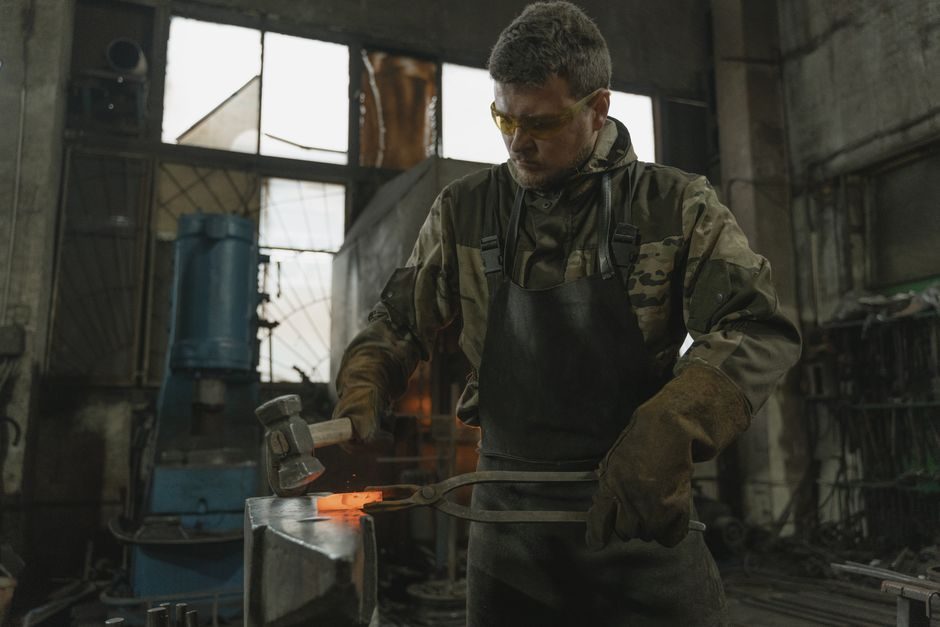
ANSI Z87.1+ certified safety glasses FOB China cluster in two distinct price bands: a commodity clear-PC lens at US$0.20-0.35 per piece (1-piece MOQ shown on the supplier card) and a feature-loaded band at US$1.00-40.80 per piece depending on coating stack and frame geometry [S2]. A third Guangzhou-based factory quotes a 3D/safety crossover at US$0.60-0.85 per piece at 10,000-piece MOQ, with documented capacity of 50,000 pieces/day — useful as a benchmark for large-volume PPE contracts [S3].
Two market signals frame the rest of this guide. First, the spec that actually controls cost is the lens+coating combination, not the frame brand — the same Pyramex Fortress and 3M Virtua CCS product tier cited by BestReviews covers the same Z87.1+ impact-rating range as the Chinese OEM clear-PPC SKU [S1][S2]. Second, MOQ tier moves price more than any other single lever; a buyer willing to take 10,000 pieces instead of 1,000 typically clears the US$0.50 threshold on a coated anti-fog lens, and breaks US$0.30 on an uncoated clear lens. For an adjacent cross-reference on the wider PPE footwear cost stack, see the Safety Shoes 2026 Price & Cost Guide.
Price bands by spec tier (FOB China, mid-2026)
Three usable price bands sit on the Made-in-China product cards sampled for this guide [S2][S3]. Tier 1 — commodity clear PC, anti-scratch only, no anti-fog: US$0.20-0.35 per piece at 1-piece MOQ, CE EN166 + ANSI Z87.1+ markings, packed 1 pc/polybag → 10 pcs/inner box → 200 pcs/72 x 30 x 38 cm export carton. Tier 2 — anti-fog + anti-scratch dual coating, wrap-around or sport-style frame: US$0.60-0.85 per piece at 10,000-piece MOQ, with the supplier declaring 50,000 pcs/day line capacity [S3]. Tier 3 — specialty lenses (IPL 200-1800 nm, photochromic, IR/welding shades, prescription safety): US$1.00-40.80 per piece, where the upper band tracks low-volume specialty production rather than commodity PPE [S2].
The practical read for a buyer: anything above ~US$1.50 on a Chinese factory card at 1,000-piece MOQ is paying for a feature (anti-fog, photochromic, Rx) rather than the Z87.1+ rating itself, which is effectively baseline across all three tiers [S2]. US-tier retail, by contrast, sits in the US$8-25 band for the BestReviews top picks (3M Virtua CCS, Pyramex Fortress), a 10-40x markup over Tier 1 FOB that funds brand, distribution and ANSI lot-control documentation [S1].
Selection criteria: lens, coating, frame, certification
Four criteria separate the tiers cleanly, and the buyer should score each candidate SKU against all four before issuing an RFQ [S1][S2]. (1) Lens material — polycarbonate is the de facto standard for impact-rated Z87.1+ eyewear; glass and TPU appear only on specialty welding/laser SKUs. (2) Coatings — anti-scratch is baseline, anti-fog is the step-up that moves a SKU from Tier 1 to Tier 2 pricing; a third hydrophobic layer pushes into the US$0.85+ band. (3) Frame geometry — straight-temple economy frames track Tier 1; ratcheting temples, soft-tip nose bridges and integrated side shields track Tier 2-3.
(4) Certification stack — CE EN166 + ANSI Z87.1+ is the dual marking carried on the Chinese factory cards [S2]. The 3M Virtua CCS and Pyramex Fortress SKUs cited by BestReviews carry the same Z87.1+ impact rating, with the CCS (Cubic Coated Silicone) variant adding a foam gasket for dust environments — useful for grinding, masonry and grain-handling sites [S1]. For site work that also needs hand protection, the safety gloves category follows a parallel MOQ-driven cost curve. For enclosed plant sites requiring full face coverage, the safety glasses vs face shield 2026 spec cut maps where spectacles stop and a face shield starts.
Comparison: commodity clear vs anti-fog vs specialty lens

On four decision criteria — unit cost, MOQ, lead-time sensitivity and intended use — the three tiers line up as follows. Cost: Tier 1 US$0.20-0.35, Tier 2 US$0.60-0.85, Tier 3 US$1.00-40.80 [S2][S3]. MOQ: Tier 1 effectively 1 piece on the sampled card, Tier 2 10,000 pieces for the quoted band, Tier 3 1 piece but with specialty-coating line setup. Lead-time: Tier 1 ships from stock at the Guangzhou supplier shown (12,000 pcs/day declared capacity on the related product card), Tier 2 requires a 2-3 week coating-line slot at 10k MOQ, Tier 3 is build-to-order with a 4-6 week window for Rx or laser-rated lenses [S2][S3]. Intended use: Tier 1 covers general construction and lab visitor specs, Tier 2 covers painting, chemical handling and humid plant sites where fogging is the dominant failure mode, Tier 3 covers laser/IPL/welding where the lens itself is the safety device [S1][S2].
BestReviews specifically calls out fogging as the dominant complaint on ventilated economy frames (Pyramex Fortress), which is the operational justification for stepping up to a Tier 2 anti-fog SKU on humid sites [S1]. The same review notes that 3M's Virtua CCS is positioned as effectively disposable for dusty environments — a useful procurement signal that Tier 1 frames should be spec'd as consumables, not capital spares, in grinding or grain-handling operations [S1].
Real use cases and the MOQ math that drives them
Construction GCs and EPC contractors typically buy Tier 1 clear-PPC at 50,000-200,000 pieces per project for site-wide visitor and general-trade spec; at those volumes the per-piece FOB drops into the US$0.20 band, and the right packaging call is 200 pcs/export carton as documented on the supplier card (72 x 30 x 38 cm) to optimize container cube [S2].
Laser and IPL clinics are the only segment where Tier 3 pricing is unavoidable: the US$1.00-40.80 band on the specialty-lens SKU is dominated by the OD rating and the 200-1800 nm wavelength certification, neither of which can be substituted by a clear-PPC lens [S2]. For OEM/ODM buyers sourcing under their own brand, the Guangzhou factory card at 50,000 pcs/day capacity supports a private-label run without dedicated tooling investment at the 10,000-piece MOQ [S3]. The parallel economics for an industrial safety-fence procurement run are covered in the safety fence and safety barrier categories, where MOQ and galvanized-vs-powder-coat finish play the same lever role.
Limitations, failure modes and what the spec sheet won't tell you
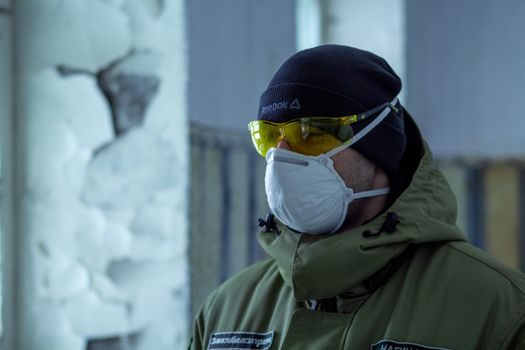
Three failure modes dominate field returns, and none of them are visible on the FOB price card. (a) Fogging — addressed only by anti-fog coating; economy frames with ventilation slots still fog in humid conditions per the BestReviews Pyramex note [S1]. (b) Lens scratch — the baseline anti-scratch hard coat extends service life but is not field-replaceable; sites that wipe lenses with solvent-soaked rags will burn through Tier 1 frames in days. (c) Frame deformation at elevated temperature — a known weakness of low-cost PC frames in hot-climate or foundry-adjacent sites; for those environments, specify a nylon-frame or wrap-around SKU rather than the cheapest clear-PPC option.
On the certification side, ANSI Z87.1+ (impact-rated) and CE EN166 are the two markings a buyer should require in writing on every shipment, and the Chinese factory cards sampled carry both [S2]. Specialty lenses (IPL, laser, welding shades) carry additional wavelength-range markings that must be matched to the site's hazard inventory — buying a US$0.30 clear-PPC lens for a 1064 nm Nd:YAG laser is a safety failure, not a cost saving. For sites that need a hard-barrier spec layered on top of the PPE program, the safety glasses and linear guide categories are unrelated technically but indexed together as part of the wider plant-safety BOM.
Sourcing signals and what to track into Q3 2026
Two trackable signals will move safety-glasses landed cost over the next two quarters. First, anti-fog coating capacity — the Tier 2 band is bottlenecked at the coating line, not the lens line, so any new coating-line commissioning at a major Guangzhou or Huadu supplier (the cluster shown on the Made-in-China product card) will compress Tier 2 lead-times and push the 10,000-piece MOQ price toward the US$0.50 mark [S3]. Second, polycarbonate resin cost — PC resin is the dominant bill-of-material input and tracks crude-oil derivatives; the same buyers who watch PE/PP strap pricing for the strapping band buying guide should track PC resin spot quotes to forecast Tier 1 safety-glasses FOB moves two quarters out.
The verifiable next node for any sourcing officer is the factory audit: a Tier 2 anti-fog SKU at 10,000-piece MOQ can be sampled with a 100-piece trial pack, validated against the site's ANSI Z87.1+ hazard inventory, and full-PO released inside a single quarter [S2][S3]. For the cross-PPE category cost stack on a single project, the sander 2026 price guide and heat treatment furnace guide cover the equipment side of the same procurement envelope.