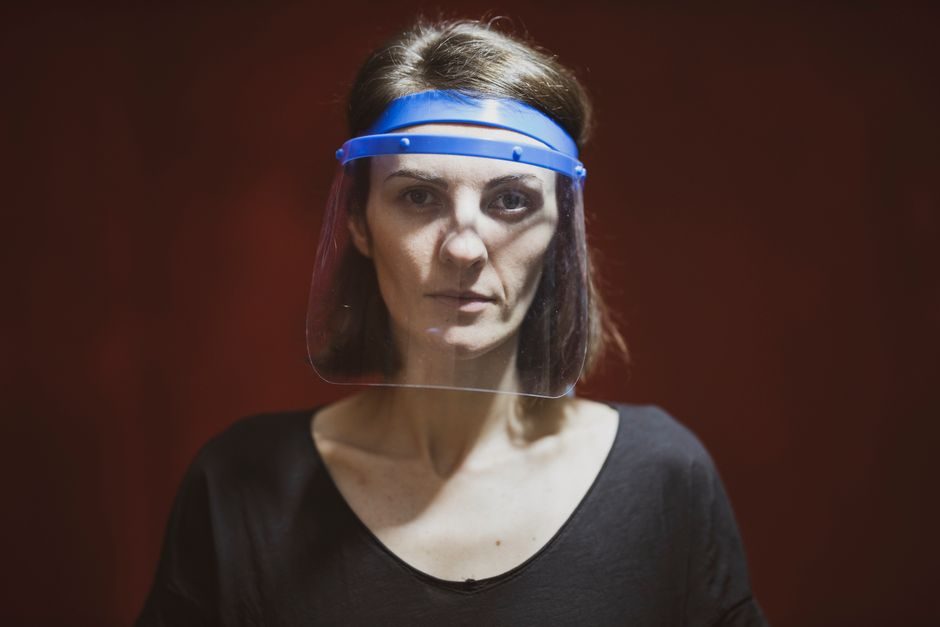
Under 29 CFR 1910.133, employers must supply appropriate eye and face protection matched to the specific hazard — splash, impact, dust, optical radiation, or chemical — and the standard explicitly allows combining spectacles with side shields, goggles, or face shields when one device does not cover the full risk envelope [S4].
In practical terms, safety glasses seal the orbital region against frontal and lateral impact, splashes and UV, typically rated to ANSI Z87.1 (impact, optical clarity, coverage) with optional Z87+ for high-velocity impact. A face shield is a brow-to-chin visor that protects the whole face — forehead, cheeks, nose, mouth, chin — from splash, spray, molten metal, arc flash, sparks and large flying debris, but on its own it does not meet Z87.1 eye-impact requirements because the open bottom and side gaps let projectiles reach the eyes [S4].
Hazard Class Drives the Spec, Not the Bracket Price
OSHA 29 CFR 1910.133 maps protection to hazard: impact, heat, chemicals, dust, and optical radiation each call for a different device class, and the same worker commonly needs more than one [S4]. For purely impact and dust jobs — grinding small parts, woodworking, routing — wrap-around Z87+ polycarbonate spectacles with integrated side shields usually satisfy the standard. For chemical splash, biological splash, arc flash, or molten-metal work, a Z87.1 face shield (often a safety barrier extension in process terms) worn over Z87+ spectacles is the spec most safety officers accept as compliant, because the face shield alone does not seal the eye orbit [S4].
General-purpose Z87.1 spectacles retail in the US$5–20 bracket for clear polycarbonate wrap-arounds, while dedicated arc-flash visors such as the Oberon OARC12SHLD-AF-DC — an arc-rated face shield with a permanently attached flat-top lens — list at US$119.99 in open-box condition and ship with an arc rating suitable for incident-energy work [S2]. Disposable anti-fog visors for medical/COVID-style splash protection sit at the bottom of the band at US$2.00–6.00 per piece at 500-piece MOQ on Chinese B2B portals [S5].
Optical Radiation: Glasses With Filter, Not a Blank Visor
For laser, IPL, and X-ray work, the spec is driven by wavelength and optical density (OD) at that wavelength, not by impact rating. Medical and laser clinics use leaded or polyamide-filter spectacles rated to specific wavelengths (Nd:YAG 1064 nm, CO₂ 10 600 nm, IPL 400–1200 nm) where the lens OD at the working wavelength is the pass/fail number [S3]. A standard Z87.1 face shield without a di-electric or wavelength-specific filter does not substitute for laser-rated eyewear, because polycarbonate attenuates only weakly at 1064 nm.
For UV and visible glare, polycarbonate Z87.1+ clear or tinted lenses typically block >99% UVA/UVB up to 380 nm, which covers outdoor and most welding-bystander cases. Welding helmets with auto-darkening filters (ADF) shade 9–13 are a separate product class and are out of scope for a glasses-vs-shield comparison [S4].
Mechanical Specs That Decide the Buy

Three numbers drive the safety glasses buy: lens material, impact rating, and coverage. [S1]
• Lens material — polycarbonate is the default for Z87+ impact (250× the impact strength of glass at the same thickness) and blocks UV inherently; glass and Trivex are scratch-resistant alternatives used in prescription safety eyewear [S6]. • Impact rating — Z87 (basic) versus Z87+ (high-velocity, 0.25-inch steel ball at ~150 ft/s): Z87+ is the gate for chipping, grinding, and pneumatic-tool work [S4]. • Coverage — wrap-around or integrated side shields are the spec line for lateral impact and splash; clip-on or slide-on side shields can be added when the base frame is not wrap-around [S4].
For face shields, the comparable gates are: headgear type (crown-and-ratchet adjustable vs hard-hat slot), window size (typically 8″×15″ to 10″×20″), material (propionate, polycarbonate, acetate, mesh), and arc or chemical rating. Arc-flash visors like the Oberon OARC12SHLD-AF-DC carry an arc thermal performance value (ATPV) and are tested to ASTM F2178, with the flat-top lens assembly replacing the need for safety spectacles to meet Z87.1 impact — but the user still wears Z87+ spectacles underneath for the eye-orbit coverage that the open-bottom shield cannot give [S2].
Comparison Table: Four Device Classes Against Four Hazards
Pairing the wrong device to the hazard is the most common Z87.1 audit finding [S4]. The table below lines up the main options against the hazards a process engineer actually has to spec against.
• Safety glasses (Z87+) — impact, dust, low-energy splash: blocks frontal + lateral eye impact, Z87+ high-velocity rated, common US$5–20. Limited face coverage, fogs under heavy splash. • Goggles (Z87+ indirect vent) — chemical splash, dust, biological: seals the eye orbit with indirect ventilation, used over prescription spectacles, common US$15–45. No face coverage beyond orbital rim, fog risk on heavy use. • Face shield (Z87.1) — splash, spray, sparks, large debris: brow-to-chin coverage, US$10–30 disposable / US$30–120 arc-rated, polycarbonate or propionate window. Open bottom and sides — must be worn over Z87+ spectacles. • Laser/lead glasses (Z87 + OD/wavelength rating) — direct and scattered laser, X-ray: wavelength-specific filter, OD typically 4–7 at the working wavelength, US$50–300. No impact rating on most laser frames unless dual-certified [S3].
Who Each Device Is For (and Who Should Not Specify It)
Safety glasses are the right call for: machinists, lab technicians, assembly operators, carpenters, and any worker exposed to flying chips, dust, or low-energy splash. They are NOT a standalone solution for: chemical splash on the lower face, arc flash, molten metal, or any task where the face below the orbital rim is exposed to a hazard [S4].
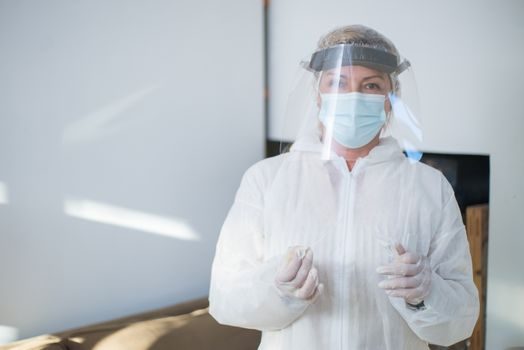
Face shields are the right call for: chemical handlers, bloodborne-pathogen clinicians, arc-flash electricians, foundry workers, and anyone spraying, grinding, or cutting where the hazard can strike any part of the face. They are NOT a substitute for: impact-rated spectacles — the bottom and side openings let a 0.25-inch projectile reach the eyes at Z87+ velocity [S2][S4].
Laser and leaded eyewear are the right call for: laser operators, IPL clinicians, interventional radiology staff, and X-ray technicians. They are NOT a substitute for: general impact or chemical protection, because most laser frames are not Z87+ impact-rated and the filter glass fails impact testing on some wavelengths [S3].
Failure Modes and Field Limits Engineers Should Plan For
Three failure modes drive most field failures of PPE in this category: fogging, coverage gap, and degraded filter. Anti-fog coatings are the spec to add for any humid or temperature-differential task — see also the broader PPE selection logic used in shop-floor safety gates, which mirrors the comparative-spec cut used in adjacent buying decisions such as the stretch film vs strapping band spec cut, where the load type and material drive the buy. A face shield that fogs is one a worker flips up, and the moment it flips up the eye-orbit coverage collapses. [S2]
Coverage gap is the second failure mode. A standard 8″×15″ propionate face shield does not protect the throat or the top of the crown — for arc flash, the shield must be tested to ASTM F2178 with a chin cup and the worker must also wear arc-rated balaclava and jacket; the face shield on its own is not a full arc-flash suit [S2]. For chemical splash, a 6-inch chin-length shield is the minimum to keep a vertical splash from running into the eyes or mouth.
Degraded filter is the third. Polycarbonate windows scratch and lose impact resistance with solvent exposure; replace, do not recoat, when optical clarity drops below the visible-light transmission needed for the task. For laser eyewear, check OD at the working wavelength every 12 months — manufacturers publish a service life, and pitting or coating loss shifts the OD [S3].
Sourcing Notes, MOQ Bands and 2026 Market Signals
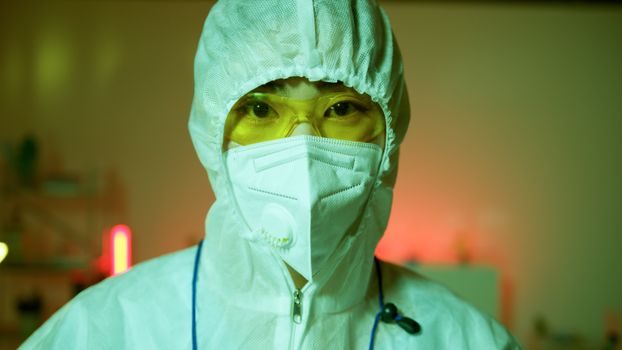
Disposable anti-fog visors for medical/infection-control use sit at US$2.00–6.00 per piece at 500-piece MOQ from Chinese B2B manufacturers, with the entry-level MOQ dropping to 100 bags on some suppliers — useful for hospital procurement and clinical consumables [S5]. General-purpose ANSI Z87.1+ polycarbonate spectacles sit in the US$5–20 retail band in North America, with the over-glasses class (e.g. NoCry) commonly spec'd for visitors and prescription-glass wearers at US$15–25 [S6]. Dedicated arc-flash visors with arc-rated windows such as the Oberon OARC12SHLD-AF-DC list at US$119.99 open-box and are typically procured through electrical-safety distributors rather than general PPE wholesalers [S2].
For sourcing decisions on adjacent shop-floor equipment, the same MOQ and FOB-band logic that drives Chinese disposable visor procurement also drives adjacent product categories — for example, the angle grinder sizing & selection gates and angle grinder supplier 2026 OEM hubs both follow similar tier breaks, where small-batch industrial buyers see 100–500 piece MOQs and tier-1 OEM hubs sit at 1 000+. For a more process-engineering buy where the comparison is a hardware spec cut between two adjacent product classes, see the swing check valve wafer vs flange 2026 buy spec cut for the same pattern of material + class driving the buy.