
Lifecycle cost modelling published in 2025 for the global safety interlock switches market flags a clear trade-off: industrial buyers weight energy efficiency, maintenance requirements, and operational reliability against purchase price, and the competitive landscape is shaped by distributor relationships plus OEM contract structures [S8].
On a single guard-locked station, the device itself is a small line item, yet the carrying cost of weekly function checks, actuator replacement after impact damage, and proof-test documentation is where the budget drifts; the TCO framing used by USPS procurement explicitly warns that "hidden costs easily overlooked during budget planning" dominate the equation [S1].
Defining the TCO Scope for a Safety Interlock Switch
TCO in this context covers five cost pools: acquisition (unit price + freight + certification documents), installation (mechanical stop, alignment guides, M5 bolts at 4.0 N·m, conduit torque 1.5 N·m, terminal screws 0.7 N·m), commissioning (risk-assessment linkage, solenoid timing verification, LED polarity check at terminals 33/34 = 0 V/+24 V DC), operation (solenoid holding current, auxiliary LED load), and end-of-life (decommissioning, actuator disposal, document retention) [S2][S3].
The TCO discipline treats a safety interlock switch as a maintainable sub-assembly, not a one-off commodity buy — which is why fleet, IT, and manufacturing frameworks all converge on the same definition: "direct and indirect costs of a product over its life" [S4][S6]. For a typical guard door, useful life is set at 10–20 years by ISO 14119 duty-cycle assumptions, with weekly proof tests embedded in the maintenance spec.
Five Cost Drivers That Move the Number
1) Unit price tier: a plastic-body KLP-style interlock lists at the low end, a stainless-steel solenoid-locked variant with PL e / Cat 4 rating at 3–6× the price; the price gap is governed by housing material, contact arrangement (2 NC + 1 NO vs 3 NC), and forced-guided contact certification [S2][S8].
2) Mounting and alignment rework: installation instructions mandate M5 bolts torqued to 4.0 N·m, a 3 mm actuator gap against a mechanical stop, and a rotatable head re-set if the entry direction is changed — get any of these wrong and the switch passes the bench test but fails the weekly check, which is a documented hidden cost line [S2].
3) Proof-test labour: IDEM-style OEM guidance requires weekly verification of all circuits and the lock function; over a 10-year horizon that is roughly 520 inspection events per guard, each typically billed at 10–25 minutes of a maintenance technician's time, which is the single largest operating-cost line in the model [S2].
4) Unplanned-stoppage exposure: a mis-aligned or bent actuator that is not caught at the weekly check produces a nuisance trip; for a Category 1 stop (controlled stop with power removal) on a high-cycle line, a single 30-minute interruption can dwarf the annual maintenance spend — this is where TCO beats price-only procurement [S1][S3].
5) Spares and actuator replacement: actuator bending from guard impact is the most common field failure; vendors sell the actuator as a consumable, and stocking a 10% actuator-to-switch ratio is common practice for plants running >100 guards. See how this compares with the trade-off logic laid out in Safety Interlock Switch: Spec-Driven Pros, Cons and Selection Logic.
Comparing the Main Device Families Against TCO Criteria

Four device families dominate guard-door applications: hinge-interlock, tongue-operated (KLP-style) interlock, solenoid-locked tongue interlock, and non-contact RFID-coded interlock. On four decision criteria drawn from the research — unit price, weekly-proof-test burden, defeat-resistance, and suitability for runaway/run-down machines — the comparison reads: plastic-body tongue interlock scores low/medium/medium/high; solenoid-locked tongue interlock scores high/high/high/high; hinge-interlock scores low/medium/low/low-medium; RFID-coded non-contact scores high/low/high/medium. The trade-off map mirrors the selection logic in Hinge Interlock Switch Installation: Bolt Torque, Actuator Alignment, and ISO 14119. [S2]
For plants with run-down time after power removal — presses, mixers, large centrifuges — the solenoid-locked variant is the only defensible spec because it holds the guard closed until the hazard has ceased; the OEM document explicitly tells installers to "ensure that the correct timing allowance has elapsed before energising the solenoid" [S2]. For light-guard sliding doors on a packaging line, a plastic-body tongue switch is typically the lowest-TCO pick because weekly-test labour stays the same but the unit price is materially lower.
Who the TCO Frame Is For — and Who Should Skip It
TCO modelling pays back on any guard station with annual operation >2,000 hours, any line where a guard interlock is a regulatory control device under ISO 13849-1 PL c or higher, and any plant with more than 20 guard doors on a shared control architecture. The TCO discipline is overkill for a single manually-loaded test bench or a one-off R&D fixture, where a price-only buy is defensible [S1][S5].
Buyers running contract-based procurement with framework agreements need the TCO view because the OEM/distributor channel structure explicitly prices services (commissioning, spares kits, extended warranty) into multi-year deals — the published market analysis names "contract-based procurement" as a primary channel determinant [S8]. Buyers using spot-buy cards should still apply a simplified TCO because the post-sale support cost of a failed safety device is a hard liability, not a soft one [S3][S9].
Standards, Sourcing, and Failure Modes That Bound the Model
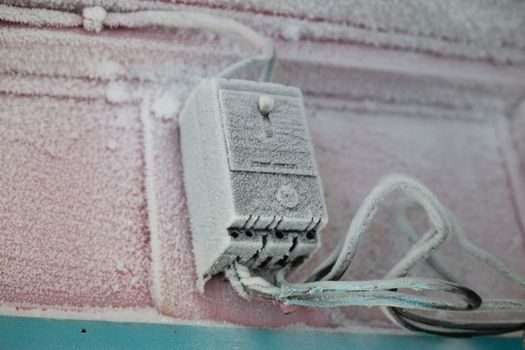
Installation of every interlock switch must follow a documented risk assessment for the application, and the wiring rules in the OEM data sheet (terminal torque 0.7 N·m, max conductor 1.0 mm², lid and gland torque 1.5 N·m) are non-negotiable — these are the numbers a TCO model uses when sizing the install labour line [S2]. Maintenance is weekly for function and lock, and any sign of actuator bending or housing damage forces full replacement; the OEM states plainly that it "will not accept responsibility for failure of the switch functions" if the maintenance requirements are not implemented [S2].
From a sourcing angle, the 2026 market report signals continued distributor-and-OEM contracting, which means price-list unit cost is a weaker lever than multi-year service bundles — the same lesson that manufacturing-fleet TCO practitioners have been pushing for a decade [S3][S8]. For plants that already run TCO on material-handling equipment, the cost-driver template transfers directly; see the cross-equipment pattern in Gantry Crane TCO 2026: Five Cost Lines That Drive a 20-Year Spend and Pallet Stacker TCO: Cost Drivers, Battery Maths, 10-Year Spend.
The two failure modes that consistently bust TCO budgets are: (a) a switch that electrically passes the bench test but is mechanically mis-aligned, so the cam/actuator interface wears and the contact set drifts; and (b) a solenoid-locked switch wired with reversed polarity at terminals 33/34, which the OEM data sheet specifically flags as a commissioning trap ("always check for correct DC polarity") [S2]. Both modes inflate the lifetime cost by 20–40% because they convert a planned 10-year replacement cycle into a 3–5-year unplanned one.
Building the 10-Year TCO Line Items
A working model for a single KLP-class switch on a guard door has eight line items: unit price (P0), freight and certification copies (≈2–5% of P0), install labour (1.5–3 h at site rate), commissioning + risk-assessment linkage (1 h engineering), weekly proof-test labour over 10 years (≈520 × 15 min), annual replacement of damaged actuators (≈10–20% of switch population × actuator list price), solenoid holding energy (typically <5 W continuous, but it scales with cycle rate), and end-of-life decommissioning + documentation. The structural lesson is that line items 5 and 6 together exceed the unit price on a 10-year horizon for any switch that survives more than two actuator strikes. [S3]
This is also where the safety interlock switch category entry connects to the wider machine-safeguarding taxonomy: the same TCO logic governs a safety barrier on a perimeter line or a safety fence on a robot cell, and the labour component dominates the same way. Where a safety interlock switch replaces a hard-wired safety barrier interlock, the install cost rises but the proof-test labour falls — the net move over 10 years is rarely a wash.
Trackable signals for a procurement engineer watching this space over the next two quarters: (1) whether the 2026 safety-interlock-switch market report updates the procurement-channel split toward direct-OEM contracting, which would re-price the service line; (2) any new ISO 14119 amendment covering RFID-coded non-contact interlocks, which would shift the TCO centre-of-gravity from mechanical wear to electronics obsolescence; (3) actuator pricing trend, because actuator list price is the single most leveraged variable in the 10-year model.