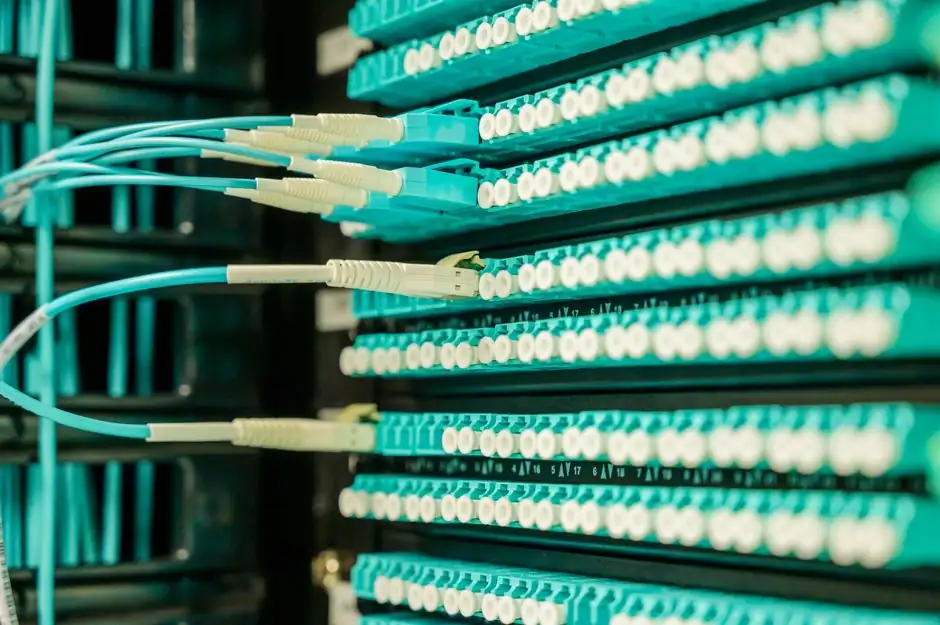
Outside telecom cabinets (cell-tower base stations, power/distribution cabinets) hit heat loads from densifying transmitters, receivers, and direct sun on the enclosure skin, so passive fan cooling falls short once NEMA 4 or 4X sealing blocks ambient-air exchange [S2].
Specifying a cooler for these cabinets means matching a closed-loop topology (air-to-air heat exchanger, vapor-compression A/C, or compressed-air vortex) to the calculated ΔT between the equipment's maximum allowable internal temperature and the worst-case ambient [S2][S3].
Heat Load Math: Watts, ΔT, and Solar Gain
Cabinet heat load is the sum of internal component dissipation (sum of each PSU, amplifier, baseband unit's rated power) plus solar heat absorbed through the cabinet walls, minus conductive and radiative losses through the skin to ambient [S3].
Step one is ΔT = (max allowable internal temperature) minus (max ambient air temperature at the site); if ΔT goes negative, the spec must call for a closed-loop air conditioner instead of an air-to-air heat exchanger, because the exchanger can only push heat from hot inside to cooler outside [S2]. For a typical outdoor telecom cabinet spec'd at 35 °C internal and a 45 °C peak ambient, ΔT is negative and an A/C is mandatory, while at a 25 °C coastal site a heat exchanger can carry the same load at lower cost and longer mean time between service [S2].
Once ΔT is positive for the heat-exchanger path, the exchanger's rating in watts or BTU/hr must meet or exceed the sum of internal dissipation plus the solar-load figure, with cabinet insulation factored in (well-insulated NEMA 4X stainless or powder-coated steel reduces the required capacity versus a thin-wall painted carbon-steel box) [S3].
Cooling Topology Comparison for Outdoor Telecom
Three topologies dominate telecom outside-plant cooling, and the choice hinges on ambient, available utilities, and sealing class [S1][S2]:
Air-to-air heat exchanger (passive heat pipe or active fin-and-tube): lowest cost, no refrigerant, zero condensation inside the sealed NEMA 4 cabinet, but only usable where ambient stays below the equipment's maximum rating; typical small-cell ratings land in the 100-500 W range per module [S2].
Vapor-compression enclosure air conditioner: handles negative ΔT (ambient hotter than internal setpoint) and gives tight temperature control; available with Class I Division 2 and Zone 1/2 ratings for hazardous-location cabinets, but requires condenser airflow clearance and periodic refrigerant service [S1].
Vortex cooler (compressed-air driven, no moving parts, no refrigerant): delivers instant spot cooling from a 80-100 psig shop-air supply, suited to dusty or dirty telecom roadside vaults where a refrigerant A/C is impractical, but it consumes compressed air continuously and adds load to the plant air system [S1].
Decision rule: NEMA 4 or 4X sealed cabinet plus positive ΔT plus non-hazardous site = heat exchanger; NEMA 4 plus negative ΔT = air conditioner; available compressed air plus dusty vault and modest load = vortex [S1][S2].
Enclosure Rating and Sealing Constraints
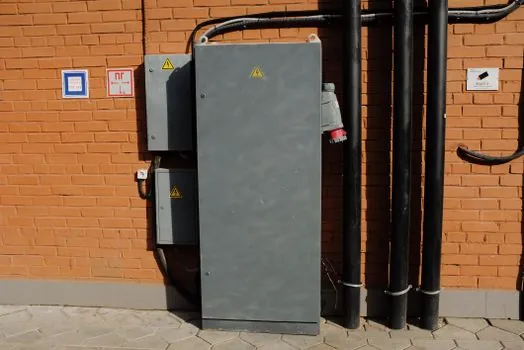
Outdoor telecom cabinets almost always require NEMA Type 4 (rain, sleet, snow, splashing water, hose-down, ice formation) or NEMA Type 4X (adds corrosion protection from salt, chemical vapors, coastal atmospheres) ratings, which by definition exclude open forced-convection fans that pull unfiltered ambient through the cabinet [S2].
A closed-loop cooler preserves the integrity of the NEMA 4/4X seal because the interior air never mixes with outside air, and condensate from the evaporator side is either re-evaporated on the condenser side or piped to the exterior through a drain fitting with a P-trap [S2].
For coastal cell-tower base stations, salt-laden air makes 4X the default; for inland road-side distribution cabinets where chemical vapor exposure is low, Type 4 is sufficient and lets a wider range of heat-exchanger cores be quoted [S2].
Sizing Pitfalls and Condensation Control
Oversizing a cabinet cooler by a wide margin wastes energy and can drive the interior below the dew point, producing condensation on circuit boards, corroding connectors, and invalidating warranties on telecom-grade PCBs [S3].
Undersizing lets the interior drift above the radio or baseband unit's maximum operating temperature (commonly 50-65 °C for outdoor-rated telecom gear), accelerating electrolytic-capacitor aging and forcing output-power derating [S2][S3].
Filter maintenance is the most common field failure: blocked intake filters on vortex coolers or A/C condenser coils cut capacity by 20-40% within a few months in dusty environments, so the spec should call for filter service access on the cabinet exterior and a documented replacement interval [S1][S3].
Airflow Direction, Filters, and Layout

Cabinet-cooler airflow must match the cabinet's internal layout: horizontal airflow suits shallow wall-mount enclosures with components arranged left-to-right, while vertical (bottom-to-top) airflow fits tall free-standing cabinets with stacked 19-inch rails [S3].
Built-in air filters on the cold-air inlet keep dust off the evaporator and on internal electronics, but the spec must include the filter's MERV rating and the cabinet's ventilation openings left unblocked by cable glands, cable ducts, or sand-cooler supply piping routed past the cabinet [S1][S3]. For a deeper look at how auxiliary sand-line equipment (coolers, mixers, reclamation units) is integrated around a foundry or casting cell, the sand cooler specification path is a useful cross-reference even when the telecom site is not a foundry.
Standards, Certifications, and Sourcing
NEMA 4 and 4X ratings are defined by the NEMA enclosure-performance standard, and hazardous-location models typically carry UL-listed Class I Division 2 or ATEX Zone 1/2 markings for cabinets sited near fueling or chemical areas [S1][S2].
For sites with explosive-gas risk, the cooler's certification (not just the cabinet's) must match the zone classification, and the spec should call out the exact marking string rather than relying on a generic "explosion-proof" descriptor [S1]. Where the broader sand-system context matters (coolers feeding resin-sand lines into which telecom-grade aluminum housings may later be cast), the related resin sand line configuration and sand reclamation unit operation references round out the equipment picture.
Close-out signal to track: a cell-site retrofit at a 45 °C-ambient urban macro site, where a NEMA 4X cabinet paired with a 1.0 kW closed-loop A/C displaces an undersized heat-exchanger-only design, and where 12-month field data on filter loading and internal-temperature drift become the next decision input for the next site roll-out.
This topic is covered further in Slewing Drive Selection for Automotive Production: Torque, Tilt-Moment, and Gear.