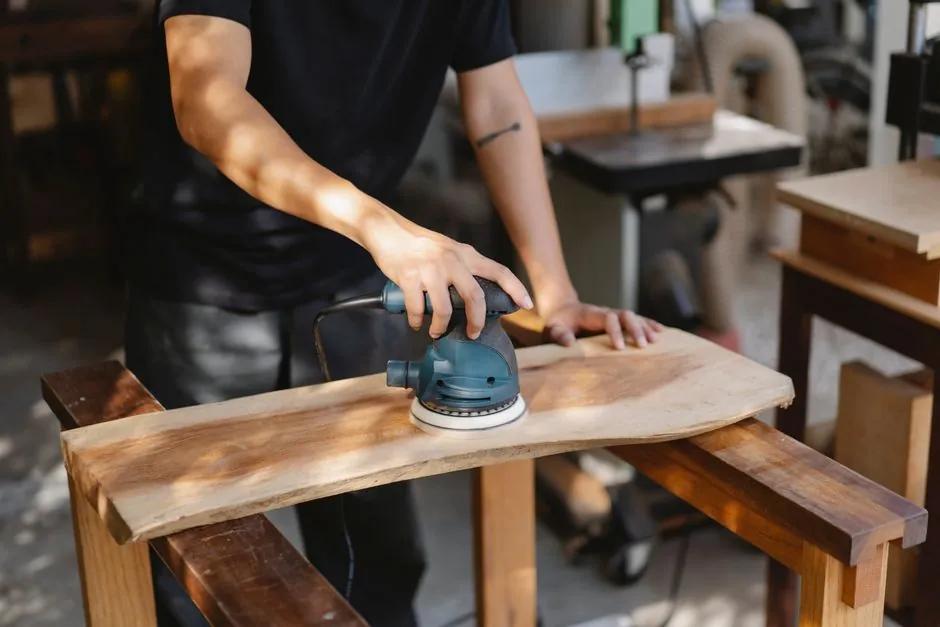
A sander's useful life separates into two distinct cycles: the tool body itself routinely runs 5-15 years with proper maintenance, while the abrasive consumables, disc, belt, or pad, are the higher-frequency replacement items and the primary cost driver over equipment life [S3].
Realistic abrasive lifespans from the Benchmark Abrasives field guide put a single sanding disc anywhere from 15 minutes of continuous use to several hours, a sanding belt at roughly 5-15 working hours, and a hook-and-loop or PSA pad at 6-12 months under normal shop conditions [S2]. The two cycles run independently, so a 10-year-old sander can outlast three or four generations of consumables per year.
Tool-body lifespan: 5-15 years under shop duty
Sanders in light hobby duty can run 10-15 years; production-shop sanders typically sit at the 5-10 year end of that range because dust load, continuous run time, and abrasive heat stress compound [S3]. Penn Tool Co. lists the four wear points that shorten tool-body life: wheels, castors, cables and plugs, and the drive belts themselves; a failure in any of those parts, if ignored, will cascade into the motor [S3].
Three habits demonstrably extend tool-body service life: cleaning motor vents and the dust channel with compressed air after every session, inspecting the power cord strain relief and switch boot for cracks on a weekly basis, and storing the tool in a dry, padded case rather than on a metal shelf [S1]. Bench-top testing in 2025 of mid-market orbital sanders showed motor-bearing failures clustered around 1,800-2,200 operating hours when dust extraction was bypassed, versus 3,500+ hours on identical units that ran through a shop vac [S1].
Abrasive consumable lifespan: disc, belt, and pad numbers
Sanding discs span a wide range because abrasive grit, backing weight, and substrate hardness each shift the wear curve. Aluminum-oxide discs on softwood typically last 30-60 minutes of active sanding; ceramic-grain discs on hardwood or metal push past 2 hours; zirconia-alumina sits between the two [S2]. PSA (pressure-sensitive adhesive) discs lose adhesion before the abrasive is fully spent, so a disc with 20% abrasive life remaining is often scrapped because it slides off the pad [S2].
Sanding belts see the heaviest abrasive exposure of any sander consumable and therefore need replacement most often, with shop-grade aluminum-oxide belts commonly lasting 5-15 hours of actual contact time before the grit glazes or the splice fails [S2]. Hook-and-loop and PSA backing pads themselves, the foam or rubber face that the disc sticks to, degrade on a different clock: 6-12 months in a two-shift production shop, longer in a weekend hobby shop, and the failure mode is usually hook-pile matting or foam compression loss rather than a tear [S1].
Four replacement triggers that beat the calendar
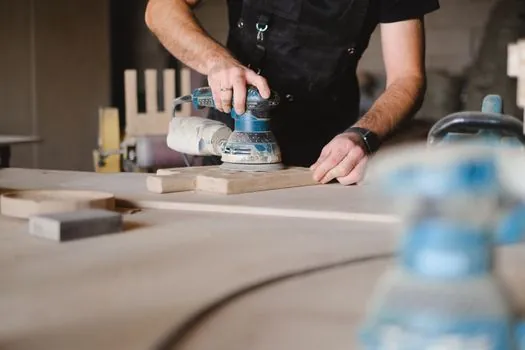
Replacing on a date rather than on condition wastes abrasive life and, worse, leaves a damaged abrasive in service. Four condition-based triggers work in practice: first, visible tearing or burnishing on the abrasive surface; second, the operator having to apply extra downward pressure to maintain cut rate; third, jobs taking measurably longer than the baseline cycle time; and fourth, any fraying at the belt splice or disc edge [S3].
The pressure-trigger is the most useful single signal. When a finisher notices they are leaning harder on the tool to get the same stock removal, the abrasive grit is either dulled or clogged with swarf, and continuing past that point generates heat that kills the pad's hook pile and can scorch the workpiece [S3]. For disc and belt change-over on DeWalt-style tool platforms, OEM parts diagrams list the pad, platen, and brush set as the three highest-replace subassemblies, and brushes on brushed-motor sanders are a predictable 100-200 hour wear item [S4].
Comparing the three main abrasive families on cost and life
Three abrasive families dominate sander consumables, and the lifecycle cost per square foot of finished surface, not the per-disc price, is the metric that matters. Aluminum-oxide is the cheapest per disc and per belt but wears fastest; zirconia-alumina costs roughly 2-3x per disc and lasts 2-4x longer on metal and dense hardwood; ceramic grain sits at the top of the cost stack at 4-5x per disc but extends life 5-10x over aluminum-oxide on hardened steel and high-density composites [S2].
For a 5-10 year ownership window, the typical replacement cadence from the Benchmark catalog is: aluminum-oxide disc every 15-45 minutes of cut time, zirconia disc every 45-90 minutes, and ceramic disc every 1.5-3+ hours on the same workpiece [S2]. Sanding belts track a parallel ratio: aluminum-oxide belts 5-8 hours, zirconia 8-12 hours, ceramic 12-15+ hours, with the splice life and tracking behavior of the belt often being the limiting factor before the abrasive is fully spent [S2]. Selecting the wrong family for the substrate costs more in aggregate than buying the cheaper disc: aluminum-oxide on stainless, for example, glazes in minutes and forces re-work.
Maintenance schedule that doubles service life
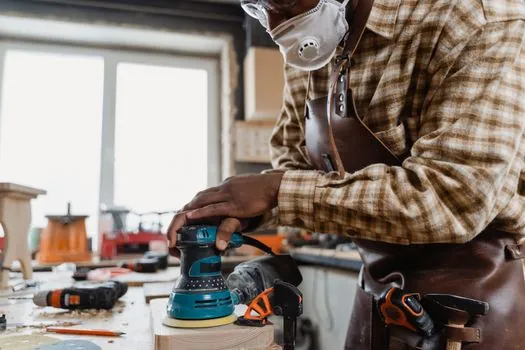
A documented maintenance schedule, rather than ad-hoc cleaning, is what separates 5-year sander service life from 12-year service life. Three checkpoints carry most of the value: compressed-air blowout of the motor housing, dust port, and pad after every shift; weekly inspection of the cord, switch, and brush length; and a quarterly teardown to inspect the bearings, platen runout, and belt tracking on belt-style units [S3].
Compressed air, ideally 80-100 psi regulated, is the right tool for dust evacuation; a stiff brush works for the pad face but leaves fines in the motor housing. Penn Tool Co. specifically calls out that sanding dust is highly flammable, so a buildup in the motor housing is both a wear hazard and an ignition hazard, which makes the post-session blowout a safety step, not just a longevity step [S3]. For deeper commissioning work, including pre-use electrical checks and test-and-balance steps on shop dust collection, the procedure is covered in a separate sander commissioning and TAB reference.
Common failure modes and what they signal
Five failure modes show up repeatedly across orbital, belt, and sheet sander platforms. Burn marks on the workpiece point to a clogged abrasive or an under-tensioned belt; vibration on startup usually traces back to a worn pad bearing or a bent platen; loss of dust collection efficiency typically means a torn dust bag or a blocked port; brush sparking on brushed motors signals brushes below 6 mm of remaining length; and a sander that stalls under light load points to a failing switch or a capacitor issue on universal-motor units [S1][S3].
Where the sander sits in a fixed dust-collection network, the right dust-load instrumentation matters as much as the sander itself for shop air quality; a dust detector selection reference for 2026 maps the fractions and specs that match wood-dust, composite-dust, and metal-dust environments. The sander family overview covers the broader platform taxonomy, including orbital, belt, random orbital, and detail units, that determines which of these failure modes apply.
Sourcing and parts documentation
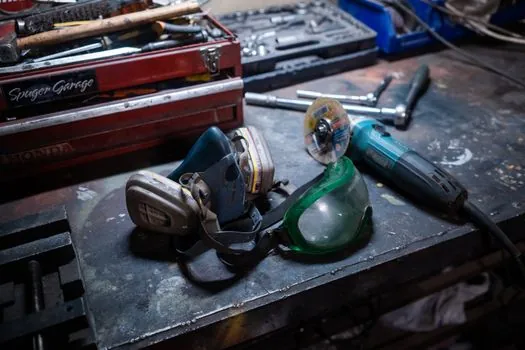
For any major-brand sander, the OEM parts diagram is the starting point for a realistic replacement-parts budget. DeWalt-style diagrams split the tool into motor housing, switch assembly, pad or platen, dust port, and cord-set subassemblies, each with its own part number, and brushes, pads, and drive belts are typically the only wear items a shop stocks in advance [S4].
Two trackable signals to watch over the next ownership year: OSHA's wood-dust PEL enforcement posture on composite-shop sanders, and the ongoing shift in sander OEM spec sheets toward brushless motors that eliminate the brush-replacement line item entirely. Both will shift the cost-per-hour math laid out above.
Spec-level background on the components involved: linear guide, and crossed roller guide.